


Today, the wellness industry has seen a dramatic change. The consumer preference in the UK today is slowly drifting from the use of synthetic supplements and highly processed compounds to more Ayurvedic, herbal, and plant-based alternatives. The drift is largely propelled by growing concerns regarding ingredients, clean labels, health benefits, and more traditional systems of medicine.
As a result of this paradigm shift, Shilajit is now gaining importance in the nutraceutical industry in the UK. Shilajit, till now, is classified as a niche natural substance obtained in Ayurvedic medicine. However, it is now being considered for usage as a high-quality compound for supplements owing to its mineral composition and long-term usage as a natural remedy.
This trend is supported by market information. The global Ayurvedic supplements market is projected to be worth USD 2.1 billion in 2025. It will reach USD 5.1 billion in 2035, recording a CAGR of 9.5%. More specifically, for a brand operating in the United Kingdom, it should be known that it will record a CAGR of 12.6% in the United Kingdom market from 2025 to 2035. Before delving deeper into know-hows related to importing shilajit from India, let’s first understand the origin and composition of shilajit.
Understanding Shilajit—Origins and Composition
As a matter of opportunity and responsibility for UK enterprises, the growth can now present a business opportunity for the UK. However, the sourcing of Shilajit is a complex issue involving many aspects.
What is Shilajit?
Shilajit is a natural resin with a tar-like consistency that takes hundreds of years to form as a result of the pressure action on plant substances in the high mountains, particularly the Himalayas. It has also been used in Ayurvedic medicine as a rejuvenator.
From a business perspective, the appeal of Shilajit can be found in its biochemical formulation, which usually consists of:
- Fulvic Acid
- Humic substances
- Trace minerals
- Natural bioactive compounds derived through geochemical processes
This formulation makes Shilajit a valuable ingredient in supplements, capsules, resins, and nutraceutical products. Conversely, not all the Shilajit available for purchase globally satisfies the requirements listed. Adulteration, with the addition of fulvic acid or fillers, is a recognized concern. For brands within the UK, knowledge about the provenance, processing, and composition of Shilajit is crucial to product purity.
Regulatory Considerations for UK Brands Importing Shilajit
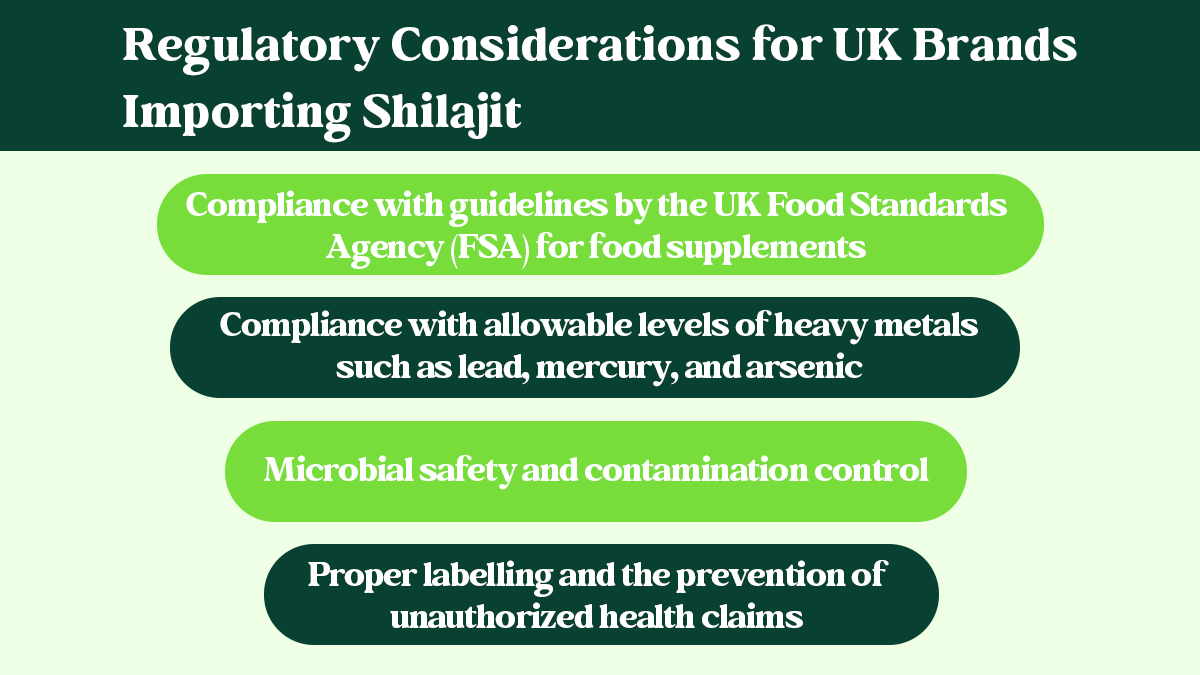
One of the most important factors UK-based brands must consider when sourcing Shilajit from India is regulatory compliance. In an international versus local procurement of herbs for health supplements, regulatory factors have stringent criteria.
Some of the key regulating factors are
- Compliance with guidelines by the UK Food Standards Agency (FSA) for food supplements
- Knowledge of MHRA regulations, and specifically in relation to product claims
- Compliance with allowable levels of heavy metals such as lead, mercury, and arsenic
- Microbial safety and contamination control
- Proper labelling and the prevention of unauthorized health claims
The categorization of Shilajit from a regulatory point of view can depend on whether it is imported into the UK as an ingredient, bulk substance, or finished dietary supplement. Thus, UK-based brands can derive particular benefits from engaging with suppliers that adhere to globally accepted food safety and quality management systems.
Documentation You Must Request from Indian Suppliers
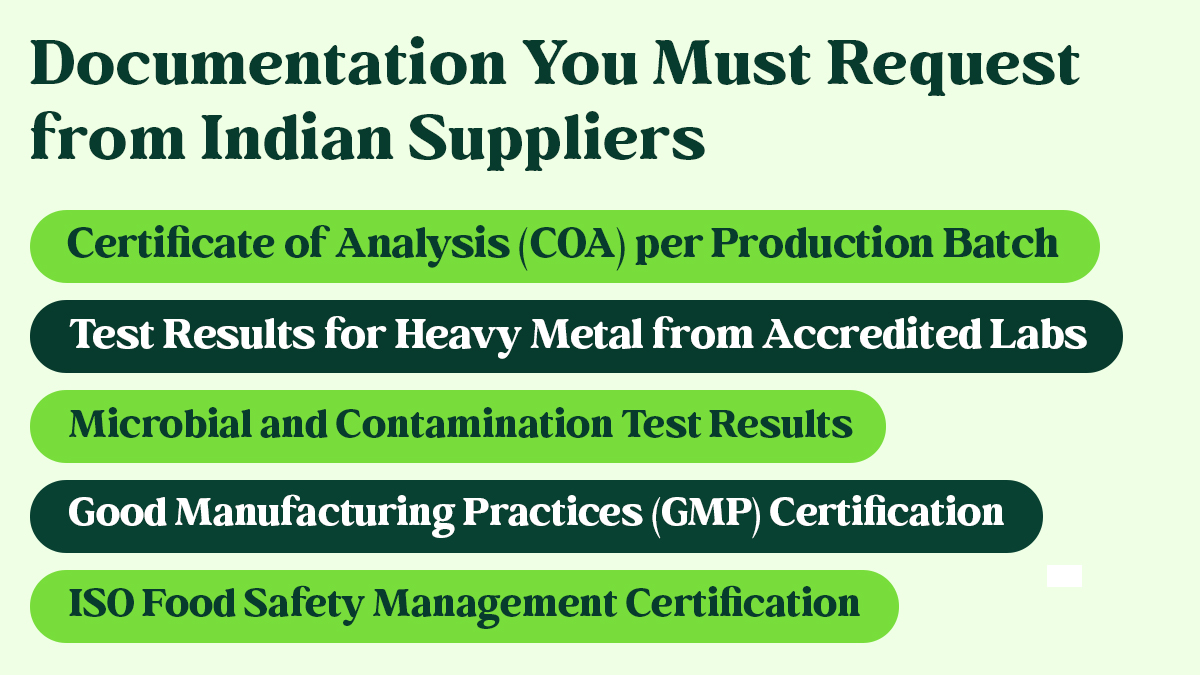
Documentations are a non-negotiable requirement in importing Shilajit to the UK. Brands in the UK must make sure that the supplier in India is transparent with valid documentation before engaging in a trade contract. Some of the necessary documents required by a UK brand in engaging a supplier for Shilajit in India are listed below:
Certificate of Analysis (COA) per Production Batch
A product-specific COA ensures the chemical identity, fulvic acid content, and purity specifications, as well as the adherence of the product to the set quality and safety standards.
Test Results for Heavy Metal from Accredited Labs
These reports indicate that there is compliance with the regulatory limits of metals like lead, mercury, and arsenic that are of prime importance for satisfying UK Food Standards Agency safety criteria.
Microbial and Contamination Test Results
Microbial analysis proves that Shilajit is free from harmful bacteria, molds, and pathogens, ensuring product safety during all stages of storage and usage by the consumer.
Good Manufacturing Practices (GMP) Certification
GMP certification means that the manufacturer adheres to global best practices in the production process, according to globally accepted standards of hygiene and quality manufacturing, which minimize contamination during manufacturing.
ISO Food Safety Management Certification
ISO certifications such as 22000:2018 prove that supplier companies are managing their food safety processes in a structured manner, which helps to identify, control, and prevent food hazards throughout their food production process.
Material Safety Data Sheet (MSDS)
MSDS describes detailed information on handling, storage conditions, safety measures, and transport requirements, aiding in the risk assessment process during the importation and distribution of the substance.
Valid Export Licenses and Documents for Business Registration
These documents ensure the supplier’s legal right to produce and export Shilajit, ensuring UK brands’ legitimacy and preventing any issues with customs or government bodies.
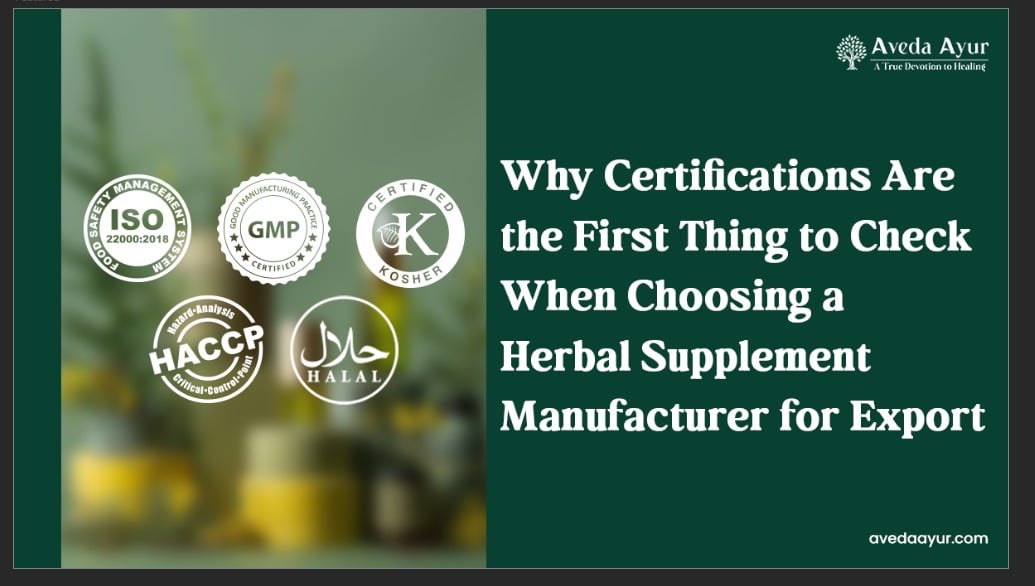
Suppliers who have been working within the framework of GMP, HACCP, and their respective ISO 22000-based food safety management schemes will be more capable of ensuring consistency and will also be more likely to be compatible with the requirements for import into the UK. This is because the framework ensures that the safety and quality of the product are integrated into the manufacturing process rather than being guaranteed at the testing stage
Choosing the Right Pure Shilajit Manufacturer in India
Choosing the right manufacturing company is crucial for UK brands to commit to long-term shilajit procurement. Being a genuine, pure shilajit manufacturer provides much deeper manufacturing process control than middlemen or trading companies.
Direct Source Control
A genuine manufacturer will monitor and control raw material sourcing to ensure that there is consistency in the sourcing and processing of raw materials from repeated cycles of production.
In-House Processing
Companies that have processing and purification facilities within their own companies have more control over manufacturing than companies that outsource these key manufacturing processes.
Batch Traceability
Strong batch-level traceability enables producers to verify raw inputs from finished goods to facilitate audit trails and eventual recall if necessary while giving regulators comfort as UK importers.
Quality System Integration
Established companies emphasize organized quality and food safety processes to manage production, monitoring, and corrections rather than relying on end product analysis.
Standards Compliance
Compliance with accepted manufacturing and food safety standards is important, as it proves operational maturity and preparedness regarding adherence to regulatory expectations of international markets.
Safety Risk Controls
Preventive safety frameworks enable the identification and control of potential contamination risks in production and thereby ensure consistency and reduce liability during import evaluation.
Verified Purity Metrics
Trustworthy manufacturers set the standard for purification and testing for such fulvic acids and have the results verified by lab testing.
Market Readiness Capability
Those companies that can meet specific product needs, such as Halal and Kosher, can meet the brands that distribute in varying market conditions.
Factors such as these are especially relevant to UK brands looking to establish scalable sourcing relationships that drive growth without sacrificing either quality or compliance.
Shilajit Quality Parameters UK Brands Should Never Ignore
Quality needs to be assessed through objective and quantifiable criteria rather than advertising. Brands operating in the UK should monitor the following:
- Percentage of fulvic acid, proven by lab testing
- Solubility in warm water. This test may help identify whether the resin is genuine.
- Lack of synthesised additives, fillers, and binders
- Acceptable heavy metal and microbial limits.
- Stability while being warehoused or shipped internationally
Usually, consistency is more likely to be obtained if structured food safety and quality control systems, rather than end product tests, are adopted by food manufacturers.
Working with a Reliable Shilajit Wholesale Supplier
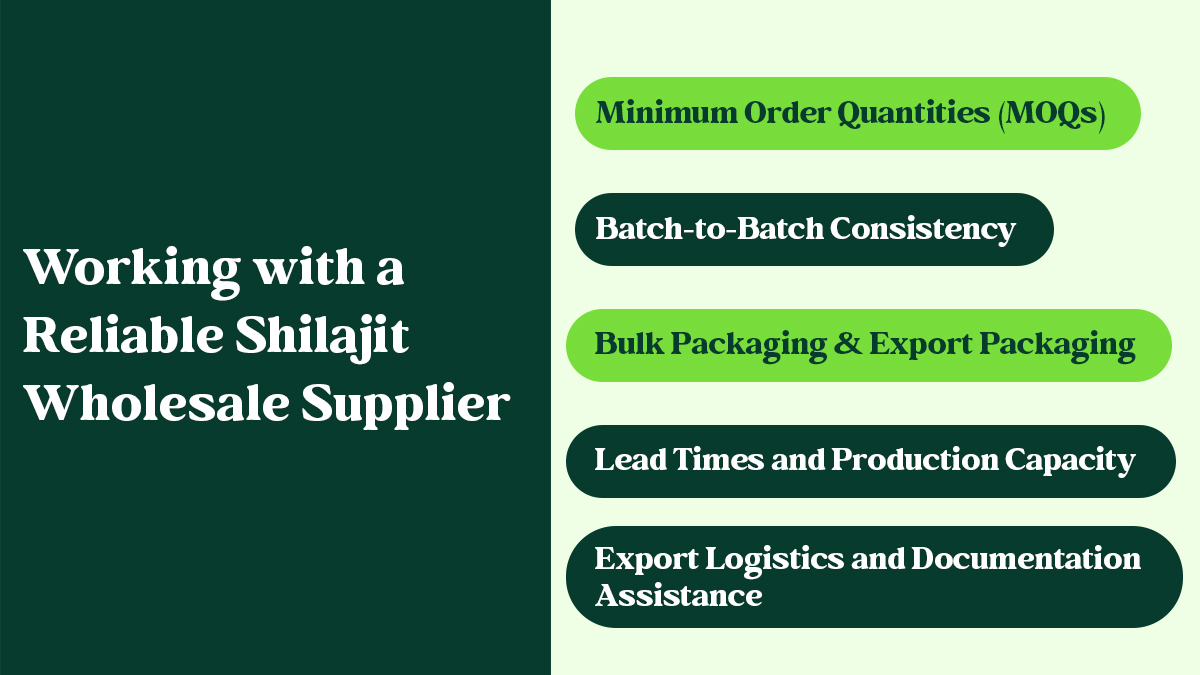
For UK brands purchasing Shilajit on a large scale, it is very crucial to choose the right wholesale supplier for Shilajit to ensure an uninterrupted supply. Wholesale procurement is not just about buying goods. Various other aspects are also involved.
Minimum Order Quantities (MOQs)
Wholesale suppliers’ MOQs must be comparable to the current scale of the business but can accommodate future expansion. This is a way for the brand to control risks related to inventory.
Batch-to-Batch Consistency
One of the important roles of a reliable wholesale supplier will be ensuring a degree of homogeneity with regard to product formulation throughout batches of production.
Bulk Packaging & Export Packaging
Appropriate bulk packaging of Shilajit helps to ensure that Shilajit remains intact during international shipping, and this is done in accordance with export handling practices.
Lead Times and Production Capacity
It is necessary to have clear production timelines and capacities to meet the market requirements and avoid shortages of stock in the product.
Export Logistics and Documentation Assistance
Seasoned wholesale distributors are able to offer experienced export paperwork and customs clearance services in helping UK brands to overcome potential delays and administrative nightmares.
For the wholesale buyers, GMP, ISO 22000, Halal, and Kosher certificates will further emphasize easier distribution for the different consumer groups present in the UK and abroad. It is necessary that a good shilajit supplier for the wholesale business be able to contribute to the growth of the company without affecting the safety and quality.
Why Many UK Brands Prefer Partnering with Experienced Indian Manufacturers
As the market for Ayurvedic products in the UK is expected to expand from around USD 541 million in 2025 to close to USD 1.8 billion by 2035, UK-based consumer goods manufacturers face increased pressures related to sourcing strategies. Partnering with experienced Indian manufacturers is a good option for UK brands as it offers many strategic advantages, such as:
- Familiarity with regulations and understanding of UK and EU safety, labelling, and import requirements
- Established sourcing networks in areas related to traditional sourcing, ensuring a continuous flow of actual quality materials.
- Private-label and formulation services that enable brands to create differentiated products without compromising quality or compliance.
- Production facilities that are scalable to allow for increased output as the market demand expands.
- Companies with a proven export track record may often be in a stronger position to assist UK Brands with issues related to regulatory audits, paperwork, and standards of compliance.
In that context, the experience of Indian manufacturers like Aveda Ayur brings value to UK companies through their unique mix of experience and international readiness. Working in accordance with globally accepted norms of GMP, HACCP, and ISO, and with Halal-certified and Kosher-certified manufacturing facilities, Aveda Ayur helps UK companies in compliant manufacturing facilities, quality management systems, and export-oriented manufacturing processes. UK companies can thus handle complexities, scale up, and be more prepared to address diverse consumer markets.
Conclusion
The import of Shilajit from the Indian market represents an excellent opportunity for UK businesses operating within the growing y. Yet, it is not just about the high demand within the marketplace but also requires smart choices.
Through collaboration with a trustworthy pure shilajit supplier or a reliable shilajit wholesaler, a UK company can mitigate legal troubles, ensure quality, and establish a strong supply chain.
Those companies looking for a certified, export-quality sourcing solution can rely on Aveda Ayur , which collaborates with UK companies to deliver internationally compliant, lab-tested Shilajit products suitable for B2B. Partnering with a qualified Indian supplier may make the entire importing process simpler and enable healthier growth.