

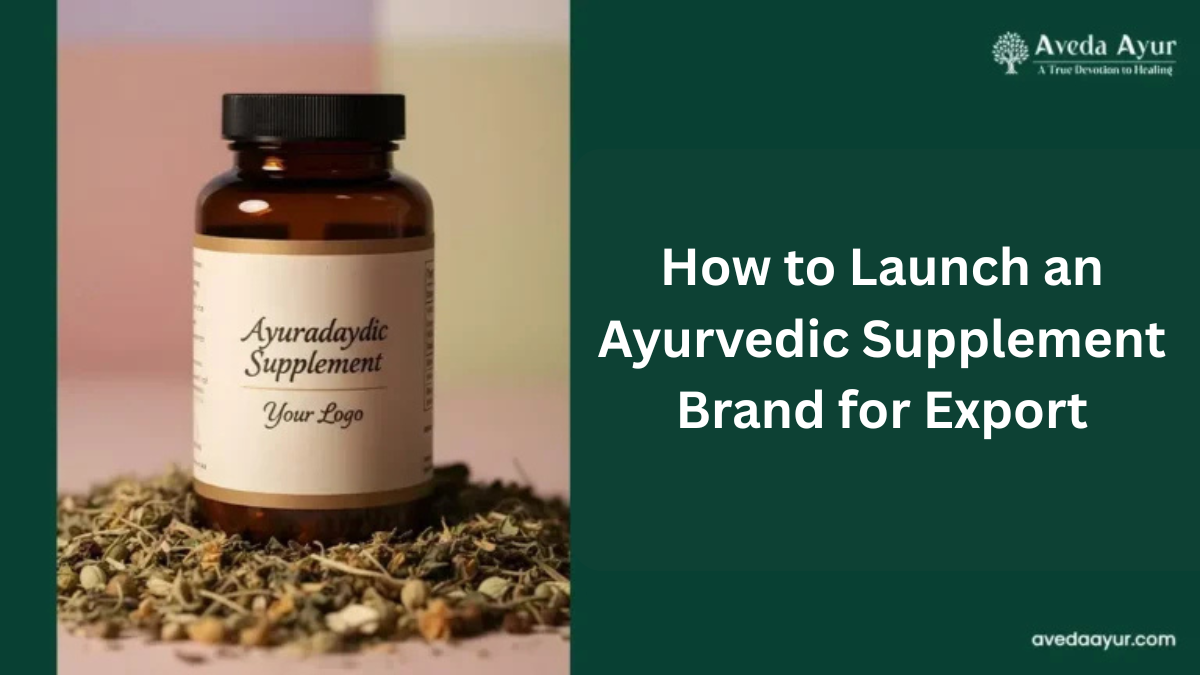
The global market for Ayurvedic and herbal supplements has crossed USD 18 billion in 2025 and is growing at over 15% annually. India exported approximately USD 689 million worth of AYUSH and herbal products in FY 2024-25 alone a 6.11% increase from the previous year. For brand owners, distributors, and wellness entrepreneurs outside India, this represents a clear opportunity: source from the world’s most established Ayurvedic manufacturing base and build a brand that meets the growing international demand for authentic, plant-based supplements.
But launching an Ayurvedic supplement brand for export is meaningfully different from launching a domestic supplement brand. The regulatory requirements are more complex, the documentation demands are higher, and the decisions you make about your manufacturing partner have longer-term consequences for your compliance position in international markets.
This guide covers the practical steps from product selection and manufacturer evaluation to compliance, labelling, and export documentation that brand owners need to work through before bringing an Ayurvedic supplement to market internationally.
Why International Markets Are Turning to Ayurvedic Supplements
Ayurveda’s growth in international markets is not a trend in the conventional sense it is a structural shift in how consumers in developed markets approach preventive health. Several converging factors are driving consistent, sustained demand:
- Clean label demand. Consumers in the US, UK, EU, and UAE are actively seeking supplements with verifiable ingredient origins, minimal processing, and no synthetic additives. Ayurvedic formulations, when properly documented and manufactured, offer exactly this transparent botanical ingredients with centuries of documented traditional use.
- Ingredient recognition. Ashwagandha, Turmeric, Shilajit, Triphala, Brahmi, and Shatavari have moved from niche Ayurvedic categories into mainstream supplement retail in Western markets. Brands building product lines around these ingredients have existing consumer awareness to leverage.
- Preventive health positioning. Post-pandemic, the preventive health supplement category has grown significantly across all major export markets. Adaptogenic herbs, immunity-supporting formulations, and stress and sleep supplements — all well-represented in the Ayurvedic product range are among the fastest-growing supplement categories internationally.
- Indian sourcing advantage. Herbs like Ashwagandha, Shilajit, and Shatavari are native to the Indian subcontinent. Brands sourcing from India benefit from geographic authenticity that is increasingly valued by informed consumers and retailers in international markets.
Choosing the Right Manufacturing Model for an Export Brand
Before working through the export launch steps, it is worth being clear about which manufacturing model fits your situation because this decision affects your timeline, your product exclusivity, and your compliance position.
Private label manufacturing
You select from a manufacturer’s existing, validated formulation range and sell under your brand name. The manufacturer already holds the formulation documentation, stability data, and batch records. This is the fastest route to market for a new export brand particularly for standard categories like Ashwagandha capsules, Triphala tablets, or Shilajit resin where proven formulations are available and the commercial priority is brand building rather than formulation differentiation.
Third party manufacturing
You commission production of a formulation either existing or proprietary at a licensed third party facility. The manufacturer produces under your brand specification and you own the brand and the product definition. This model is common for brands that have developed their own formulations or want exclusive product positioning. It typically involves a longer pre-production phase for formulation finalisation, stability testing, and regulatory review.
What both models require for export
Regardless of which model you use, export from India requires that the manufacturing facility holds a valid AYUSH manufacturing licence and operates under GMP-certified conditions. The documentation generated at the facility batch manufacturing records, Certificates of Analysis, stability data forms the foundation of your compliance position in your target export market. This documentation is not optional for serious international buyers, distributors, or regulatory bodies. It is the baseline expectation.
6 Stages of Launching an Ayurvedic Supplement Brand for Export
This roadmap covers the steps in the sequence they need to happen not the sequence most guides present them in. The order matters because decisions made early constrain options later.
- Define your target market before selecting your product. The single most common mistake export brand founders make is selecting a product before understanding the regulatory environment of their target market. The product you can sell in the UK, the claims you can make in the UAE, and the labelling requirements in the US are all different and they affect which formulations are suitable, what certifications your manufacturer needs, and what documentation your shipments require. Define your primary market first. Then select products that are viable in that market without requiring regulatory approvals you cannot realistically obtain in your launch timeline.
- Select product categories with established international demand. Not all Ayurvedic products have the same level of consumer awareness and distribution infrastructure in international markets. Adaptogenic supplements (Ashwagandha, Shilajit, Brahmi), digestive health formulations (Triphala, Trikatu), and immunity-supporting products have established retail presence in the US, UK, EU, and UAE markets. Launching into a recognised category reduces your market education burden and gives your brand a clearer positioning context. Niche classical Ayurvedic formulations Chandraprabha Vati, Mahayograj Guggul are better suited to markets with existing Ayurvedic community infrastructure, such as specific regions in the UK, Canada, and the US with South Asian diaspora populations.
- Evaluate your manufacturing partner against export-specific criteria. A GMP-certified, AYUSH-licensed manufacturer is the baseline but for export, additional criteria apply. Does the facility have direct experience supplying to your target market? Do they understand the regulatory classification of your product in your destination country? Can they provide batch-specific Certificates of Analysis from ISO/IEC 17025 accredited third-party laboratories? Do they have FDA facility registration for US-bound products? Are they familiar with MHRA requirements for UK herbal products? A manufacturer with genuine export experience in your target market will know what your buyers and regulators expect one without that experience will not, and the gap surfaces at customs clearance.
- Resolve product regulatory classification before production. Ayurvedic supplements are classified differently across international markets, and the classification determines your labelling, claims, and compliance pathway. In the US, the FDA classifies them based on intended use typically as dietary supplements under 21 CFR Part 111, which requires specific facility registration and labelling compliance including a Supplement Facts panel. In the UK, the MHRA regulates herbal products certain categories require Traditional Herbal Registration (THR) before sale. In the UAE, products may require registration with the Ministry of Health. Resolving this classification before production begins prevents costly reformulation or relabelling after your product is already manufactured.
- Prepare export documentation during production not after. Export documentation for Ayurvedic supplements is not a shipping formality it is a regulatory requirement that must be prepared alongside production. Standard documentation for most markets includes: a batch-specific Certificate of Analysis, a Certificate of Origin, a commercial invoice and packing list, and an AYUSH export NOC where applicable. Market-specific additions include FDA facility registration confirmation for the US, Halal certification for UAE and Gulf markets, phytosanitary certificates for certain botanical products, and Free Sale Certificates for some markets. These documents need to be in order before dispatch. Requesting them after production is complete creates delays that affect your launch timeline and cash flow.
- Build your brand compliance position from day one. International buyers distributors, retailers, health stores, e-commerce platforms — increasingly conduct their own supplier audits before listing a new supplement brand. They ask for facility certifications, batch COAs, stability data, and ingredient sourcing documentation. Building your compliance documentation file from your first production run positions your brand for distribution partnerships from launch rather than having to retroactively compile documentation that your manufacturing partner may no longer have easy access to. Ask your manufacturer to provide a compliance pack certifications, COA template, batch records structure before you commit to your first production order.
High-Demand Ayurvedic Products for International Export Markets
Not every Ayurvedic product travels equally well across international markets. The following categories have established demand, distribution infrastructure, and consumer recognition in major export destinations:
Adaptogenic supplements
Ashwagandha, Shilajit resin, Brahmi, and Shatavari have crossed from specialist Ayurvedic retail into mainstream health and wellness retail in the US, UK, and EU. Ashwagandha alone has achieved significant shelf presence in major pharmacy and supplement chains internationally. Shilajit resin is a growing category in the UK, UAE, and US markets, driven by interest in testosterone support, energy, and mineral nutrition positioning.
Digestive health formulations
Triphala, Trikatu, and Hingvastak-based formulations have strong demand in markets with established Ayurvedic communities particularly the UK, Canada, and the US. These are also among the most accessible categories from a regulatory standpoint in most markets, typically classifiable as food supplements without requiring therapeutic claims.
Immunity and respiratory support
Tulsi, Giloy, Neem, and multi-herb immunity formulations have seen sustained demand internationally since 2020. These categories are well-suited to e-commerce launch strategies, where health-conscious consumers actively search for plant-based immunity support.
Herbal oils and topical products
Ayurvedic hair oils, massage oils, and pain relief formulations are growing in international markets, particularly in the UK and EU where natural beauty and personal care is a strong consumer trend. Regulatory classification for topical products varies some markets treat them as cosmetics, others as medicines so classification research is particularly important in this category.
Regulatory Requirements by Key Export Market
Each export market has its own regulatory framework for herbal and Ayurvedic supplements. Here is a practical summary of the key requirements for the markets where Indian Ayurvedic product demand is strongest:
United States
Ayurvedic supplements sold as dietary supplements in the US are regulated under 21 CFR Part 111. Key requirements include: the manufacturing facility must be registered with the FDA as a dietary supplement facility; labelling must include a Supplement Facts panel in the specified format; health claims are strictly regulated structure/function claims require notification to FDA within 30 days of first use; and products must be manufactured under cGMP conditions with batch records maintained for a minimum of two years.
United Kingdom
Post-Brexit, herbal products in the UK are regulated by the MHRA. Products making medicinal claims require Traditional Herbal Registration (THR) a process that requires 30 years of documented traditional use and 15 years of EU/UK use. Food supplements without medicinal claims are regulated under the Food Supplements (England) Regulations 2003. Label claims must be compliant with UK food supplement regulations and must not reference disease treatment or cure.
United Arab Emirates
Supplements and herbal products in the UAE typically require registration with the Ministry of Health and Prevention (MOHAP) before commercial sale. Halal certification from a recognised certifying body is a commercial standard requirement across the Gulf market. Arabic language labelling is mandatory alongside English. Some product categories require additional toxicology documentation.
European Union
Food supplements in the EU are governed by Directive 2002/46/EC and national implementations. The EU maintains a positive list of permitted vitamins and minerals in food supplements botanical ingredients are subject to member state regulation, which varies. GMP compliance is required. Heavy metal limits are typically stricter than US standards. Some member states maintain national lists of permitted herbal ingredients.
How Your Manufacturing Partner Affects Your Export Position
The choice of manufacturing partner for an export Ayurvedic brand is not simply a production decision it is a compliance and commercial decision that affects every downstream aspect of your market entry.
A manufacturer with genuine export experience in your target market understands how your product will be classified in that market, what documentation your distributors and regulators will request, and what labelling requirements apply before a single unit ships. This knowledge prevents the most common and costly mistakes in export brand launches discovering compliance requirements after production rather than before.
A manufacturer without that export experience will produce your product competently but will not know what they do not know about your destination market. The consequences of that gap typically surface at customs clearance, in distributor due diligence conversations, or when a regulatory body requests documentation that was not prepared during production.
When evaluating a manufacturing partner for export, ask specifically: which markets have you supplied to, what documentation did those shipments require, and can you provide a reference from a client in my target market? A manufacturer with genuine export credentials will answer these questions directly and specifically.
Working with Aveda Ayur for Your Export Brand
Aveda Ayur is a GMP-certified, AYUSH-licensed Ayurvedic and herbal product manufacturer based in India, supporting brands and distributors looking to enter markets including the UK, USA, UAE, Canada, and Europe. We offer private label and third party manufacturing for a range of Ayurvedic formulations and Shilajit resin, and can assist with export documentation requirements for international shipments.
If you are in the process of planning an Ayurvedic supplement brand for international markets and want to understand our product range, manufacturing capabilities, and export documentation process, reach out to our team with your target market and product requirements.
Frequently Asked Questions
What licences and certifications does an Ayurvedic manufacturer need to export to the UK and USA?
For export to the US, the manufacturing facility must be registered with the FDA as a dietary supplement manufacturer under 21 CFR Part 111. For the UK, the facility should be GMP-certified and, for products making herbal medicinal claims, compliance with MHRA’s Traditional Herbal Registration scheme is required. In both markets, a valid AYUSH manufacturing licence and GMP certification are baseline requirements. The manufacturer should be able to provide their AYUSH licence number for independent verification through the Ministry of AYUSH portal, and their FDA registration number for verification through the FDA’s establishment registration database.
How is an Ayurvedic supplement classified for export as a food supplement or a medicine?
Classification depends on the intended use claims made on the product and the regulatory framework of the destination country. In the US, most Ayurvedic supplements are classified as dietary supplements under 21 CFR Part 111, provided they make structure/function claims rather than disease treatment claims. In the UK, products making medicinal claims require Traditional Herbal Registration. In the UAE, classification is determined by MOHAP based on the product’s composition and claims. Resolving this classification question before production begins is critical it determines your labelling, your claims, and your compliance pathway. Work with your manufacturer and a regulatory consultant in your target market to confirm classification before committing to formulation and label design.
What export documents are required for an Ayurvedic supplement shipment from India?
Standard documentation for an Ayurvedic supplement export shipment from India includes: a batch-specific Certificate of Analysis from quality control testing; a Certificate of Origin from an authorised body; a commercial invoice and detailed packing list; and an AYUSH export NOC where applicable. Market-specific additions include FDA facility registration confirmation for US shipments, Halal certification for UAE and Gulf markets, a Free Sale Certificate for some markets, and a phytosanitary certificate for certain botanical products. These documents need to be prepared during the production process, not requested after dispatch. A manufacturer with established export processes will prepare the relevant documentation as part of their standard production workflow.
Which Ayurvedic products have the strongest demand in international export markets?
Based on current international supplement market trends, the Ayurvedic ingredients and formulations with the strongest established demand in export markets are: Ashwagandha (adaptogenic stress and energy support strong presence in US, UK, EU retail); Shilajit resin (energy, testosterone support, and mineral nutrition growing in UK, US, and UAE); Triphala (digestive health strong in markets with established Ayurvedic communities); Brahmi and Bacopa (cognitive health growing in US and EU nootropic supplement category); Turmeric/Curcumin formulations (anti-inflammatory positioning widespread international retail presence); and Tulsi and Giloy (immunity support — growing internationally since 2020). Formulations targeting stress, sleep, digestion, immunity, and energy have the broadest consumer appeal across multiple international markets.