


India’s Ayurvedic industry is shifting rapidly toward contract-based manufacturing models, especially among early-stage wellness startups. Instead of investing in production infrastructure, founders are increasingly relying on Ayurvedic third-party manufacturing and private label ecosystems to launch products faster, reduce compliance risk, and control capital burn.
This shift is not just operational; it is structural. Most new Ayurvedic brands today are not manufactured in-house; they are built through certified manufacturing clusters in India that already meet regulatory and export-grade standards.
What is Private Label Ayurvedic Manufacturing?
Private label Ayurvedic manufacturing is a production model where a licensed Ayurvedic manufacturer produces pre-developed, approved formulations that startups sell under their own brand name without owning a factory.
These formulations are already validated for stability, safety, and regulatory compliance, allowing startups to focus on branding, distribution, and market entry instead of production.
How Much Capital Do Startups Actually Save?
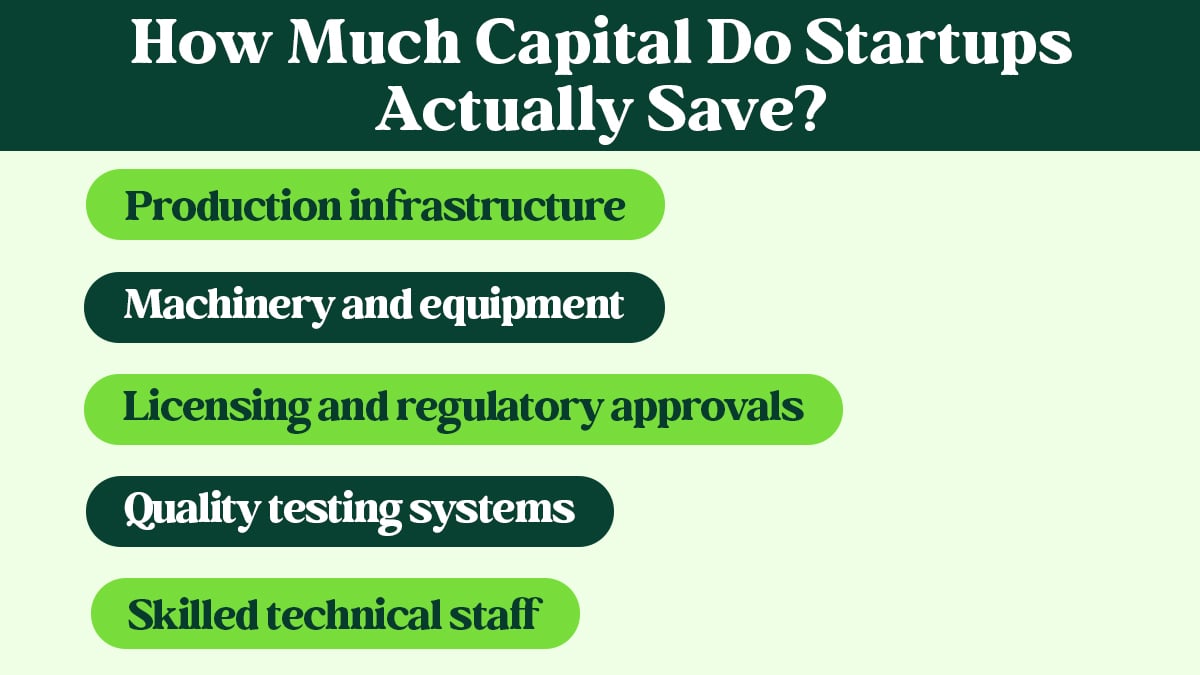
One of the biggest reasons startups prefer private label and contract manufacturing models is the significant reduction in upfront investment and operational complexity.
Setting up an AYUSH-compliant Ayurvedic manufacturing facility involves substantial expenditure on:
- Production infrastructure
- Machinery and equipment
- Licensing and regulatory approvals
- Quality testing systems
- Skilled technical staff
For most early-stage brands, this level of investment creates unnecessary financial pressure during the initial growth phase.
In comparison, private label and Ayurvedic third-party manufacturing models allow startups to launch products without building manufacturing infrastructure from scratch. Since the manufacturing partner already has approved facilities, operational systems, and production capabilities in place, startups can allocate more resources toward branding, marketing, distribution, and customer acquisition.
This asset-light approach reduces risk while improving speed-to-market and scalability.
How Fast Can You Launch a Product?
Speed-to-market is one of the most important advantages of outsourcing manufacturing, especially for startups trying to enter the Ayurvedic market quickly.
| Manufacturing Model | Typical Launch Timeline | What Happens During the Process |
| Private Label Ayurvedic Manufacturing | 3–4 weeks | Existing formulation selection → packaging customization → labeling → production → dispatch |
| Custom Ayurvedic Third-Party Manufacturing | 2-4 months | Product R&D → formulation development → testing → sample analysis→ AYUSH documentation → commercial manufacturing |
The timeline difference is largely driven by regulatory documentation, formulation validation, stability testing, and compliance procedures required under Ayurvedic manufacturing standards.
Why Startups Prefer Private Label Manufacturing Models
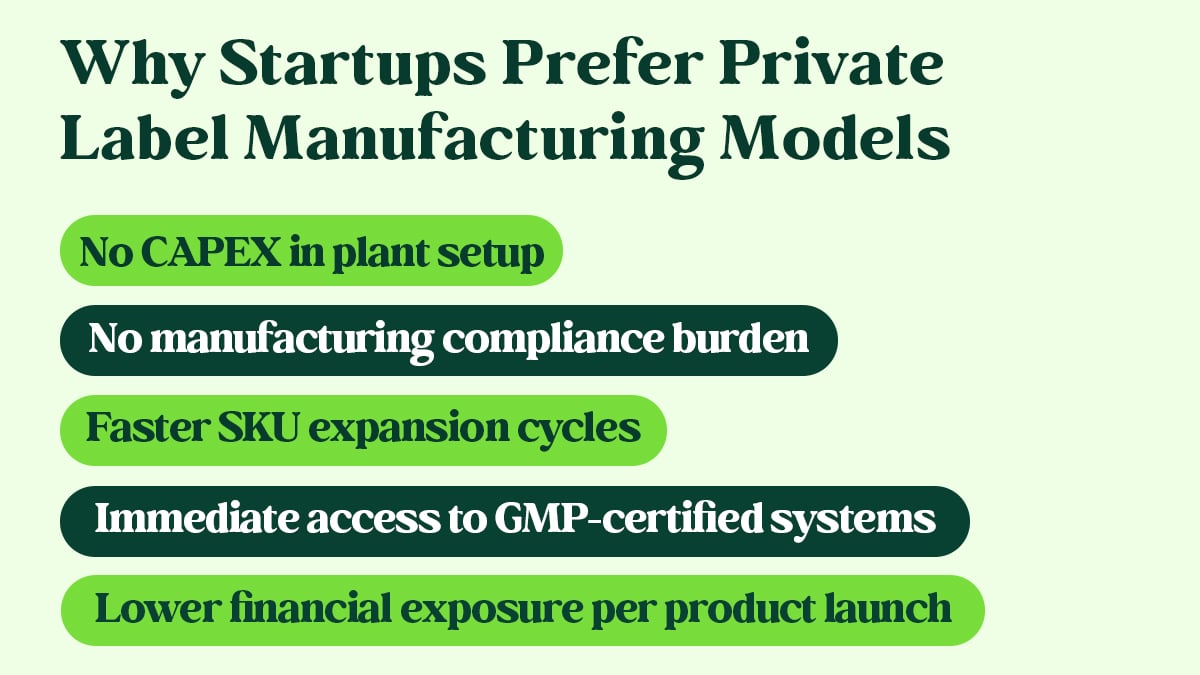
Startups are not just outsourcing production; they are outsourcing risk.
Key operational advantages:
- No CAPEX in plant setup
- No manufacturing compliance burden
- Immediate access to GMP-certified systems
- Faster SKU expansion cycles
- Lower financial exposure per product launch
This is why Ayurvedic third-party manufacturing has become the default model for early-stage wellness brands in India.
Regulatory Reality: What Startups Must Actually Comply With
Under the Drugs and Cosmetics Act, 1940, Ayurvedic product manufacturing is strictly regulated.
Startups entering contract manufacturing typically operate under:
- Loan License (Form 25-E) when using an existing manufacturing facility
- A Principal-to-Principal (P2P) agreement with the manufacturer, where the manufacturer holds production responsibility and compliance liability
This structure ensures regulatory accountability without requiring startups to own a factory license.
What “Quality Testing” Actually Means in Ayurveda
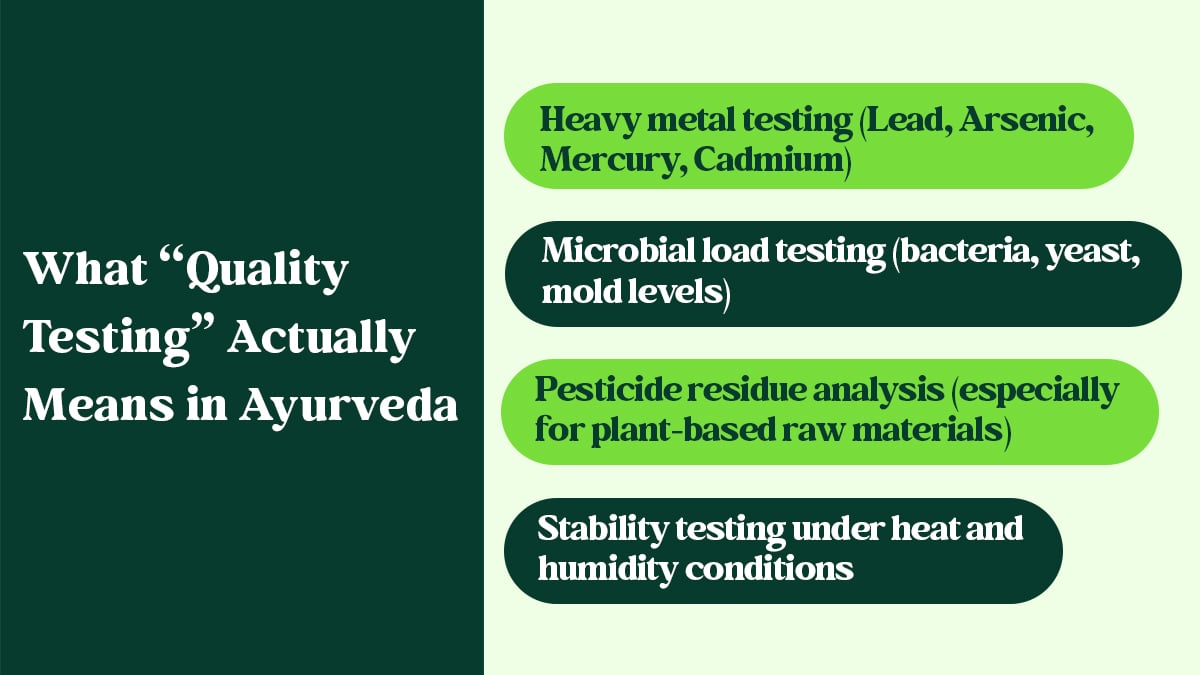
Unlike generic wellness products, Ayurvedic manufacturing requires specific safety validation protocols, especially for domestic and export markets.
Certified manufacturers typically conduct:
- Heavy metal testing (Lead, Arsenic, Mercury, Cadmium)
- Microbial load testing (bacteria, yeast, mold levels)
- Pesticide residue analysis (especially for plant-based raw materials)
- Stability testing under heat and humidity conditions
These tests are critical for compliance with both AYUSH standards and international export regulations.
Why This Model Works for Modern Ayurvedic Startups
The dominance of outsourced manufacturing is not accidental. It is driven by structural advantages:
- Lower upfront financial risk
- Faster product-market fit cycles
- Access to regulated infrastructure without ownership
- Ability to scale SKUs without operational friction
This is why most new wellness brands in India today are built using Ayurvedic private label and third-party manufacturing models rather than in-house production.
Conclusion
The rise of Ayurvedic third-party manufacturing reflects a fundamental shift in how Ayurvedic brands are built in 2026. Startups are no longer constrained by infrastructure; they are constrained only by execution speed and brand strategy.
By combining low-MOQ private label systems with scalable contract manufacturing ecosystems, founders can launch faster, reduce capital exposure, and remain compliant without building factories.
In today’s market, manufacturing is no longer a barrier to entry; it is a service layer.
FAQs
-
What is Ayurvedic private label manufacturing?
Ayurvedic private label manufacturing is a model where a manufacturer produces ready-made Ayurvedic products that startups sell under their own brand name.
-
What is Ayurvedic third party manufacturing?
Ayurvedic third party manufacturing is a process where a certified manufacturer produces Ayurvedic products for another company under a contractual agreement.
-
Do startups need their own manufacturing license for Ayurvedic products?
Not always. Many startups operate through Loan License arrangements or Principal-to-Principal (P2P) agreements with licensed manufacturers.
-
Why do startups prefer private label Ayurvedic manufacturing?
Startups prefer it because it reduces infrastructure investment, shortens product launch timelines, and simplifies regulatory compliance.
-
What quality tests are important in Ayurvedic manufacturing?
Key tests include heavy metal testing, microbial load testing, pesticide residue analysis, and stability testing for product safety and compliance.