

Launching a maca root supplement brand requires careful planning of the product formulation, ingredient specifications, manufacturing process, quality requirements, and production budget. Businesses can use private-label or custom supplement manufacturing to develop products under their own brand without investing in production facilities.
To launch a maca supplement brand, define your product concept, select the appropriate maca ingredient, finalize the formulation, choose a qualified manufacturer, determine the minimum order quantity (MOQ), estimate production costs, and verify applicable quality and regulatory requirements.
Define Your Maca Root Supplement Product Concept
Start by deciding what type of maca supplement you want to develop. Your product concept will influence formulation, dosage form, packaging, and manufacturing costs.
Consider the following:
- Target customers: Identify the consumer segment for your product.
- Product positioning: Decide whether to develop a standalone maca supplement or a multi-ingredient formula.
- Dosage form: Choose between capsules, tablets, and powder based on your product specifications.
- Product range: Determine whether you want to launch one formulation or multiple maca-based products.
A clear product brief helps manufacturers assess production feasibility and provide relevant quotations.
Choose the Right Maca Root Supplement Formulation
Maca supplements can be developed using maca root powder or maca root extract. These ingredients differ in processing, composition, and formulation characteristics.
Common options include:
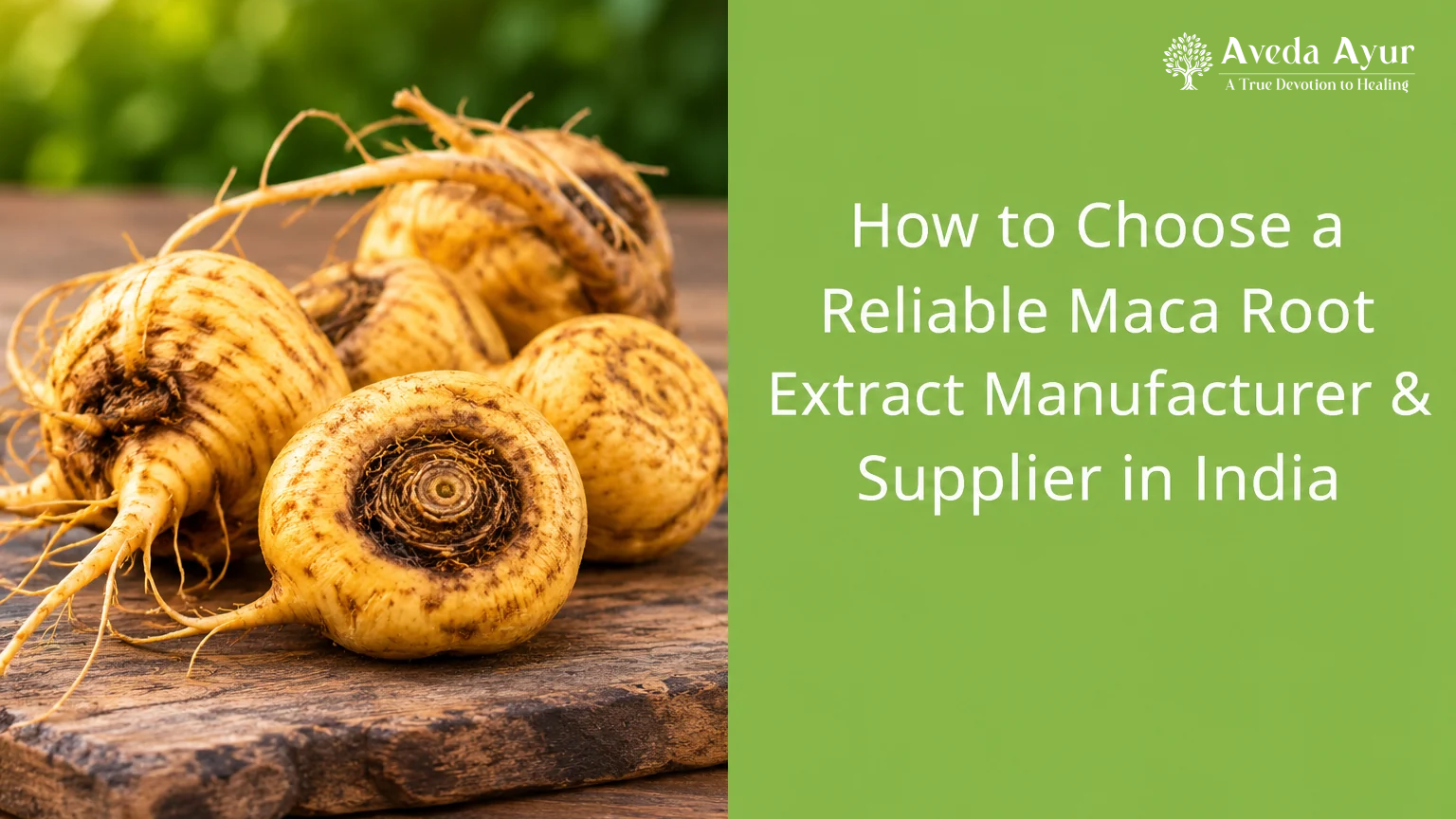
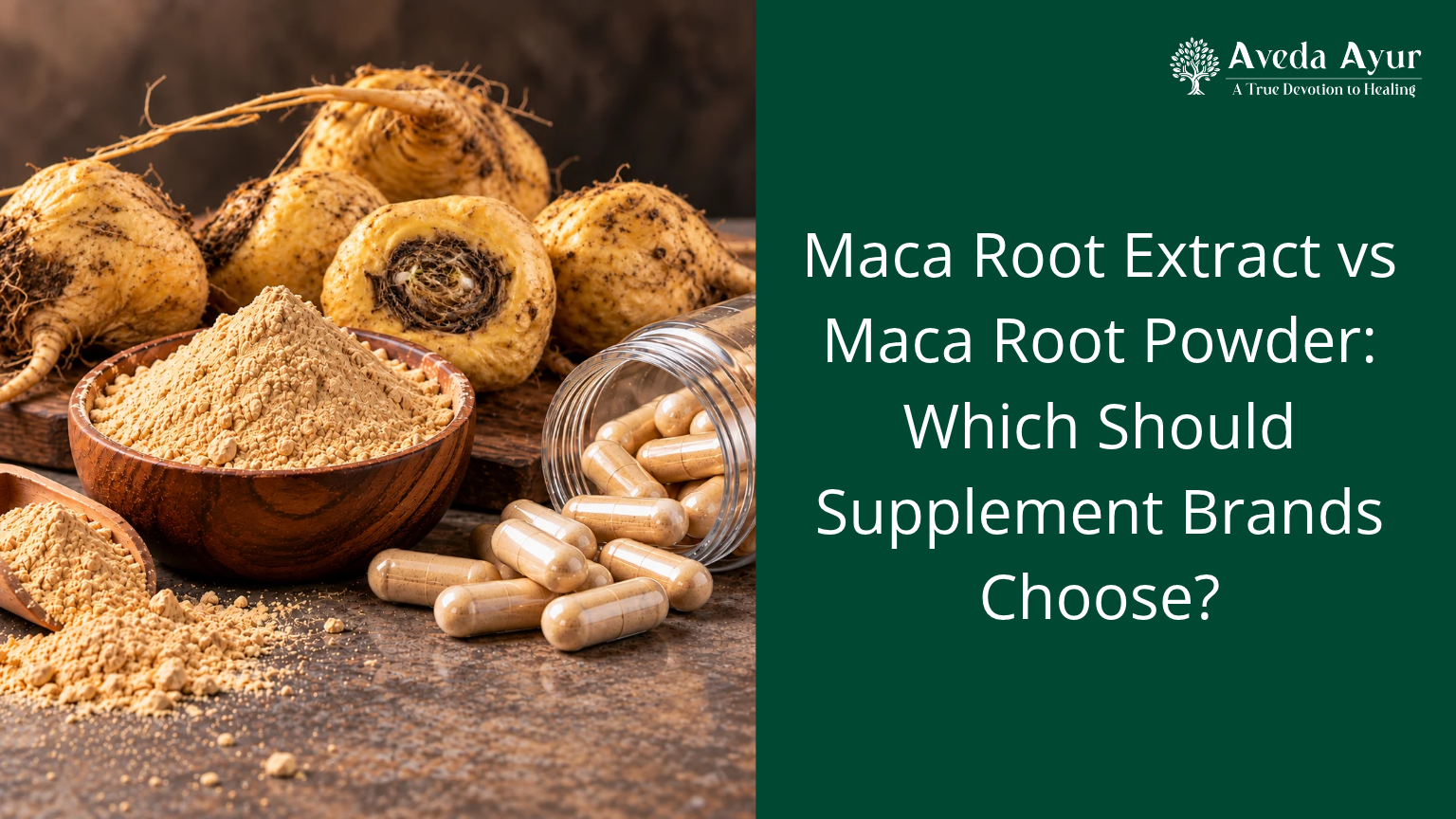
- Maca root powder: Produced by drying and grinding the maca root or hypocotyl. It can be incorporated into capsules and powder supplements.
- Maca root extract: Produced through an extraction process and supplied with defined specifications, such as an extraction ratio or selected marker compounds.
What Should You Check When Selecting Maca Root Extract?
Before approving a raw material, verify:
- Botanical identity: Confirm the scientific name, Lepidium meyenii, and the plant part used.
- Processing method: Establish whether the material is raw powder, gelatinized powder, or an extract.
- Extraction specifications: Review the extraction ratio, solvent information, and relevant processing details.
- Standardization: Check whether specific marker compounds are declared and supported by analytical testing.
- Purity: Review heavy metal, pesticide residue, and microbiological test results.
- Documentation: Request a Certificate of Analysis (CoA), supplier details, and batch traceability records.
An extraction ratio alone does not establish extract strength or quality. Evaluate it alongside the ingredient’s composition and analytical specifications.
For capsule formulations, also finalize the maca quantity per serving, capsule size, excipients, and finished-product specifications.
Choose Between Private-Label and Custom Maca Supplement Manufacturing
Businesses generally have two options for developing their maca supplement products.
|
Private-label manufacturing |
Custom manufacturing |
| Uses an existing manufacturer-developed formulation. | Develops a formulation around specific requirements. |
| Requires fewer product-development steps. | Involves additional formulation development and feasibility checks. |
| Offers comparatively limited formulation flexibility. | Provides greater control over ingredient combinations and specifications. |
| Suitable for businesses seeking an established product format. | Suitable for brands seeking product differentiation. |
Private-label manufacturing can simplify product development, while custom manufacturing is appropriate when a brand requires a specific ingredient profile, dosage, or product specification.
How Does Maca Root Supplement Manufacturing Work?
Third-party manufacturing involves producing supplements according to agreed formulation, quality, and packaging specifications.
The typical process includes:
- Product briefing: Share the desired formulation, dosage form, serving size, and packaging requirements.
- Formulation finalization: Confirm ingredient quantities, specifications, and manufacturing feasibility.
- Raw-material procurement: Source maca powder or extract and verify its identity and quality documentation.
- Sample development: Review and approve the product sample before commercial production.
- Manufacturing: Process the formulation into the selected dosage form under established production procedures.
- Quality control: Conduct applicable in-process and finished-product checks.
- Packaging and batch release: Complete packaging, labelling, and required batch documentation before dispatch.
Before production, agree on product specifications, testing responsibilities, packaging requirements, and batch-release procedures.
What Is the MOQ for Maca Root Supplement Manufacturing?
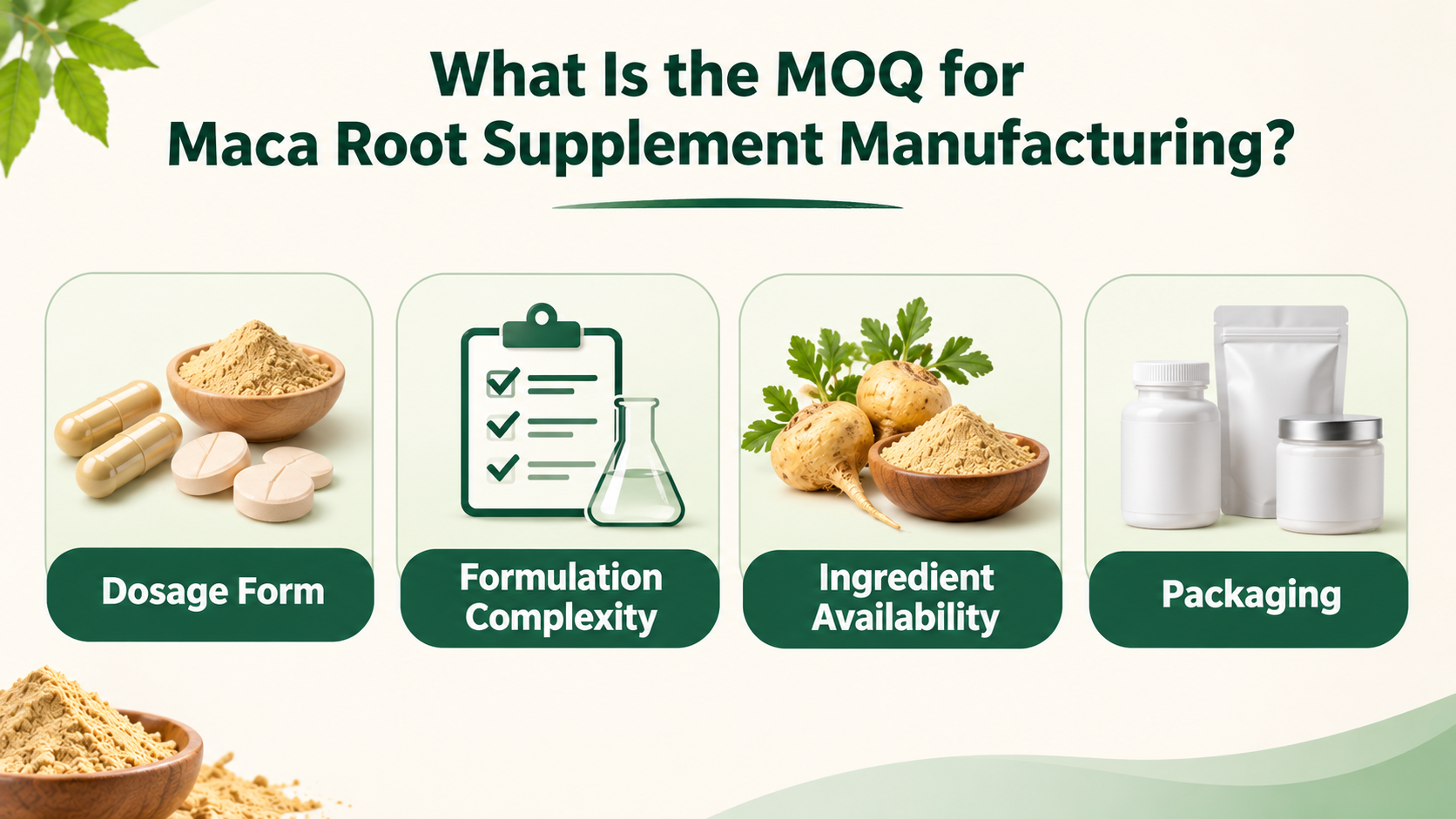
The minimum order quantity (MOQ) for maca supplements varies by manufacturer, formulation, dosage form, raw-material availability, and packaging requirements. There is no universal MOQ for every product.
The main factors influencing MOQ include:
- Dosage form: Capsules, tablets, and powders have different production requirements.
- Formulation complexity: Customized formulations may require additional raw-material procurement.
- Ingredient availability: Supplier purchase quantities can affect minimum production volumes.
- Packaging: Custom containers, printed labels, and cartons may have separate minimum order requirements.
When requesting a quotation, clarify whether MOQ refers to the manufacturing batch, finished retail units, or packaging materials. Also check whether smaller initial production runs are available.
How Much Does It Cost to Launch a Maca Supplement Brand?
Maca supplement manufacturing costs depend on the ingredient specifications, formulation, production quantity, packaging, and quality requirements.
| Cost component | Factors affecting cost |
| Formulation development | Customization and sample revisions |
| Raw materials | Maca powder or extract specifications and quantity |
| Manufacturing | Dosage form, processing, and batch size |
| Packaging | Bottles, pouches, labels, and cartons |
| Quality testing | Laboratory tests and sample requirements |
| Regulatory compliance | Applicable assessments and documentation |
| Logistics | Storage, freight and delivery |
How Do You Calculate Manufacturing Cost Per Unit?
Use the following formula:
Manufacturing cost per unit = Total production cost ÷ Number of saleable finished units
For example, if a production order costs 10,000 and yields 1,000 saleable units, the manufacturing cost is 10 per unit. This is an illustrative calculation, not an estimate of industry pricing.
To compare manufacturer quotations accurately, use identical formulation specifications, serving sizes, pack sizes, and order quantities.
Also check whether sampling, testing, packaging artwork, taxes, and freight are included. Keep one-time development and branding expenses separate from recurring production costs.
Quality Testing and Regulatory Requirements for Maca Supplements
Quality assurance helps verify raw-material identity, product composition, safety, and batch consistency. Businesses should establish testing specifications with their manufacturing partners before production.
Important quality-control checkpoints include:
- Raw-material verification: Confirm botanical identity, plant part, processing category, and supplier documentation.
- Certificate of Analysis: Review the CoA for relevant identity, purity, and composition specifications.
- Contaminant testing: Evaluate heavy metals, microbial contamination, and pesticide residues, as applicable.
- In-process checks: Monitor relevant production parameters and ingredient quantities.
- Finished-product testing: Verify that the manufactured batch meets approved specifications.
- Stability testing: Assess product quality under defined storage conditions to establish an appropriate shelf life.
- Traceability: Maintain batch records linking incoming ingredients to finished products.
A CoA should be supported by appropriate testing and supplier qualification rather than accepted as the only evidence of quality.
Regulatory requirements vary by intended sales market. Before commercial production, verify ingredient eligibility, manufacturing requirements, mandatory label declarations, warnings, and permitted product claims under the applicable regulations.
How to Choose a Reliable Maca Supplement Manufacturer
Selecting a qualified manufacturer is essential for maintaining product consistency and meeting commercial requirements.
Evaluate potential manufacturing partners based on:
- Manufacturing capabilities: Confirm experience with maca powder, extracts, and your preferred dosage form.
- Quality management: Review raw-material verification, testing procedures, and batch traceability.
- Regulatory documentation: Verify applicable manufacturing licenses, certifications, and quality records.
- Customization: Assess formulation, serving size, and packaging options.
- Commercial transparency: Compare MOQ, production costs, payment terms, and manufacturing timelines.
Before finalizing a manufacturer, ask:
- Can you provide raw-material specifications and CoAs?
- What quality tests are conducted on finished batches?
- Can you accommodate customized formulations?
- What is the MOQ for the selected dosage form?
- Who handles label review and regulatory documentation?
- What are the expected sampling and production timelines?
Request supporting documentation and clarify responsibilities before signing a manufacturing agreement.
Launch Your Private-Label Maca Supplement Brand with Aveda Ayur
Choosing the right private-label manufacturing partner can simplify product development and production planning. Aveda Ayur offers businesses an opportunity to discuss maca supplement manufacturing requirements, including formulation, product specifications, and private-label packaging options.
Whether you are developing your first maca supplement or expanding an existing nutraceutical portfolio, Aveda Ayur can be approached to discuss:
- Product formulation: Share your preferred maca ingredient, formulation concept, and serving-size requirements.
- Manufacturing options: Discuss suitable dosage forms based on available production capabilities.
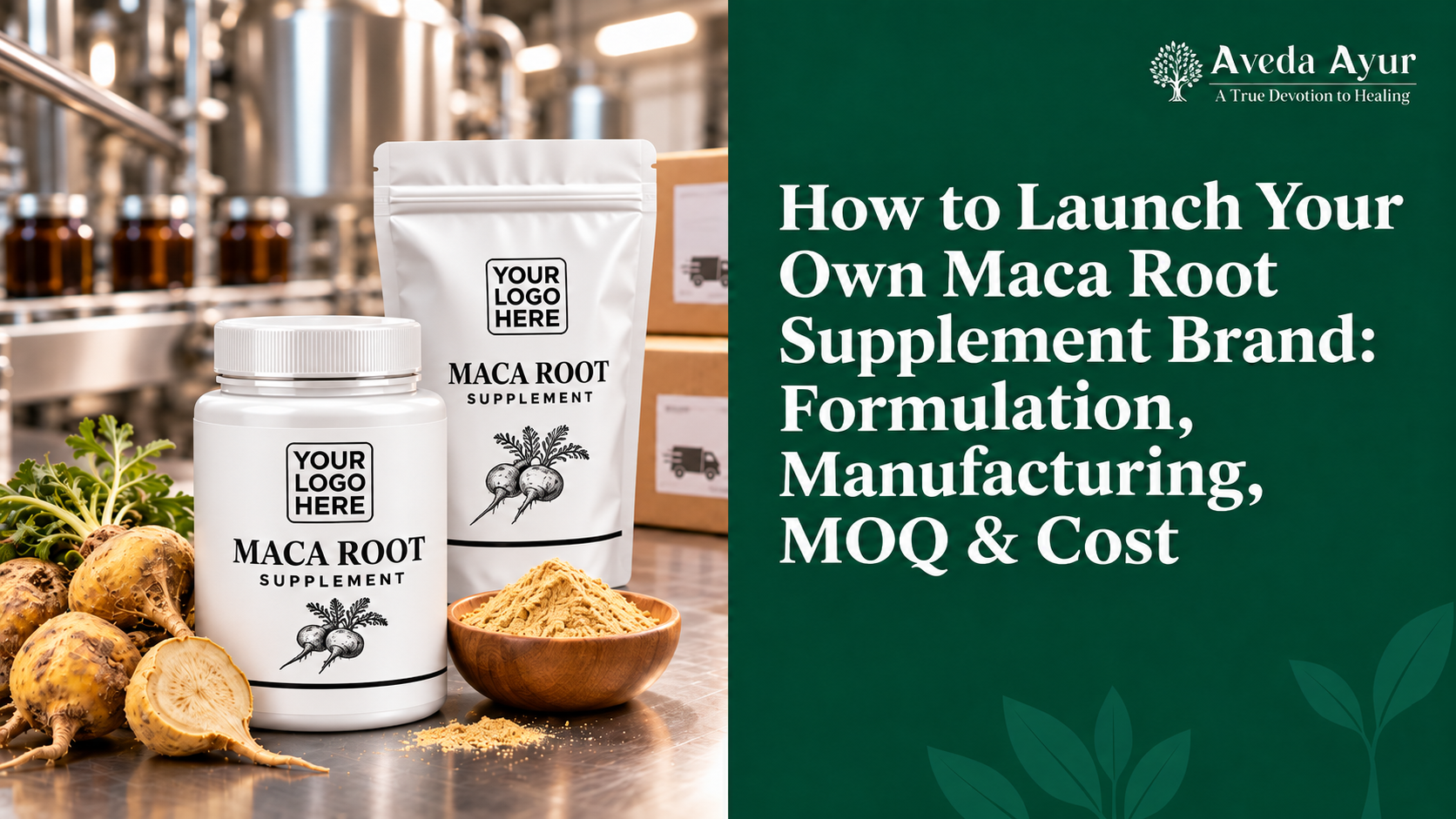
- Private-label packaging: Explore packaging and branding specifications for your product.
- Order planning: Request details about MOQ, production timelines, and manufacturing costs.
- Quality documentation: Clarify applicable testing procedures, manufacturing standards, and batch documentation.
Planning to launch your own maca supplement brand? Contact Aveda Ayur to discuss your private-label manufacturing requirements and request a customized quotation.
FAQs
- Can I start a maca supplement brand without owning a manufacturing facility?
Yes. Third-party manufacturing allows businesses to outsource production while selling supplements under their own brand, subject to applicable regulatory and licensing requirements.
- What is the difference between maca root powder and maca root extract?
Maca root powder is produced by drying and grinding the plant material, whereas maca extract undergoes an extraction process. Their composition and formulation specifications can differ.
- What is the MOQ for private-label maca supplements?
MOQ depends on the manufacturer, formulation, dosage form, raw-material procurement, and packaging requirements. Request a product-specific quotation to determine the minimum order quantity.
- Can I customise my maca supplement formulation?
Yes, depending on the manufacturer’s capabilities, ingredient compatibility, production feasibility, and applicable regulatory requirements.
- What quality tests should maca supplements undergo?
Depending on the raw material and finished formulation, testing may include botanical identity, heavy metals, microbial contamination, pesticide residues and stability evaluation.
- What information is required to get a maca supplement manufacturing quotation?
Provide the preferred maca ingredient, dosage form, formulation specifications, serving size, pack size, estimated order quantity and packaging requirements.