

Europe’s herbal supplement industry is growing rapidly as consumers increasingly prefer natural health and wellness products. However, launching a successful supplement brand in Europe requires more than a great product idea. The manufacturer you choose plays a major role in product quality, regulatory compliance, and customer trust.
Whether you’re launching a new supplement line or expanding into Europe, this guide will help you choose the right herbal supplement manufacturer for European market requirements and avoid costly mistakes.
Why Choosing the Right Manufacturer Matters While Targeting the European Market
Europe has some of the world’s strictest standards for food supplements. From ingredient sourcing and product testing to labeling and documentation, every aspect of manufacturing must meet high expectations.
A reliable supplement manufacturer for EU market expansion can help you:
- Meet European quality and safety standards
- Ensure consistent product quality
- Support regulatory compliance
- Reduce supply chain risks
- Scale your business efficiently
Choosing the wrong manufacturer, on the other hand, can result in product recalls, compliance issues, delayed launches, and damage to your brand reputation.
Step-by-Step Guide to Choosing a Private Label Herbal Supplement Manufacturer for the European Market
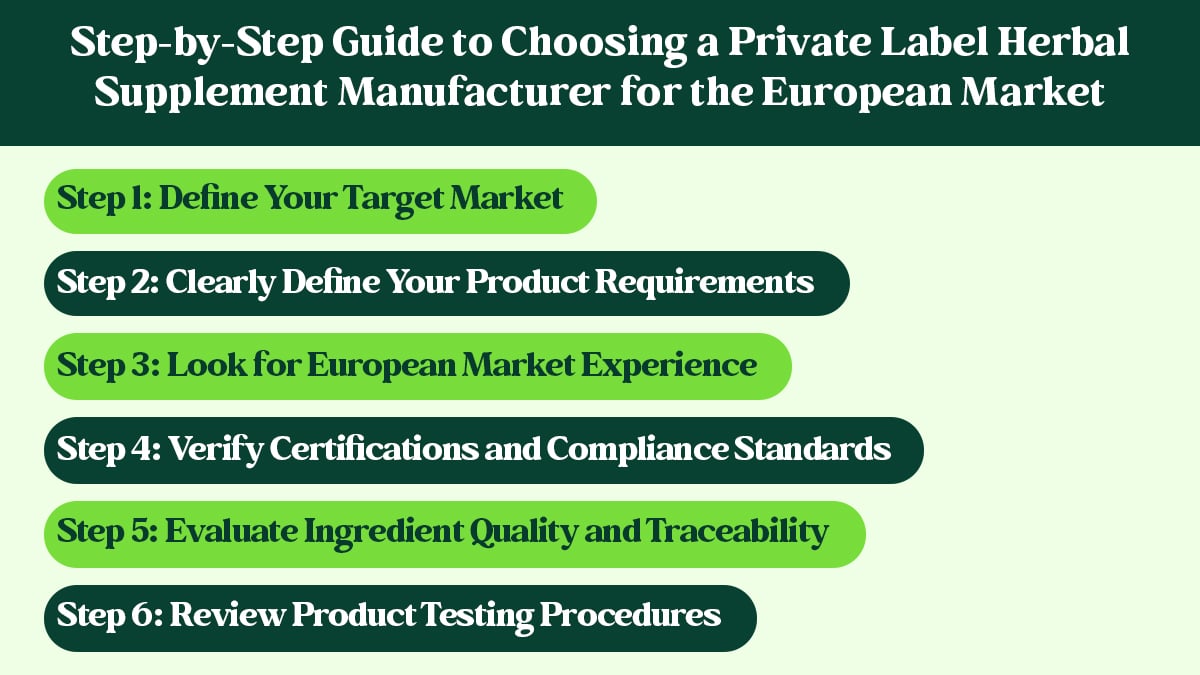
Step 1: Define Your Target Market
Before approaching manufacturers, identify the European countries you plan to serve. Requirements can vary between Germany, France, Italy, Spain, and other European markets.
Understanding your target audience and market requirements will help you choose a manufacturer with relevant experience.
Step 2: Clearly Define Your Product Requirements
Create a clear product brief that includes:
- Product type (capsules, tablets, powders, or liquids)
- Herbal ingredients
- Packaging preferences
- Labeling requirements
- Expected order volumes
This information allows manufacturers to provide accurate recommendations and quotations.
Step 3: Look for European Market Experience
Not every manufacturer understands the complexities of exporting herbal supplements to Europe.
An experienced herbal supplement manufacturer for European market distribution should have knowledge of European regulations, documentation requirements, and export procedures. They should also be able to demonstrate experience working with international brands.
Step 4: Verify Certifications and Compliance Standards
Quality certifications indicate that a manufacturer follows recognized production standards.
Look for:
- GMP Certification
- HACCP Compliance
- ISO Quality Standards
- Third-Party Quality Audits
For European markets, manufacturers should also understand and comply with the EU Food Supplements Directive, EU General Food Law, and EFSA health-claim requirements. Along with these, ISO 22000 certification can provide additional assurance of strong food safety management systems.
A trusted supplement manufacturer for EU market requirements should be transparent about certifications and quality processes.
Step 5: Evaluate Ingredient Quality and Traceability
The quality of a herbal supplement starts with its ingredients.
Ask manufacturers about:
- Ingredient sourcing practices
- Supplier verification processes
- Batch record systems
- Sustainability initiatives
Manufacturers should be able to trace ingredients from source to finished product, ensuring transparency and quality control.
Step 6: Review Product Testing Procedures
Comprehensive testing is essential for product safety and consistency.
A reputable manufacturer should conduct the following:
- Raw material testing
- Heavy metal testing
- Microbiological testing
- Finished product testing
They should also provide Certificates of Analysis (COAs) to verify product quality.
Step 7: Assess Private Label Capabilities
A strong private label partner should offer more than manufacturing.
Evaluate whether they provide:
- Custom formulation support
- Packaging solutions
- Label development assistance
- Regulatory documentation support
These services can simplify product development and accelerate your launch timeline.
Step 8: Request Samples Before Making a Decision
Never finalize a manufacturing partnership without reviewing product samples.
Assess:
- Product quality
- Packaging quality
- Documentation accuracy
- Communication responsiveness
The sample stage often reveals how reliable the manufacturer will be as a long-term partner.
Key Factors to Consider When Comparing Manufacturers
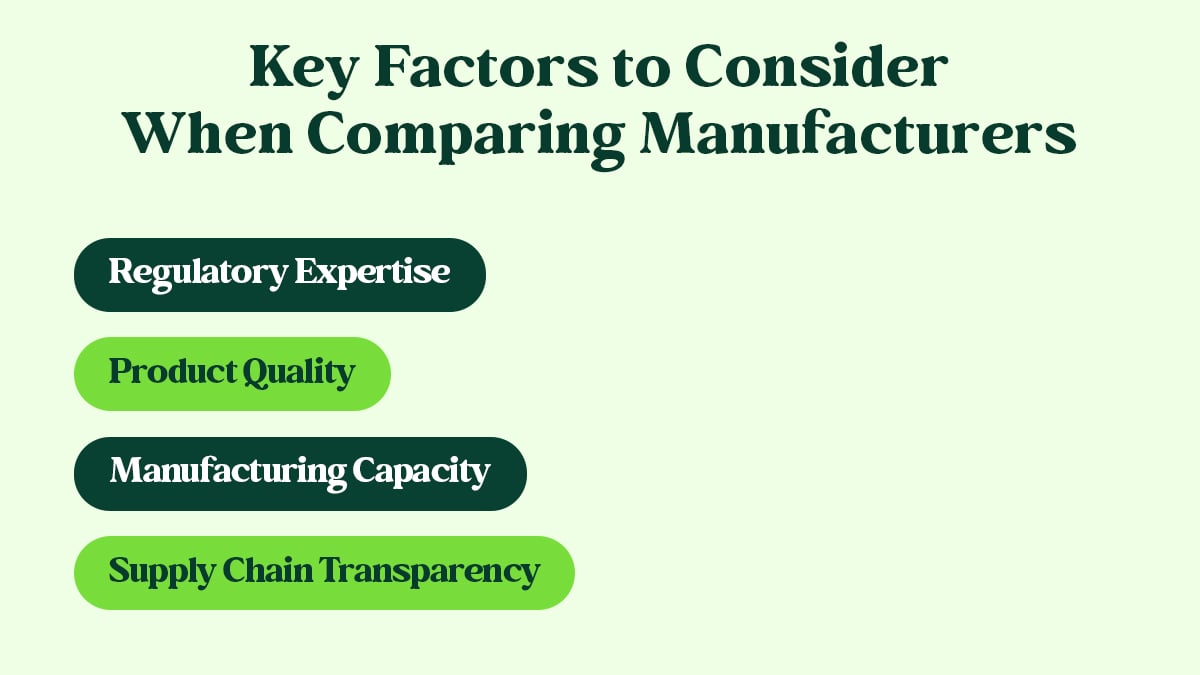
When evaluating multiple suppliers, focus on these critical factors:
- Regulatory Expertise: Manufacturers should understand European supplement requirements and export procedures.
- Product Quality: Consistent quality standards are essential for customer satisfaction and brand growth.
- Manufacturing Capacity: Your partner should be able to support both current demand and future expansion.
- Supply Chain Transparency: Clear ingredient sourcing and traceability systems demonstrate commitment to quality.
- Communication and Support: Fast, transparent communication often leads to smoother business relationships.
Common Mistakes to Avoid
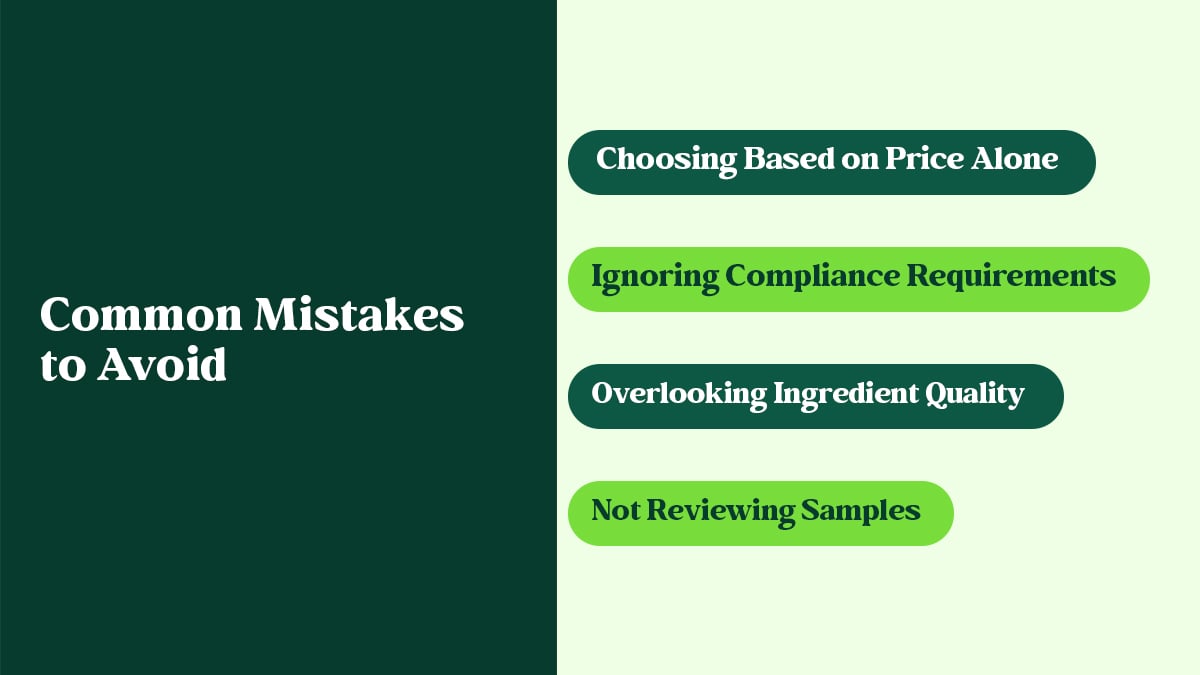
Many businesses focus only on pricing and overlook more important factors. Avoid these common mistakes:
- Choosing Based on Price Alone: The lowest-cost option is not always the best long-term investment.
- Ignoring Compliance Requirements: Failure to verify certifications and documentation can create serious challenges later.
- Overlooking Ingredient Quality: Transparency is increasingly important in the European market.
- Not Reviewing Samples: Product samples provide valuable insight into quality standards.
- Selecting a Manufacturer Without European Market Experience: A manufacturer unfamiliar with Europe may struggle with compliance and logistics requirements.
Why Aveda Ayur Is a Reliable Choice
If you’re looking for a trusted herbal supplement manufacturer for European market opportunities, Aveda Ayur offers comprehensive private label manufacturing solutions tailored to global quality standards.
Aveda Ayur specializes in herbal and Ayurvedic supplement manufacturing, combining carefully sourced ingredients with strict quality control processes. The company supports businesses with private label manufacturing, custom formulations, product development, packaging solutions, and quality testing.
As a dependable supplement manufacturer for EU market expansion, Aveda Ayur focuses on consistency, transparency, and customer support. With expertise in herbal formulations and international manufacturing standards, the company helps brands develop market-ready products for European consumers.
Conclusion
Choosing the right private label herbal supplement manufacturer is one of the most important decisions for any brand entering the European market. By following a structured evaluation process—defining your requirements, verifying certifications, assessing ingredient quality, reviewing testing procedures, and evaluating private label capabilities—you can find a manufacturing partner that supports long-term growth.
The best manufacturers offer more than production services. They provide quality assurance, regulatory support, transparency, and scalability, helping your brand succeed in Europe’s competitive herbal supplement industry.
FAQs
- What should I look for in a herbal supplement manufacturer for the European market?
Look for European market experience, GMP certification, quality ingredients, product testing capabilities, and strong private label services.
- Why is regulatory compliance important when choosing a supplement manufacturer for the EU market?
Compliance helps ensure products meet European quality and safety standards, reducing the risk of delays, recalls, or regulatory issues.
- How can I verify the quality of a private label herbal supplement manufacturer?
Review certifications, testing procedures, Certificates of Analysis (COAs), ingredient sourcing practices, and product samples before making a decision.
- Should I choose a manufacturer based only on pricing?
No. Product quality, compliance expertise, manufacturing capabilities, and long-term reliability are equally important factors.
- Why is ingredient traceability important in Europe?
Traceability helps verify ingredient quality, supports regulatory compliance, and builds trust among European consumers.