

Choosing the right Ayurvedic manufacturer can determine your product quality, regulatory compliance, and long-term business success. This guide explains the most common mistakes businesses make and how to avoid them.
Why Choosing the Right Ayurvedic Manufacturer Matters
India’s Ayurvedic market continues to grow as consumers increasingly seek natural wellness solutions. For startups and emerging brands, partnering with the right manufacturer is critical. A reliable manufacturing partner doesn’t just produce products; it protects your brand reputation, ensures compliance with AYUSH regulations, maintains product consistency, and supports business growth.
Choosing the wrong manufacturer, on the other hand, can result in poor-quality products, delayed deliveries, regulatory issues, and dissatisfied customers.
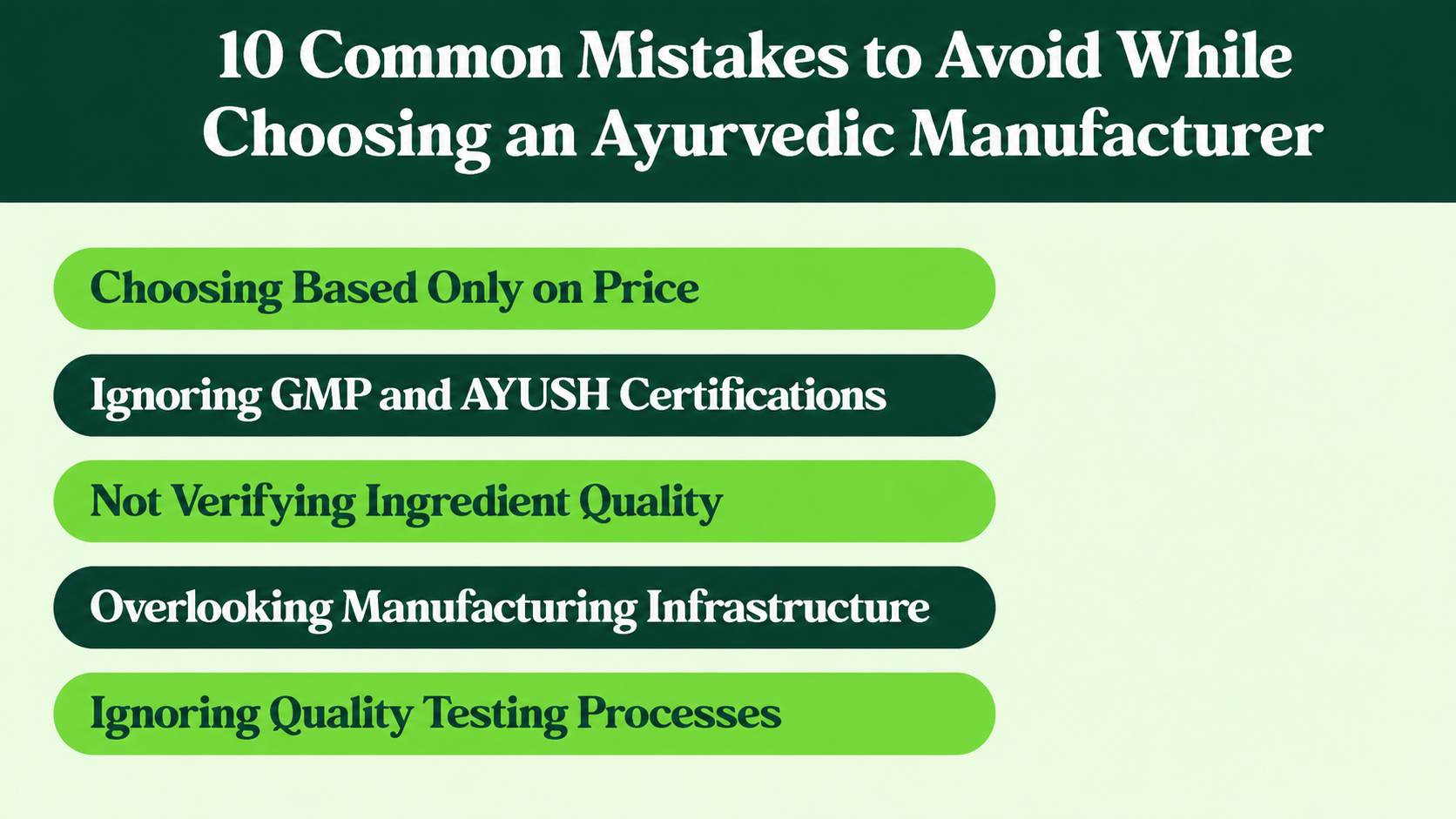
10 Common Mistakes to Avoid While Choosing an Ayurvedic Manufacturer
-
Choosing Based Only on Price
The lowest quotation isn’t always the best deal. Extremely low manufacturing costs may indicate compromised raw materials, inadequate quality control, or outdated manufacturing practices.
Avoid it by comparing manufacturers based on certifications, quality systems, production capabilities, and long-term value, not just cost.
-
Ignoring GMP and AYUSH Certifications
One of the biggest mistakes businesses make is overlooking regulatory certifications.
A reliable Ayurvedic manufacturer should operate under GMP (Good Manufacturing Practices) and comply with AYUSH guidelines. These certifications indicate standardized manufacturing processes, quality control, and regulatory compliance.
Avoid it by verifying certifications before finalizing your manufacturing partner.
-
Not Verifying Ingredient Quality
The effectiveness of an Ayurvedic product depends largely on the quality of its herbs and raw materials.
Manufacturers that don’t maintain strict sourcing standards may produce inconsistent products, undermining customer trust.
Avoid it by asking about ingredient sourcing, raw material testing, purity standards, and quality verification procedures.
-
Overlooking Manufacturing Infrastructure
Modern manufacturing infrastructure directly impacts product consistency and production efficiency.
Evaluate whether the manufacturer has:
- Advanced production equipment
- Dedicated manufacturing units
- In-house quality testing facility
- Hygienic production facilities
- Sufficient capacity for bulk manufacturing
Avoid it by reviewing the manufacturer’s infrastructure before entering a long-term partnership.
-
Ignoring Quality Testing Processes
Quality inspection shouldn’t happen only after production; it should occur throughout the manufacturing cycle.
Reliable manufacturers typically conduct:
- Raw material testing
- In-process quality checks
- Microbial testing
- Stability testing
- Finished product inspection
Avoid it by requesting details about the company’s quality assurance process and batch testing procedures.
-
Not Evaluating Customization Capabilities
Every brand has unique product requirements. Some manufacturers only produce standard formulations with limited flexibility.
If you’re launching a new brand, customization is often essential for market differentiation.
Avoid it by choosing a manufacturer that offers custom formulations, private labeling, and packaging customization.
-
Ignoring Production Capacity and Delivery Timelines
Manufacturers with limited production capacity may struggle to fulfill growing order volumes, causing delays and supply disruptions.
Avoid it by discussing monthly production capacity, lead times, inventory management, and scalability before signing an agreement.
9. Not Reviewing Industry Experience
Experience often reflects a manufacturer’s ability to handle formulation challenges, regulatory requirements, and large-scale production.
An experienced manufacturer is generally better equipped to maintain quality consistency across batches.
Avoid it by reviewing their manufacturing experience, product portfolio, and expertise in Ayurvedic formulations.
9. Failing to Verify Transparency and Documentation
Reliable manufacturers maintain complete documentation for every batch.
Essential documents may include:
- Certificates of Analysis (COA)
- Batch manufacturing records
- Quality testing reports
- Regulatory certifications
Avoid it by working only with manufacturers that provide transparent documentation and clear quality records.
10. Ignoring Post-Manufacturing Support
Manufacturing doesn’t end when production is complete.
Growing brands often require ongoing assistance with packaging, documentation, regulatory guidance, and future product development.
Avoid it by selecting a manufacturer that provides dedicated B2B support beyond production.
Why Startups and New Brands Choose Aveda Ayur
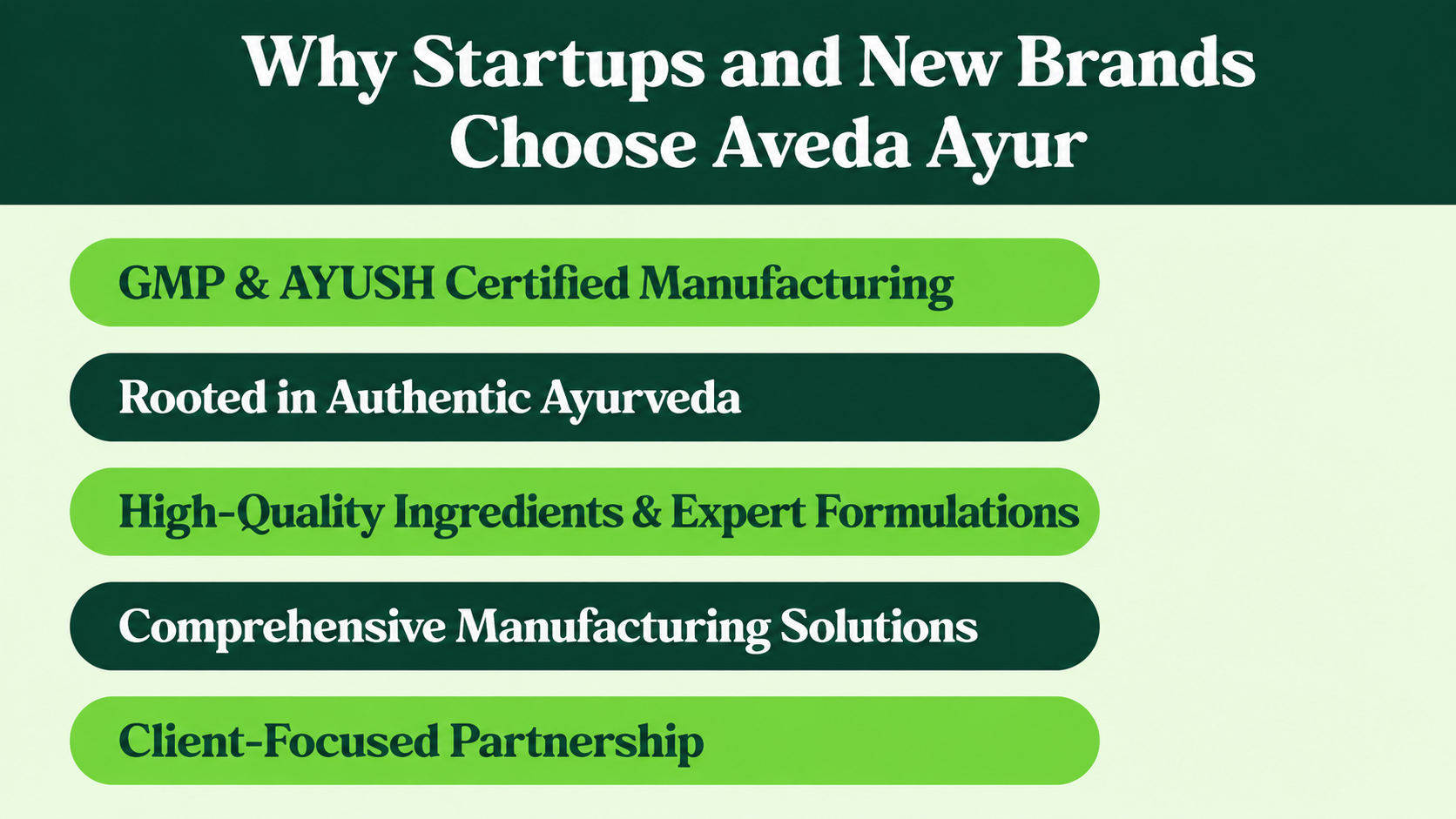
Choosing the right manufacturing partner is about more than production—it requires a company committed to quality, compliance, and long-term collaboration. Aveda Ayur reflects many of the qualities businesses should look for when evaluating an Ayurvedic manufacturing partner.
GMP & AYUSH Certified Manufacturing
Aveda Ayur operates with GMP and AYUSH-certified manufacturing standards, helping businesses manufacture products that align with recognized quality and regulatory requirements.
Rooted in Authentic Ayurveda
The company’s approach combines modern manufacturing with the principles found in classical Ayurvedic texts, including Charaka Samhita, Sushruta Samhita, Ashtanga Hridayam, and Bhav Prakash Nighantu, while applying contemporary production practices.
High-Quality Ingredients & Expert Formulations
Aveda Ayur focuses on carefully selected herbal ingredients, expert-developed formulations, and rigorous quality checks to help ensure product consistency and effectiveness.
Comprehensive Manufacturing Solutions
For startups and emerging wellness brands, Aveda Ayur offers:
- Private label manufacturing
- Third-party manufacturing
- Custom formulation development
This enables businesses to launch products with greater flexibility while maintaining quality standards.
Client-Focused Partnership
Beyond manufacturing, the company emphasizes personalized support, transparent communication, and collaborative product development to help businesses scale with confidence.
Conclusion
Selecting an Ayurvedic manufacturer is one of the most important decisions for any wellness brand. Rather than focusing solely on pricing, evaluate certifications, manufacturing infrastructure, ingredient quality, testing processes, customization capabilities, production capacity, and post-manufacturing support.
A structured evaluation helps minimize business risks, maintain product quality, and build long-term customer trust. For startups and new brands entering the Ayurvedic market, partnering with a manufacturer that combines regulatory compliance, quality assurance, and flexible manufacturing services can create a stronger foundation for sustainable growth.
FAQs
- What should I check before choosing an Ayurvedic manufacturer?
Verify GMP and AYUSH certifications, manufacturing infrastructure, ingredient sourcing, quality testing processes, production capacity, customization options, and documentation.
- Why are GMP and AYUSH certifications important?
They indicate that the manufacturer follows recognized manufacturing and quality standards for Ayurvedic products, supporting regulatory compliance and product consistency.
- Can startups work with Ayurvedic manufacturers?
Yes. Many manufacturers offer private label, third-party manufacturing, and custom formulation services designed specifically for startups and new wellness brands.
- Why is customization important in Ayurvedic manufacturing?
Customization allows businesses to develop unique formulations, packaging, and branding that differentiate their products in a competitive market.
- How do I identify a reliable Ayurvedic manufacturing partner?
Look for certified facilities, transparent documentation, robust quality control systems, modern infrastructure, scalable production capabilities, and responsive B2B support.