


Global demand for Ayurvedic products has grown as consumers seek traditional wellness solutions. However, exporting these products involves far more than manufacturing and shipping. Every destination market has its own regulatory framework, documentation requirements, labeling standards, and quality expectations. Understanding these challenges helps exporters prepare for international trade while giving global buyers confidence in selecting reliable suppliers.
What Are the Biggest Challenges in Exporting Ayurvedic Products?
The biggest challenges in exporting Ayurvedic products include complying with different country-specific regulations, meeting quality standards, preparing accurate export documentation, following labeling requirements, managing ingredient compliance, maintaining product consistency, navigating logistics, and ensuring marketing claims align with local regulations.
Why Exporting Ayurvedic Products Is More Complex Than Domestic Sales
Unlike domestic distribution, international trade requires exporters to comply with the importing country’s legal and regulatory requirements. Depending on the destination, an Ayurvedic product may be classified as a dietary supplement, herbal product, cosmetic, food, or traditional medicine. This classification influences the approval process, labeling, documentation, and import conditions.
As regulations differ across global markets, exporters must adapt their products and documentation to meet country-specific requirements before shipment.
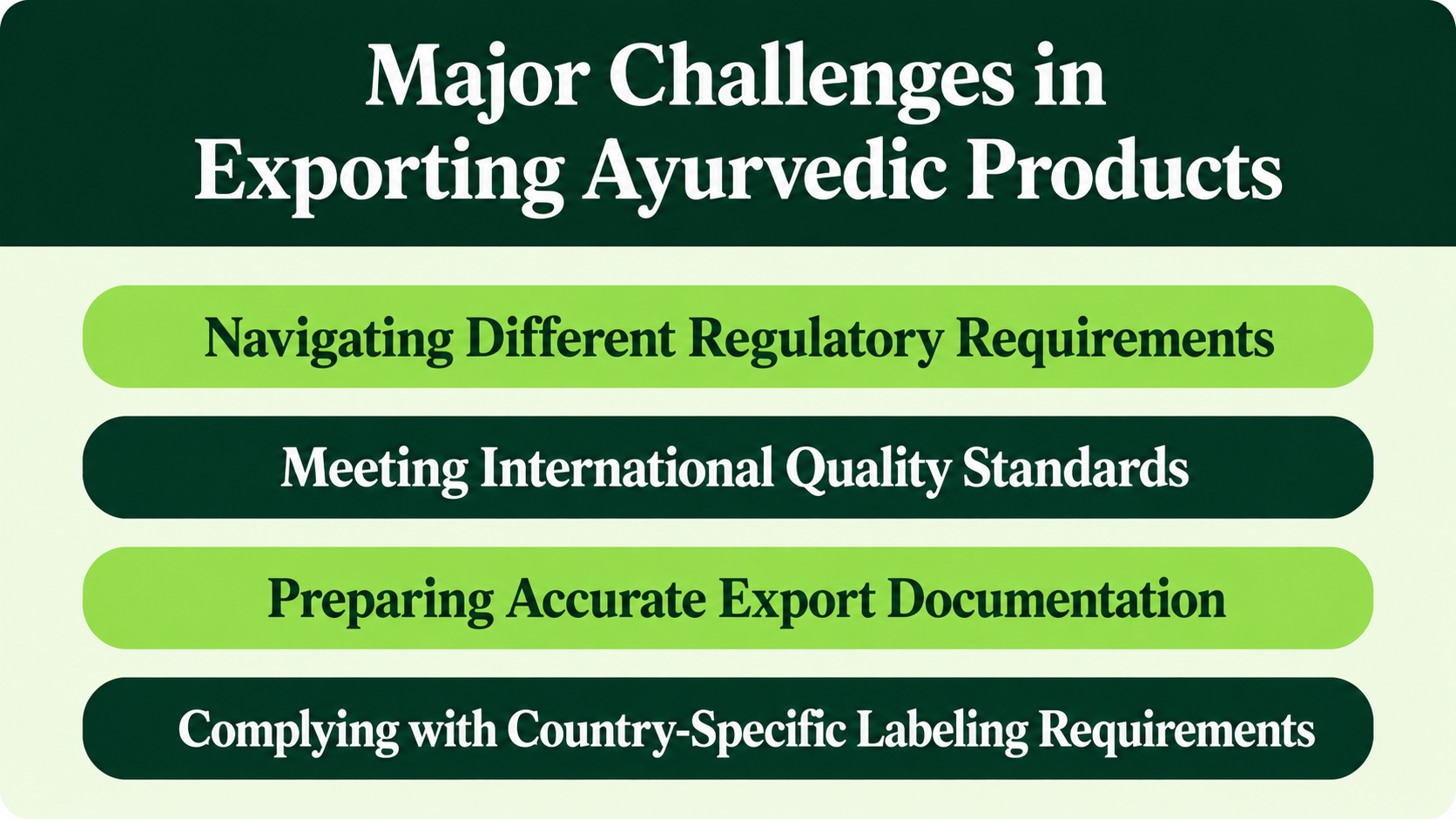
Major Challenges in Exporting Ayurvedic Products
-
Navigating Different Regulatory Requirements
One of the most significant export challenges is the lack of a universal regulatory framework for Ayurvedic products. Countries have different authorities, registration procedures, and compliance requirements.
Exporters should evaluate:
- Product classification in the destination market
- Import registration requirements
- Permitted ingredients
- Required licenses or approvals
- Applicable quality standards
Understanding these requirements early can help reduce delays during product registration and customs clearance.
-
Meeting International Quality Standards
Global buyers increasingly prioritize manufacturers that demonstrate consistent quality practices. While quality expectations vary by market, exporters should maintain robust manufacturing and quality management systems.
Important areas include:
- Good Manufacturing Practices (GMP)
- Batch-to-batch consistency
- Raw material traceability
- Standardized manufacturing processes
- Product testing and quality records
Well-maintained quality documentation can also support buyer confidence during supplier evaluation.
-
Preparing Accurate Export Documentation
Incomplete or inaccurate paperwork is a common reason for shipment delays. Export requirements vary by country and product category, making documentation an essential part of the export process.
Common export documents may include:
- Commercial invoice
- Packing list
- Certificate of Analysis (CoA)
- Certificate of Origin
- Product specifications
- Manufacturing license
- Shipping documents
- Any additional documents required by the importing country
Keeping documentation organized helps streamline customs procedures and supports regulatory compliance.
-
Complying with Country-Specific Labeling Requirements
Product labels must often meet the legal requirements of the destination market. Requirements can differ significantly between countries regarding language, ingredient disclosure, and mandatory information.
Labels may need to include:
- Product name
- Ingredient list
- Batch number
- Manufacturing and expiry dates
- Storage instructions
- Country of origin
- Manufacturer details
- Required warnings or statements
Reviewing labeling requirements before production can help prevent relabeling or shipment delays.
-
Managing Ingredient Compliance
Not every ingredient permitted in one country is automatically accepted in another. Certain botanicals, formulations, or ingredient limits may be subject to additional review or restrictions depending on local regulations.
Before exporting, businesses should verify:
- Ingredient acceptance
- Applicable limits or restrictions
- Import regulations
- Product classification
- Required supporting documentation
Regularly monitoring regulatory updates helps exporters remain prepared for changing requirements.
-
Maintaining Product Consistency Across Shipments
International buyers expect consistency in every shipment. Variations in raw materials, manufacturing processes, or packaging can affect buyer confidence and long-term business relationships.
Exporters should focus on:
- Reliable sourcing practices
- Consistent manufacturing processes
- Standardized quality checks
- Stable packaging
- Batch traceability
These practices support product consistency throughout the supply chain.
-
Handling Logistics and Supply Chain Challenges
Exporting Ayurvedic products involves coordinating manufacturing, packaging, transportation, customs clearance, and international delivery.
Common logistics considerations include:
- Protective packaging
- Moisture and storage conditions
- Shipping timelines
- Customs documentation
- Freight coordination
- Inventory planning
Efficient logistics planning helps minimize disruptions and supports timely deliveries.
-
Ensuring Marketing Claims Meet Local Regulations
Marketing claims that are acceptable in one country may not comply with another country’s regulations. Product labels, promotional materials, and digital content should align with the applicable legal framework of the target market.
Exporters should review:
- Product descriptions
- Label statements
- Promotional content
- Packaging claims
- Website information
Careful review helps reduce compliance risks when entering international markets.
-
Building Trust with Global Buyers
Beyond regulatory compliance, international buyers often evaluate suppliers based on their operational capabilities and transparency.
Buyers commonly look for:
- Export experience
- Manufacturing capabilities
- Quality management systems
- Documentation readiness
- Reliable communication
- Packaging options
- Private label capabilities
- Consistent production capacity
Demonstrating these strengths can support long-term business partnerships.
How Exporters Can Prepare for Global Markets 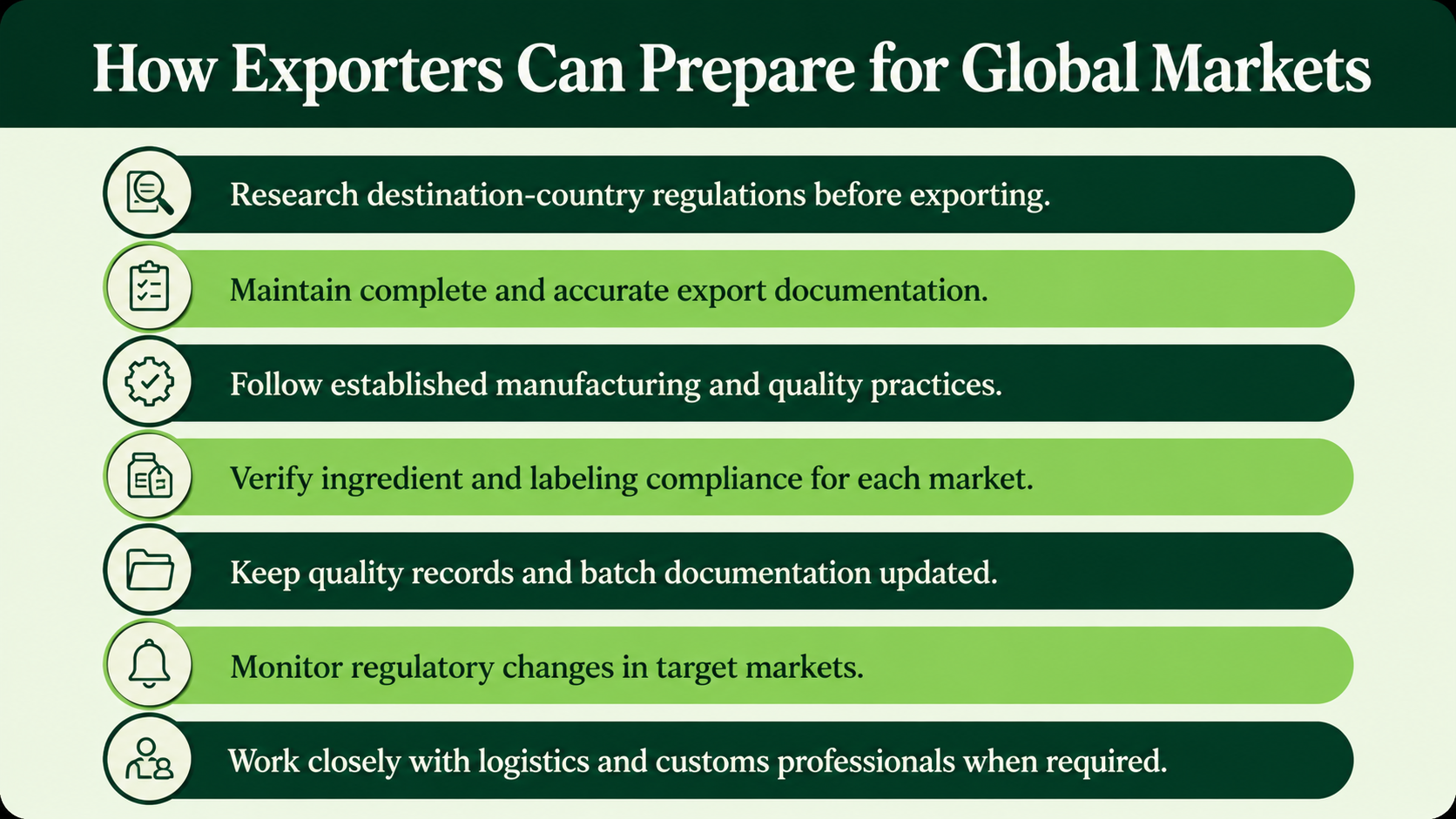
Although export requirements vary across countries, businesses can strengthen their readiness by following a structured approach.
Best practices include:
- Research destination-country regulations before exporting.
- Maintain complete and accurate export documentation.
- Follow established manufacturing and quality practices.
- Verify ingredient and labeling compliance for each market.
- Keep quality records and batch documentation updated.
- Monitor regulatory changes in target markets.
- Work closely with logistics and customs professionals when required.
Preparing in advance can help exporters navigate international requirements more efficiently.
Choosing an Ayurvedic Export Partner
For global buyers, selecting the right exporter involves more than comparing prices. A reliable export partner should demonstrate manufacturing expertise, documentation readiness, and an understanding of international market requirements.
When evaluating an Ayurvedic exporter, consider:
- Experience in international exports
- Manufacturing infrastructure
- Quality management practices
- Documentation support
- Packaging and private labeling capabilities
- Batch traceability
- Communication and responsiveness
- Ability to meet buyer specifications
A transparent and well-prepared exporter is often better positioned to support long-term international business relationships.
Conclusion
Exporting Ayurvedic products presents opportunities in global markets, but success depends on careful preparation rather than manufacturing alone. Businesses must navigate varying regulations, maintain consistent quality, prepare accurate documentation, comply with labeling requirements, and understand destination-specific expectations.
For global buyers, working with an experienced Ayurvedic exporter that prioritizes quality systems, documentation, and regulatory awareness can contribute to a smoother international sourcing process.
FAQs
- What are the biggest challenges in exporting Ayurvedic products?
Major challenges include regulatory compliance, product documentation, quality standards, labeling requirements, ingredient compliance, logistics, and adapting to country-specific import regulations.
- What documents are commonly required for exporting Ayurvedic products?
Requirements vary by destination, but exporters commonly prepare documents such as a Commercial Invoice, Packing List, Certificate of Analysis (CoA), Certificate of Origin, shipping documents, and other records required by the importing country.
- Why do Ayurvedic products face different regulations in different countries?
Countries classify Ayurvedic products differently—as dietary supplements, herbal products, cosmetics, foods, or traditional medicines—which affects registration, labeling, and import requirements.
- Why is labeling important for Ayurvedic exports?
Labels help meet country-specific legal requirements by providing essential product information, ingredient details, batch information, storage instructions, and other mandatory declarations.
- What should global buyers consider when choosing an Ayurvedic exporter?
Global buyers should evaluate the exporter’s manufacturing capabilities, quality management practices, documentation support, export experience, packaging options, communication, and ability to meet destination-market requirements.