

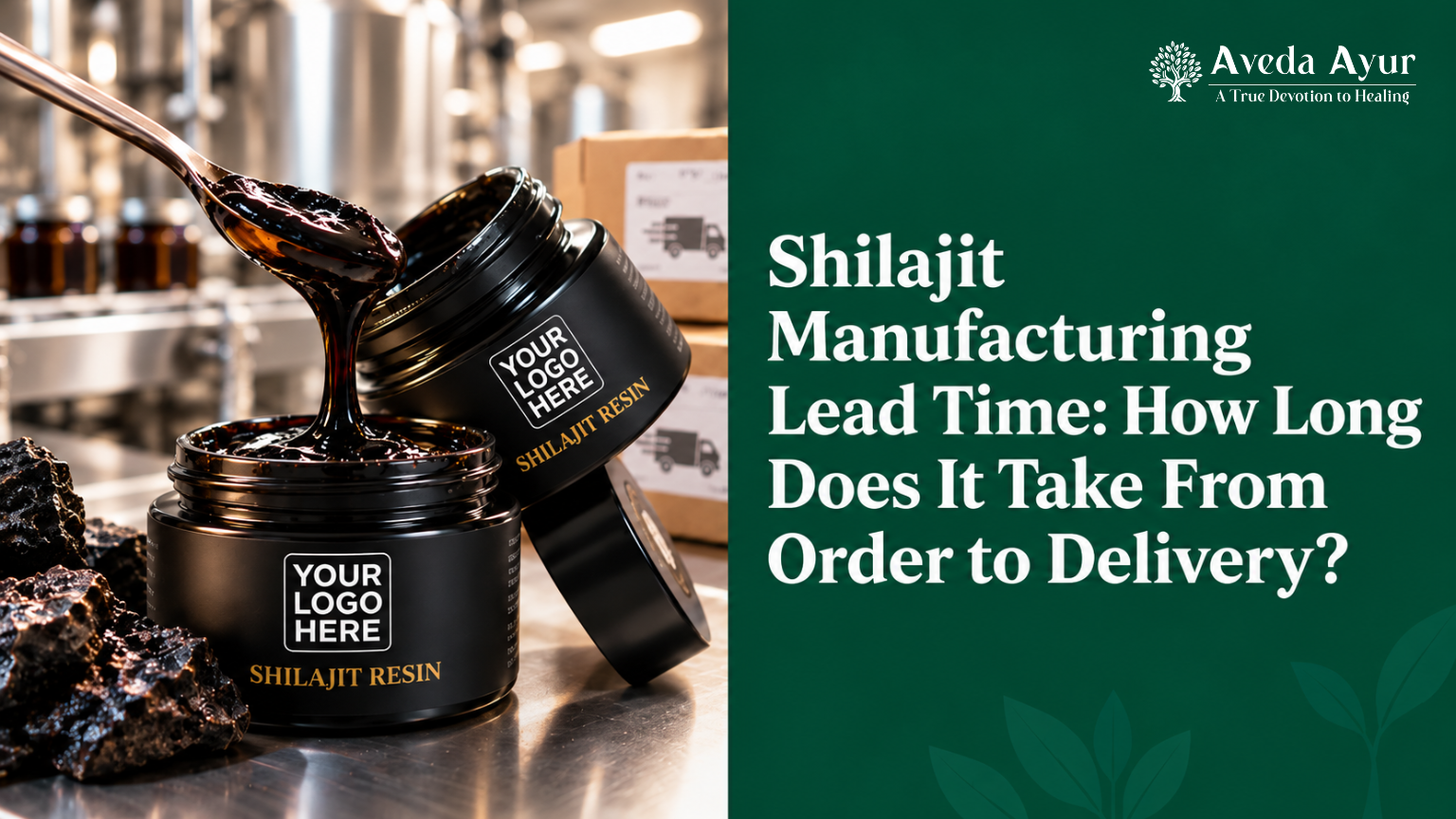
Shilajit manufacturing lead time is determined by the availability of qualified raw material, production requirements, batch-release procedures, packaging readiness, and delivery arrangements. For B2B buyers, the critical distinction is between production completion and order fulfillment: a batch may be manufactured but not yet cleared for dispatch. An accurate delivery estimate should therefore account for material approval, processing, quality review, packaging, and transit rather than production time alone.
How Long Does Shilajit Manufacturing Take?
There is no single lead time applicable to every shilajit order. A manufacturer supplying an available product in standard packaging may follow a different schedule from one processing a new batch or developing a customized private-label product.
The most reliable estimate comes from the manufacturer’s documented production schedule and the specific requirements of the purchase order. Buyers should establish four milestones: production completion, quality release, dispatch, and estimated delivery.
The following distinctions help prevent inaccurate procurement estimates:
- Ready-stock orders: Depend on whether the available product meets the buyer’s specifications and can be released for supply.
- New bulk production: Requires consideration of material availability, production scheduling, processing, and applicable batch-release requirements.
- Private-label orders: May additionally require sample approval, label authorization, packaging procurement, and finished-product packing.
A manufacturer should provide a timeframe for the actual order configuration rather than applying one standard estimate to every product and quantity.
What Determines the Shilajit Manufacturing Timeline?
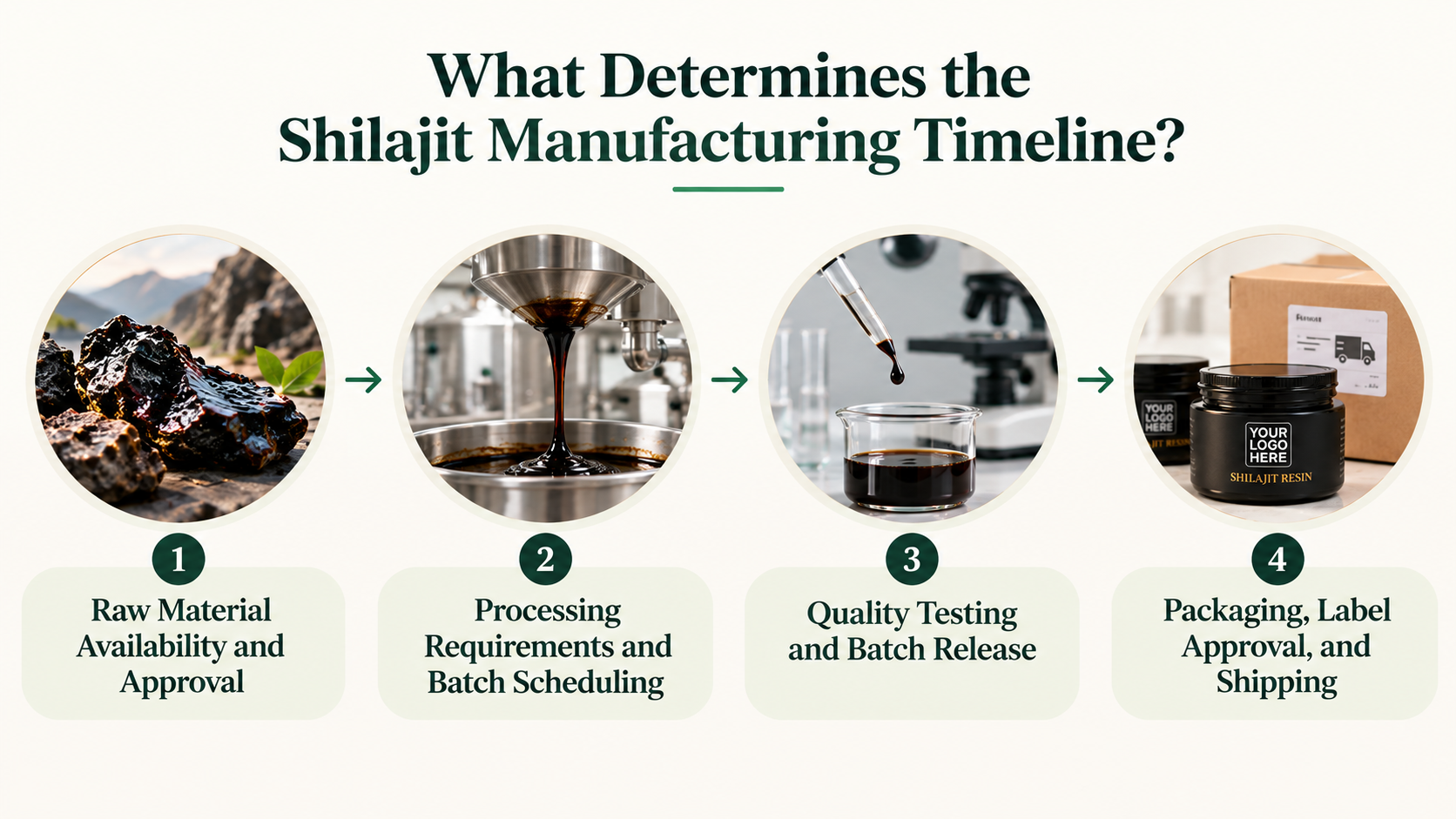
Shilajit manufacturing lead time depends on four key factors: raw material approval, batch scheduling, quality release, and packaging and shipping readiness.
-
Raw Material Availability and Approval
Production can begin when suitable shilajit material is available and meets the required specifications. If new material must be sourced or undergo incoming inspection, identity verification, and quality checks, the manufacturing timeline may extend.
-
Processing Requirements and Batch Scheduling
Shilajit resin, powder, and capsules may require different processing and handling procedures. Batch size, equipment availability, production capacity, and existing orders determine when production can start and finish. Buyers should confirm the planned production start and completion dates with the manufacturer.
-
Quality Testing and Batch Release
Manufacturing completion does not automatically mean a batch is ready for dispatch. Applicable checks may cover identity, composition, specified contaminants, and compliance with finished-product specifications. Laboratory turnaround, documentation review, or investigation of failed results can delay batch release. Buyers should confirm the required tests, available reports, and release procedure.
-
Packaging, Label Approval, and Shipping
Custom labels, printed cartons, and branded containers can extend lead time if artwork approval or packaging procurement remains pending. After quality release and packaging, delivery time depends on the destination, shipping method, and required documentation. International orders may also involve export paperwork and import clearance.
Why Can Private-Label Shilajit Orders Take Longer?
Private-label manufacturing introduces approval and coordination steps that may not apply to a standard product supplied in existing packaging.
The main scheduling dependencies are:
- Product specifications: The buyer and manufacturer must agree on the product format and applicable quality requirements.
- Sample approval: Where samples are required, production may depend on the buyer’s acceptance.
- Artwork approval: Labels and packaging designs must be finalized before relevant materials can be printed or ordered.
- Packaging procurement: Custom components may have separate supplier lead times.
- Finished-product release: The completed batch must meet the applicable specifications and undergo the required review before dispatch.
The purchase order should specify when the lead-time commitment begins. Depending on the agreement, this may be after order acceptance, payment, final specifications, or approval of samples and artwork.
This starting point matters because a quoted production period may exclude time spent waiting for buyer approvals or externally sourced packaging.
How Should B2B Buyers Verify a Manufacturer’s Delivery Commitment?
Instead of asking only, “How many days will the order take?” buyers should request a milestone-based schedule.
| Milestone | What to confirm |
| Order acceptance | Final specifications, quantity, payment terms, and lead-time start date |
| Material approval | Availability and status of required incoming checks |
| Production completion | Planned batch size and expected completion date |
| Quality release | Required tests, supporting records, and release authorization |
| Dispatch | Packaging readiness, shipping method, and dispatch date |
| Delivery | Estimated arrival date and responsibility for customs clearance, where applicable |
Buyers should also verify that the manufacturer’s documented quality system and regulatory authorizations are appropriate for the product and intended market.
In India, the FSSAI’s health supplement and nutraceutical regulations provide a regulatory reference for products falling within those categories. The applicable classification and requirements should be confirmed for the specific product; a general reference to supplements does not establish that every shilajit product falls into the same category.
Conclusion
Shilajit manufacturing lead time should be calculated from the actual order specifications, material status, production plan, quality-release requirements, packaging readiness, and delivery destination. For reliable B2B planning, obtain a written schedule with defined milestones and clarify which activities are included in the quoted timeframe. This provides a more defensible basis for procurement and launch planning than a generic delivery estimate.
FAQs
- How many days does bulk shilajit manufacturing take?
The duration depends on approved material availability, batch size, processing requirements, production scheduling, quality release, and packaging. Request an estimate based on the manufacturer’s actual production plan for your order.
- Does quality testing affect shilajit delivery time?
Yes, it can. Sampling, laboratory turnaround, documentation review, and batch-release decisions may affect the dispatch date. The timeline depends on the tests required and the manufacturer’s quality procedures.
- Is private-label shilajit manufacturing slower than bulk supply?
It can be, particularly when customized packaging, sample approval, or new production is required. The difference depends on whether the manufacturer already has the specified product and packaging available.
- What is the difference between manufacturing lead time and delivery time?
Manufacturing lead time covers the agreed production and preparation period. Total order-to-delivery time also includes any remaining quality-release and dispatch activities not included in that period, plus shipping transit and applicable customs clearance.