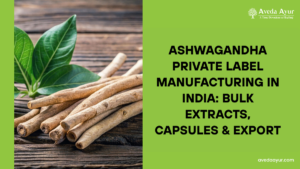


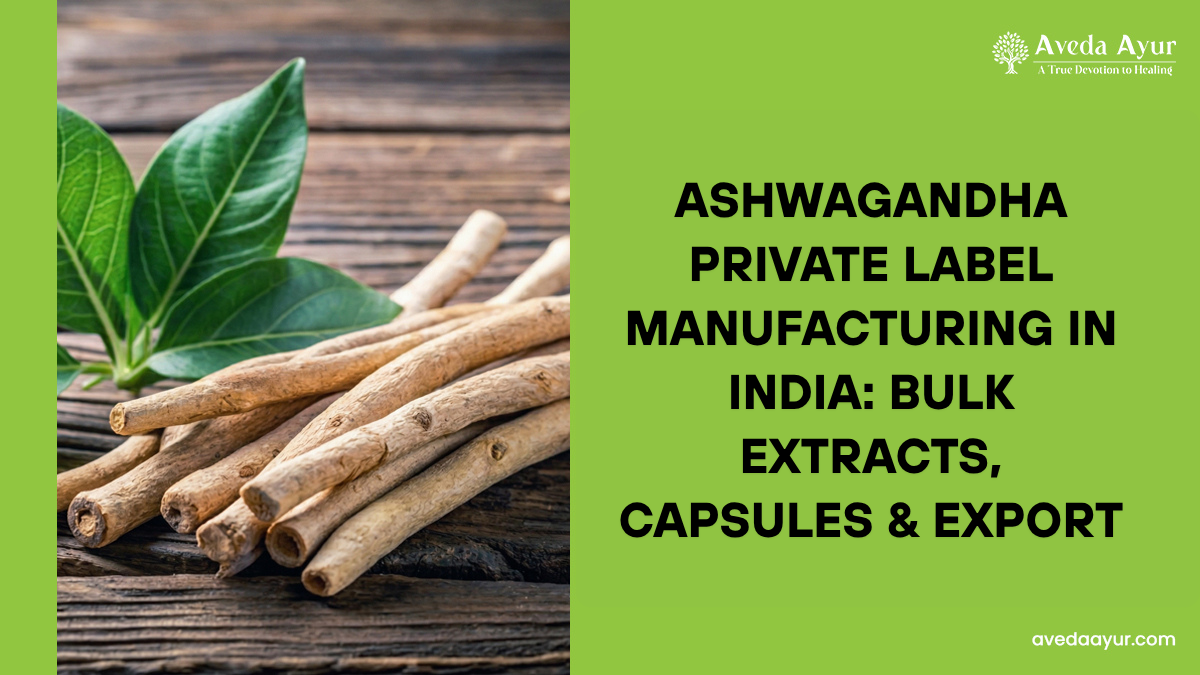
Ashwagandha private label manufacturing in India enables supplement brands, importers, and distributors to source bulk Ashwagandha extracts and finished products under their own brand. India is a relevant sourcing market for Withania somnifera, the botanical name for Ashwagandha, which has a long history of use in Ayurveda and is now widely used in dietary supplements.
For international buyers, choosing the right Ashwagandha manufacturer in India involves more than comparing prices. Product specifications, extract standardization, quality testing, batch consistency, packaging, documentation, and destination-market requirements all need to be evaluated before placing a bulk or private-label order.
Why Source Ashwagandha from India?
India offers an established ecosystem for sourcing and manufacturing botanical products, making it a practical location for businesses looking for Ashwagandha extract manufacturers and private label supplement suppliers.
For B2B buyers, sourcing from an Indian manufacturer can provide:
- Access to Ashwagandha raw materials and extracts
- Bulk supply for international distribution
- Private-label manufacturing for branded products
- Customized packaging and labeling
- Manufacturing and quality documentation
- Export support for international orders
However, buyers should evaluate each manufacturer’s actual capabilities rather than assuming that all suppliers offer the same quality, standardization, or export support.
Ashwagandha Private Label Manufacturing: What Can You Source?
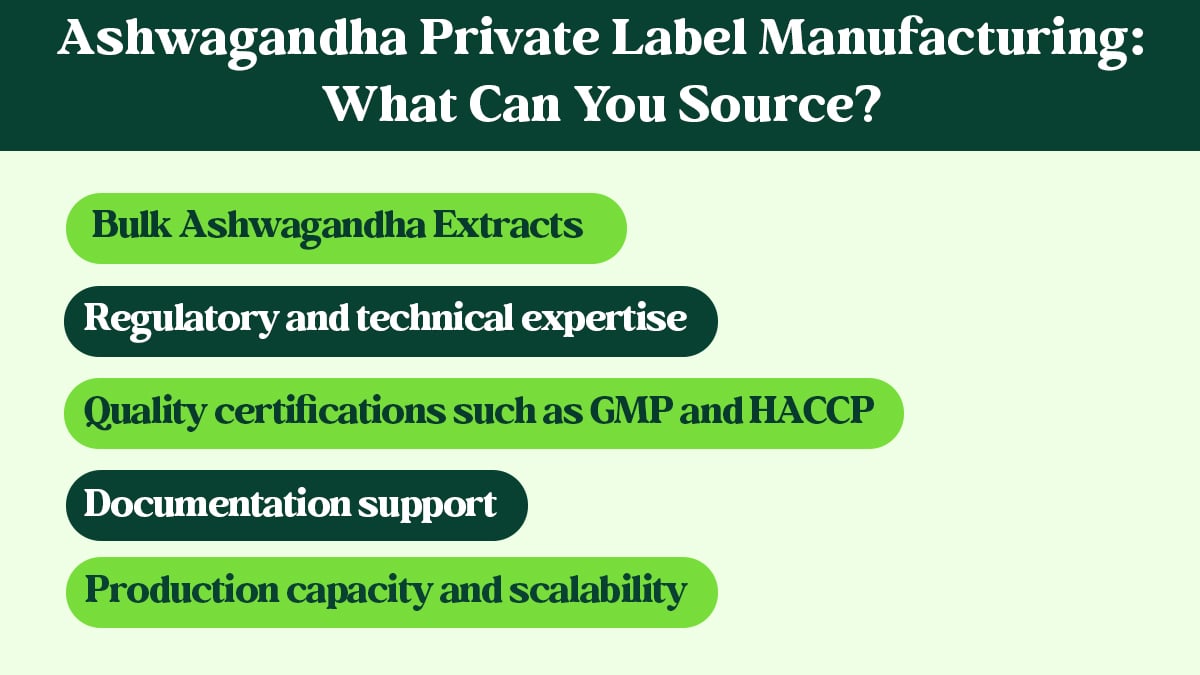
Bulk Ashwagandha Extracts
Bulk Ashwagandha extract is suitable for brands and supplement manufacturers seeking to formulate or package products to their own specifications.
Before purchasing, define the technical specifications, including:
- Botanical name: Withania somnifera
- Plant part used
- Extract specifications
- Extraction method or extract ratio, where applicable
- Withanolide standardization, where required
- Physical and chemical specifications
- Microbiological requirements
- Contaminant and residue testing
- Packaging requirements
- Batch-specific Certificate of Analysis (COA)
Withanolides are a group of bioactive compounds naturally found in Ashwagandha. However, Ashwagandha products used in research can differ substantially in preparation and composition, so buyers should compare products based on defined specifications rather than treating all extracts as equivalent.
Private Label Ashwagandha Capsules
Brands that want a ready-to-market product can work with a private-label manufacturer to produce finished Ashwagandha capsules.
Depending on the manufacturer’s capabilities, private label services may include the following:
- Product specification and formulation support
- Capsule manufacturing
- Filling and packaging
- Customized labels
- Batch coding
- Finished-product testing
- Documentation for commercial supply
The exact formulation, permitted ingredients, claims, and labeling requirements should be established according to the intended destination market.
Custom Packaging and Branding
Private-label manufacturing can also include customized packaging aligned with the buyer’s brand. Buyers should finalize:
- Packaging format and material
- Label artwork
- Product information
- Batch and expiry details
- Storage instructions
- Shipping cartons
- Destination-market labeling requirements
How Does Ashwagandha Private Label Manufacturing Work?
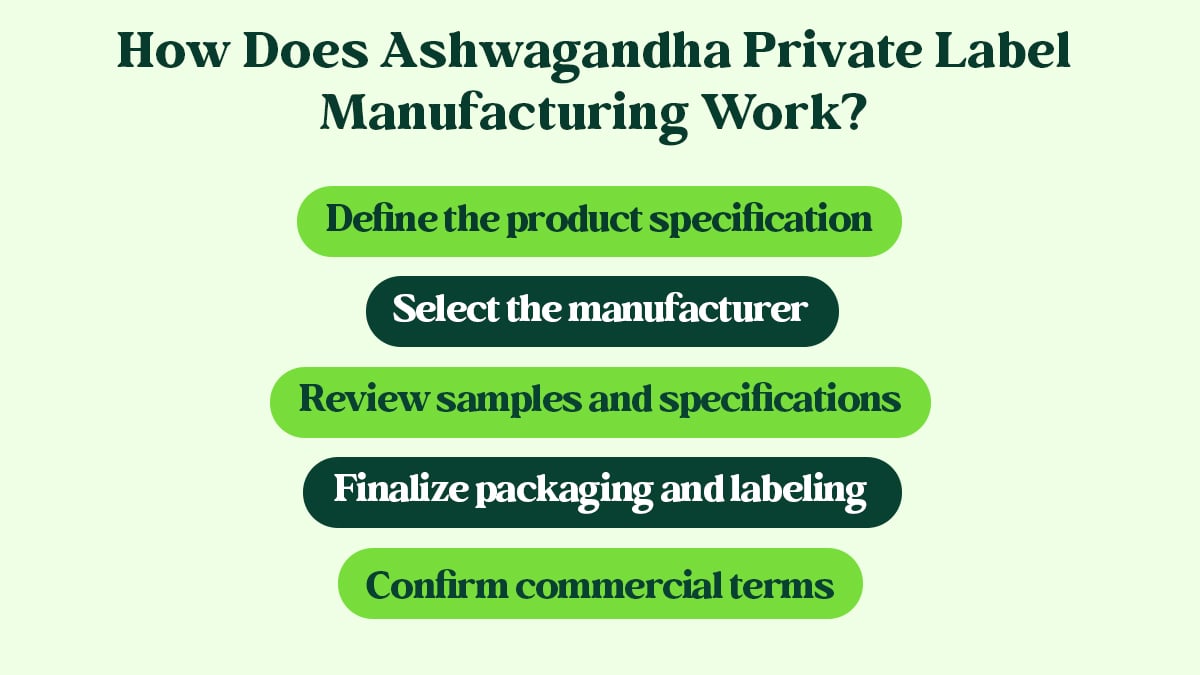
A typical B2B manufacturing process follows these steps:
- Define the product specification: Specify the Ashwagandha material, extract requirements, dosage form, packaging, and target market.
- Select the manufacturer: Assess manufacturing capability, quality systems, documentation, MOQ, capacity, and export experience.
- Review samples and specifications: Request representative samples, product specifications and relevant COAs before commercial approval.
- Finalize packaging and labeling: Approve artwork, packaging materials, product information and market-specific requirements.
- Confirm commercial terms: Finalize MOQ, pricing, payment terms, production timeline and shipping responsibilities.
- Manufacture and test the batch: Production should follow the approved specification, with appropriate quality checks and batch documentation.
- Complete packaging and export: After final approval, the finished goods can be packed and prepared with the documentation required for shipment and the destination market.
Quality Parameters to Check When Buying Ashwagandha in Bulk
A reliable Ashwagandha extract manufacturer in India should be able to provide clear specifications and appropriate quality documentation.
| Quality Parameter | What B2B Buyers Should Verify |
| Botanical identity | Correct Withania somnifera material |
| Plant part | Root or other specified plant material |
| Extract Specification | Defined extraction and concentration parameters |
| Standardization | Declared marker-compound specification where applicable |
| Microbiology | Results against applicable limits |
| Heavy metals | Testing against applicable market requirements |
| Pesticide residues | Compliance with destination-market requirements |
| Batch consistency | Consistent specifications between batches |
| COA | Batch-specific analytical results |
| Traceability | Raw-material and finished-batch records |
The lowest price is not necessarily the lowest sourcing cost. Two Ashwagandha extracts priced per kilogram may not be directly comparable if their plant part, extraction process, concentration, standardization, and testing requirements differ.
Ashwagandha Export from India: What Buyers Should Check
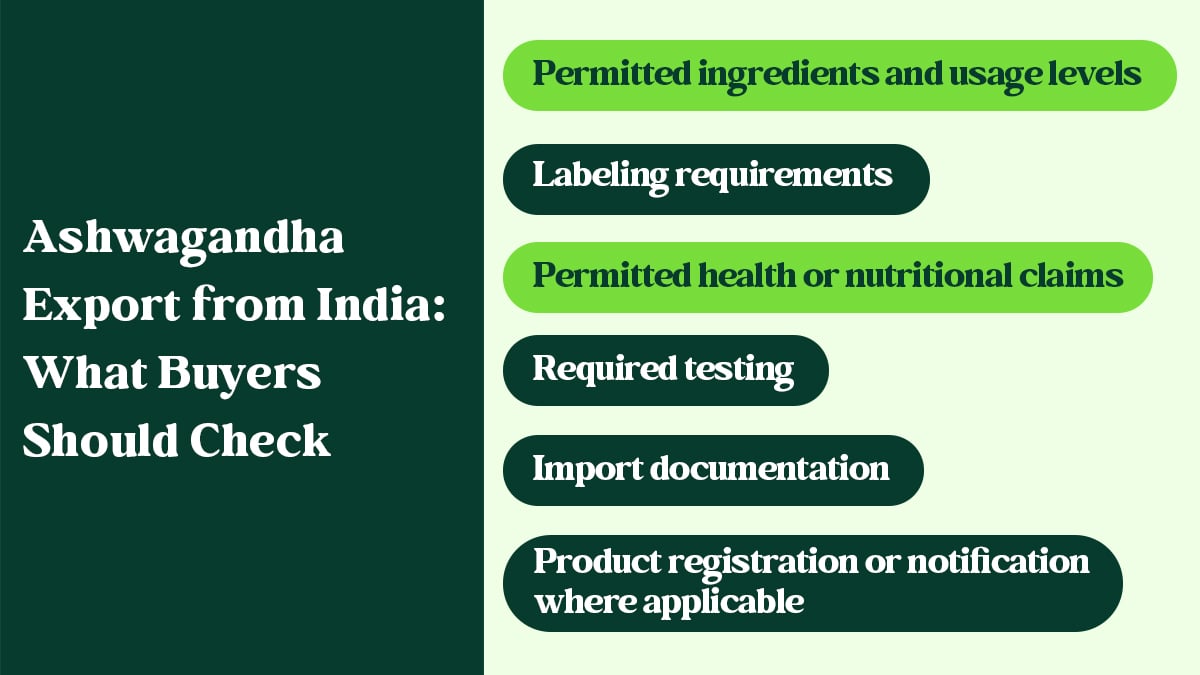
Exporting Ashwagandha products requires attention to both the Indian regulatory framework and the regulations of the destination country.
In India, health supplements and nutraceuticals fall under the Food Safety and Standards Authority of India’s regulatory framework. FSSAI currently lists the Food Safety and Standards (Health Supplements, Nutraceuticals, Food for Special Dietary Use, Food for Special Medical Purposes, Functional Food and Novel Food) Regulations, 2016, as the applicable framework.
International buyers should confirm:
- Product classification in the destination country
- Permitted ingredients and usage levels
- Labeling requirements
- Permitted health or nutritional claims
- Required testing
- Import documentation
- Product registration or notification, where applicable
Requirements vary by market. For example, FSSAI’s product specification system specifically considers product format, serving size, ingredients and proposed claims, while its framework restricts disease-treatment or cure claims for these food categories.
Therefore, export readiness should be evaluated on a market-by-market basis, rather than assuming that compliance in India automatically establishes compliance overseas.
How to Choose an Ashwagandha Private Label Manufacturer in India
Before selecting a supplier, B2B buyers should evaluate five areas:
- Manufacturing Capability: Check whether the manufacturer has suitable facilities, production capacity and experience with herbal or nutraceutical products.
- Raw-Material and Extract Control: Verify botanical identity, plant part, extract specifications, standardization requirements and traceability.
- Quality Assurance: Request relevant specifications, batch COAs and testing documentation. Quality should be demonstrated through documented controls rather than broad claims such as “premium quality.”
- Private Label Capability: Confirm whether the supplier can support the required product format, packaging, labeling, customization and repeat production.
- Export Capability: Ask about experience with international orders, export documentation, packaging requirements and coordination for shipment.
Why Choose Aveda Ayur for Ashwagandha Private Label Manufacturing?
Aveda Ayur provides Ashwagandha private label manufacturing in India for businesses seeking bulk and branded Ashwagandha products for commercial markets.
For B2B buyers, the focus should be on aligning the product with the required specifications, packaging, and target market rather than using a one-size-fits-all product.
Aveda Ayur can support buyers looking for:
- Ashwagandha-based private-label products
- Bulk sourcing requirements
- Finished-product manufacturing
- Customized branding and packaging
- Product documentation
- International order and export support
Buyers should share their target market, product specification, required quantity, packaging requirements, and documentation needs to establish the appropriate manufacturing and supply plan.
Conclusion
Choosing an Ashwagandha private label manufacturer in India starts with defining the product specification, not simply finding the lowest quotation. Verify botanical identity, extract specifications, standardization, testing, batch consistency, documentation, and manufacturing capabilities. For export orders, also confirm the regulatory and labeling requirements of the destination market before production.
FAQs
- What is Ashwagandha private label manufacturing?
Ashwagandha private label manufacturing allows a brand, importer, or distributor to have Ashwagandha products manufactured by a third-party manufacturer and sold under its own brand. Services can include product manufacturing, testing, packaging, labeling and documentation, depending on the manufacturer’s capabilities.
- Can I buy bulk Ashwagandha extract from manufacturers in India?
Yes. Indian manufacturers and ingredient suppliers can provide Ashwagandha extracts in bulk. Buyers should specify the botanical identity, plant part, extract specification, standardization requirements, testing parameters, packaging, and quantity before comparing quotations.
- What should I check when sourcing Ashwagandha extract in bulk?
Check Withania somnifera identity, plant part, extraction specification, marker-compound standardization where applicable, microbiological quality, contaminants, pesticide residues, batch consistency, COA, and traceability. Comparing equivalent specifications is essential before evaluating price.
- Can Indian manufacturers produce private label Ashwagandha capsules for export?
Yes, private-label manufacturers in India can produce finished Ashwagandha capsules for commercial and export markets, subject to their capabilities and the applicable product requirements. Buyers should confirm formulation, packaging, labeling, testing, and destination-market compliance before production.
- What documents should I request from an Ashwagandha manufacturer?
Depending on the product and market, buyers may request a product specification sheet, batch-specific COA, testing reports, ingredient documentation, manufacturing and quality records, packaging information and export documents. Additional documents may be required by the destination country’s regulations.