

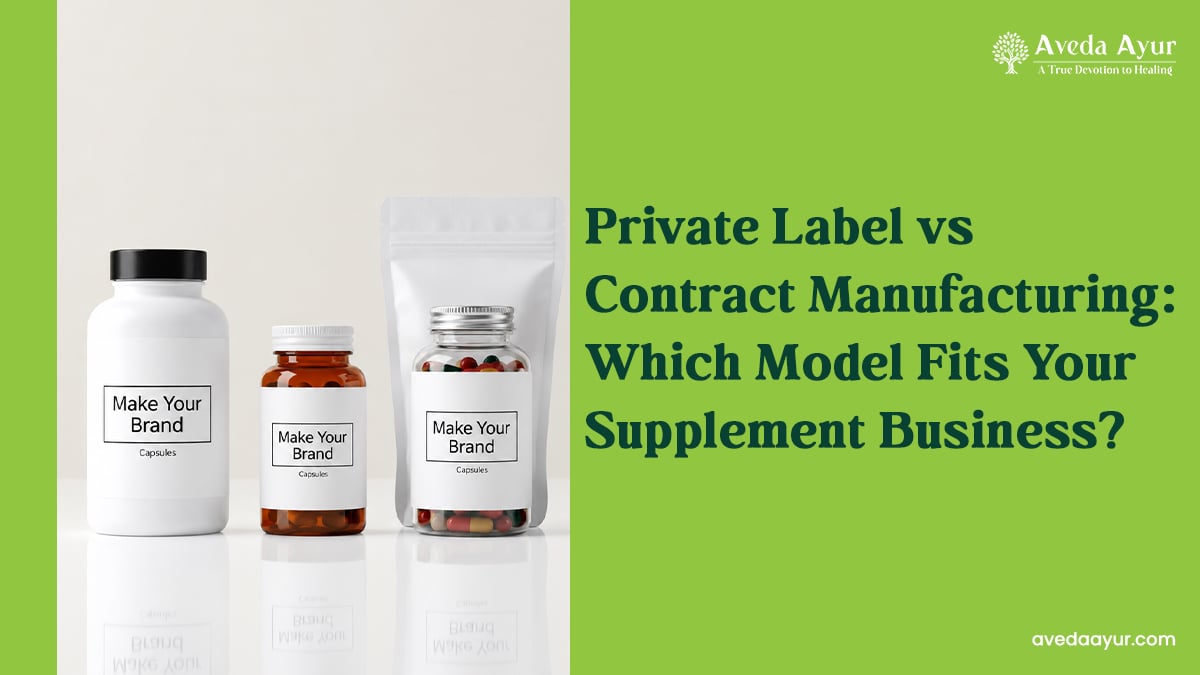
The global supplement market is growing rapidly, creating opportunities for brands to launch innovative products and reach health-conscious consumers worldwide. However, one of the most important decisions entrepreneurs and established businesses face is choosing between private label supplement manufacturing and contract supplement manufacturing.
Both models offer unique advantages, but selecting the right one depends on your business goals, budget, product vision, and speed-to-market requirements.
This guide explains the key differences between private label and contract manufacturing, their benefits, challenges, and how to determine which model best fits your supplement business.
What Is Private Label Supplement Manufacturing?
Private label supplement manufacturing is a business model where manufacturers produce ready-made supplement formulations that brands can sell under their own name and packaging.
The manufacturer has already developed, tested, and produced the formula. Businesses simply customize the label, branding, and packaging before bringing the product to market.
How Private Label Manufacturing Works
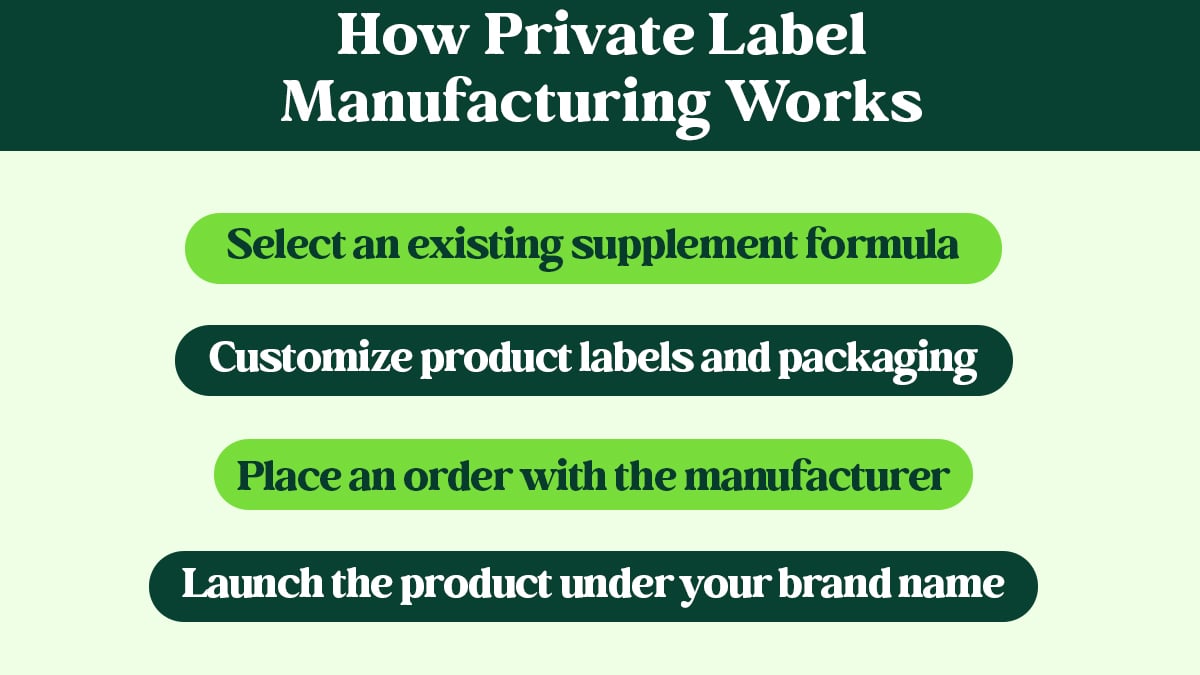
- Select an existing supplement formula.
- Customize product labels and packaging.
- Place an order with the manufacturer.
- Launch the product under your brand name.
Advantages of Private Label Supplement Manufacturing
- Faster Time to Market: Since the formulation already exists, products can be launched within weeks instead of months.
- Lower Initial Investment: There are no research and development costs, making it attractive for startups and emerging brands.
- Reduced Risk: The formulas have often been tested and sold previously, reducing development uncertainties.
- Easier Market Entry: Businesses can quickly build a product portfolio without extensive manufacturing expertise.
Challenges of Private Label Manufacturing
- Limited product customization.
- Similar products may be sold by competing brands.
- Less opportunity for market differentiation.
- Restricted control over ingredient selection and formulation changes.
What Is Contract Supplement Manufacturing?
Contract supplement manufacturing involves partnering with a manufacturer to create a custom supplement product based on your unique requirements.
The manufacturer develops, tests, manufactures, and packages supplements according to your specifications.
How Contract Manufacturing Works
- Develop a custom formula.
- Source ingredients.
- Conduct testing and quality validation.
- Manufacture the product.
- Package and distribute under your brand.
Advantages of Contract Supplement Manufacturing
- Complete Formula Ownership: Brands can create proprietary formulations tailored to specific consumer needs.
- Stronger Market Differentiation: Custom products help businesses stand out in competitive supplement categories.
- Greater Ingredient Flexibility: You can choose ingredient types, dosages, delivery formats, and sourcing preferences.
- Long-Term Brand Value: Unique formulations create stronger brand recognition and customer loyalty.
Challenges of Contract Manufacturing
- Higher development costs.
- Longer production timelines.
- Larger minimum order quantities (MOQs).
- More involvement in product development and compliance processes.
Private Label vs Contract Manufacturing: Side-by-Side Comparison
| Factor | Private Label Supplement Manufacturing | Contract Supplement Manufacturing |
| Time to Market | Fast | Longer |
| Product Customization | Limited | Extensive |
| Initial Investment | Lower | Higher |
| Formula Ownership | No | Yes |
| Market Differentiation | Moderate | High |
| Development Complexity | Low | High |
| Regulatory Involvement | Minimal | Greater |
| Scalability | Good | Excellent |
| Product Innovation | Limited | Unlimited |
Which Model Is Best for Startups?
For most startups, private label supplement manufacturing is often the preferred choice because it allows businesses to:
- Enter the market quickly.
- Test product demand.
- Build brand awareness.
- Minimize upfront investment.
- Generate revenue faster.
Private label manufacturing provides a practical way to validate a business concept before investing in custom formulations.
Private Label May Be Ideal If You:
- Are you launching your first supplement brand?
- Have a limited budget.
- Need products quickly.
- Want to test multiple supplement categories.
Which Model Is Best for Established Brands?
Businesses seeking long-term growth and product differentiation often benefit more from contract supplement manufacturing.
Custom formulations enable brands to create exclusive products that competitors cannot easily replicate.
Contract Manufacturing May Be Ideal If You:
- Want a proprietary supplement formula.
- Need unique ingredient combinations.
- Target specialized health niches.
- Have established sales channels.
- Plan for long-term brand growth.
Key Factors to Consider Before Choosing
- Business Goals
Determine whether your primary objective is rapid market entry or long-term product innovation.
- Budget
Private label solutions typically require lower upfront costs, while contract manufacturing involves formulation, testing, and development expenses.
- Product Differentiation
If standing out in a crowded market is critical, custom formulations may provide a competitive advantage.
- Speed to Market
Brands launching seasonal or trend-driven products often benefit from private label manufacturing.
- Regulatory Compliance
Ensure your manufacturing partner follows Good Manufacturing Practices (GMP), quality testing protocols, and relevant market regulations.
- Future Growth Plans
Consider whether your current manufacturing choice supports future product expansion and scalability.
How to Choose the Right Manufacturing Partner
Regardless of the model you choose, evaluate manufacturers based on:
- GMP-certified production facilities.
- Third-party testing procedures.
- Ingredient sourcing transparency.
- Product development expertise.
- Regulatory compliance support.
- Packaging and labeling capabilities.
- Production capacity.
- Industry reputation and experience.
A reliable manufacturing partner should provide consistent quality, documentation, and support throughout the product lifecycle.
Why Many Brands Start with Private Label and Transition to Contract Manufacturing
Many successful supplement companies begin with private label products to establish market presence and generate revenue.
As the business grows, they often transition to contract manufacturing to develop exclusive formulations that strengthen brand positioning and customer loyalty.
This phased approach allows brands to reduce risk while creating a path toward long-term differentiation.
Conclusion
There is no one-size-fits-all answer when comparing private label supplement manufacturing and contract supplement manufacturing. The right choice depends on your business objectives, budget, timeline, and growth strategy.
If you want a fast, cost-effective way to launch a supplement brand, private label manufacturing offers an efficient starting point. If your goal is to create proprietary products with a strong competitive advantage, contract manufacturing provides the flexibility and customization needed for long-term success.
By understanding the strengths and limitations of each model, supplement brands can make informed decisions that support sustainable growth and market success.
FAQs
- What is the main difference between private label and contract supplement manufacturing?
Private label manufacturing uses pre-developed supplement formulas that are branded under your company name, while contract manufacturing involves creating custom formulations tailored to your specifications.
- Is private label supplement manufacturing cheaper than contract manufacturing?
Yes. Private label manufacturing generally requires lower upfront investment because product development, formulation, and testing have already been completed.
- Can I customize ingredients in private label supplements?
Customization options are usually limited. Significant ingredient modifications often require a contract manufacturing arrangement.
- Which manufacturing model is better for new supplement brands?
Most startups benefit from private label manufacturing because it reduces costs, lowers risk, and allows faster market entry.
- When should a brand choose contract supplement manufacturing?
Brands should consider contract manufacturing when they want proprietary formulations, greater product differentiation, and long-term control over product development.