

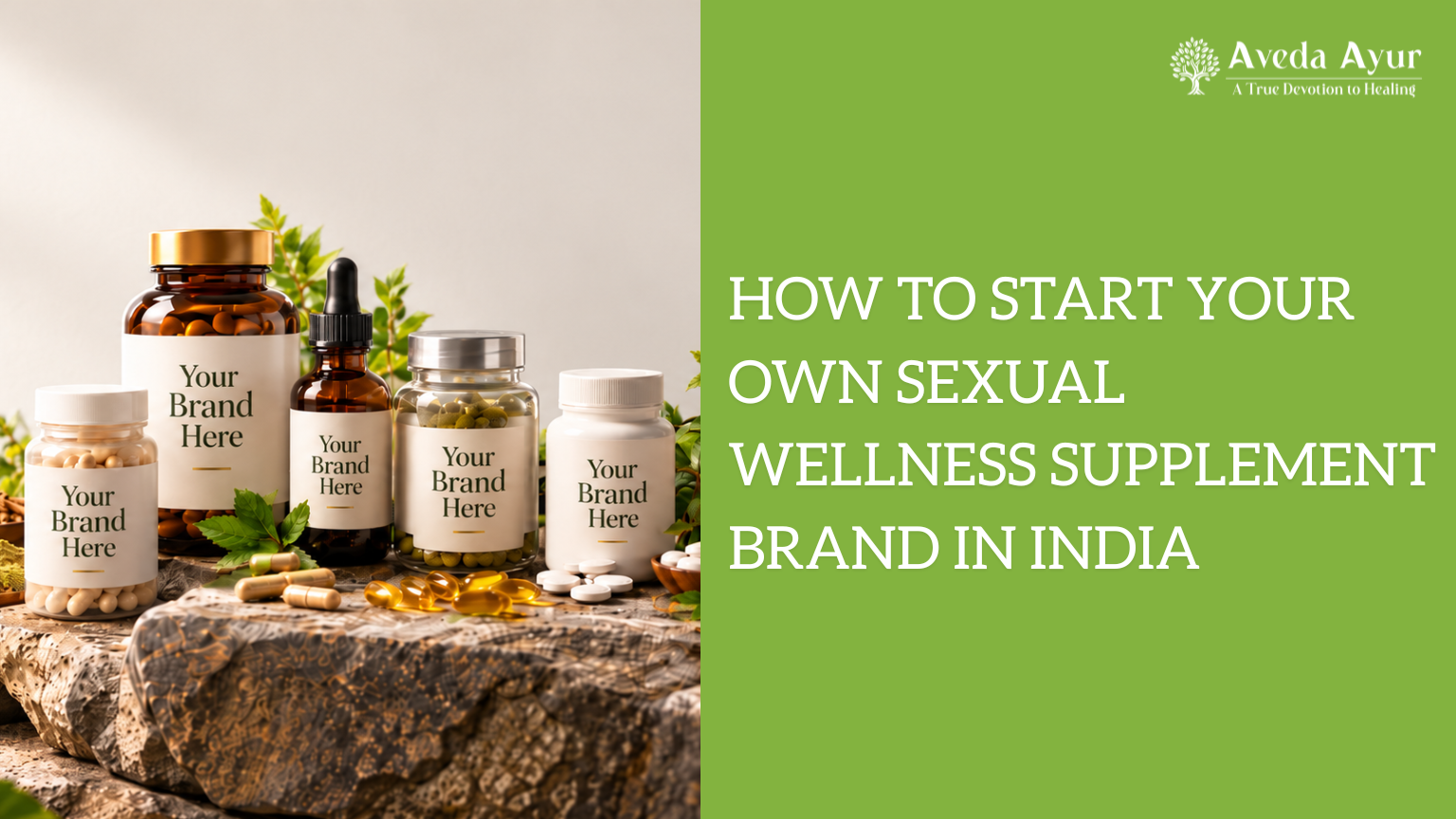
Starting a sexual wellness supplement brand in India requires a commercially viable product concept, a compliant formulation, a reliable manufacturing partner, and a clear route to market. Entrepreneurs can work with established manufacturers instead of investing in their own production facilities.
From identifying market demand to understanding FSSAI requirements and calculating product costs, each decision influences the feasibility of your brand. This guide explains the key steps to launching a sexual wellness supplement business in India.
-
Identify Your Target Market and Product Opportunity
Begin by identifying the audience your brand intends to serve. Potential segments include male sexual wellness, female intimate wellness, and other areas of reproductive or intimate health, depending on the product’s intended use and regulatory classification.
Research competing products available in India through brand websites, e-commerce platforms, and retail channels. Compare their ingredient compositions, dosage formats, pack sizes, pricing, positioning, and customer feedback.
Use these findings to identify a specific market gap, such as better ingredient transparency, a convenient dosage format, or a differentiated product concept. Avoid selecting a product solely because competitors are selling it.
-
Define Your Product Concept and Positioning
Translate your market research into a clear product brief before approaching a manufacturer.
Determine the intended audience, product format, proposed ingredients, serving size, pack size, and target retail price. Capsules, tablets, and powders are potential options, subject to formulation feasibility and applicable regulations.
Your positioning should communicate what distinguishes the product without relying on unsupported sexual-performance promises.
For example, ingredient transparency, clearly declared quantities, and suitable packaging can contribute to differentiation. However, the final formulation and marketing claims must remain consistent with applicable regulatory requirements.
-
Check Regulatory Feasibility Before Formulation
Before investing in product development, determine whether the proposed ingredients, intended use, and marketing claims are permissible under the applicable Indian regulatory framework.
Products classified as health supplements or nutraceuticals must comply with the relevant Food Safety and Standards Authority of India (FSSAI) requirements. Not every product marketed for sexual wellness automatically qualifies for this classification.
Key checks include:
- Product classification: Identify the applicable regulatory category.
- Ingredient eligibility: Verify permitted ingredients, conditions of use, and relevant limits.
- Licensing: Determine the applicable FSSAI licence or registration requirements for the brand owner and manufacturing arrangement.
- Product claims: Ensure claims are permissible and supported by appropriate evidence.
- Labelling: Confirm mandatory declarations, directions for use, and warnings.
Food supplements must not be presented as treatments for conditions such as erectile dysfunction or infertility without an appropriate legal basis. Such claims require careful regulatory assessment.
Consult the official FSSAI website and FoSCoS licensing portal before finalising the product.
-
Develop a Suitable Sexual Wellness Supplement Formulation
Once regulatory feasibility is established, work with a qualified formulation team to develop a product that meets your specifications.
Ingredient selection should consider scientific evidence, safety, potential interactions, ingredient quality, and the proposed daily intake. The formulation must also be suitable for the chosen dosage format and intended shelf life.
You can consider two approaches:
- Ready formulation: Use an existing manufacturer formulation, subject to permitted customisation and agreed terms.
- Custom formulation: Develop a product tailored to your requirements, subject to technical feasibility and regulatory compliance.
Custom formulation may offer greater differentiation, but it can involve additional development, testing, and validation work. Evidence supporting an individual ingredient does not automatically establish the efficacy of the finished product.
-
Choose the Right Manufacturing Partner
For entrepreneurs entering the supplement industry, private-label or third-party manufacturing can provide access to established production infrastructure without requiring ownership of a manufacturing facility.
When evaluating a sexual wellness supplement manufacturer in India, assess:
| Evaluation factor | What to verify |
| Manufacturing capabilities | Relevant licences, dosage formats, and production capacity |
| Formulation support | Existing formulations and custom development options |
| Quality systems | Raw material controls, testing, and batch documentation |
| Commercial terms | Minimum order quantity (MOQ), pricing, and lead times |
| Repeat production | Material availability and batch consistency |
| Ownership terms | Rights to the brand, artwork, and commissioned formulation |
Before requesting a quotation, prepare a product brief containing your proposed ingredients, dosage format, pack size, target price, and estimated order quantity. Ask manufacturers to clarify testing costs, sample approval procedures, production timelines, and responsibilities for regulatory compliance.
Aveda Ayur can be considered by businesses exploring custom formulation and private-label manufacturing for their supplement brand. Discuss your product requirements, expected order volumes, formulation needs, and quality documentation with the team to assess whether the manufacturing arrangement suits your business.
-
Establish Product Quality and Shelf-Life Requirements
Quality requirements should be defined before commercial production begins.
Depending on the formulation, testing may cover ingredient identity, purity, relevant contaminants, microbiological quality, and other specified parameters. Review the manufacturer’s certificate of analysis (CoA) and confirm that the reported tests are appropriate for your product specifications.
Shelf-life claims should be supported by suitable stability data. Packaging compatibility and storage conditions should also be evaluated.
Before approving a production batch, ensure the required specifications and release procedures are documented. A CoA alone does not establish that every regulatory and quality requirement has been satisfied.
-
Calculate Product Costs and Commercial Viability
Your investment will depend on formulation development, production volume, packaging, testing, compliance, and distribution.
Include the following in your launch budget:
- Formulation development and samples
- Manufacturing and MOQ
- Packaging and labelling
- Testing and regulatory support
- Branding, website, and marketing
- Freight, storage, and working capital
Calculate the total landed cost per unit, not just the manufacturing price. Include applicable logistics costs, marketplace fees, fulfilment, discounts, and expected returns when assessing profitability.
Request itemised quotations from multiple suitable manufacturers and compare the scope of services, testing inclusions, payment terms, and production timelines. A lower unit price may not represent better value if important services are excluded.
-
Finalise Branding, Packaging, and Sales Channels
Choose a brand name, visual identity, and packaging design that align with your target audience. Check trademark availability and have the final product label reviewed for regulatory compliance before printing packaging in bulk.
Next, select suitable distribution channels, such as:
- A direct-to-consumer website
- Online marketplaces, subject to platform policies
- Retail outlets and distributor partnerships
Build your marketing around accurate product information, transparent ingredient declarations, and educational content. Ensure product descriptions and advertisements comply with applicable claims requirements and platform policies.
Track conversion rates, customer acquisition costs, contribution margins, repeat purchases, and inventory turnover to evaluate the launch.
-
Plan for Repeat Orders and Production Scaling
Use sales data and repeat-purchase trends to determine when to increase production. Before placing larger orders, assess raw material availability, manufacturing schedules, packaging supply, and working capital.
Maintain the approved formulation, product specifications, and quality controls across batches. Expand into additional products only when demand and commercial performance justify the investment.
Build Your Sexual Wellness Supplement Brand with Aveda Ayur
Launching a successful sexual wellness supplement brand requires the right balance of product differentiation, regulatory compliance, quality assurance, and commercial planning. Aveda Ayur offers a relevant starting point for businesses exploring custom formulation and private-label manufacturing. Discuss your product concept, formulation requirements, and production plans with the team to evaluate a suitable manufacturing approach for your brand.
FAQs
- How do I start a sexual wellness supplement brand in India?
Identify your target market, validate demand, check regulatory feasibility, develop a suitable formulation, select a qualified manufacturer, establish quality requirements, and plan pricing and distribution.
- Do sexual wellness supplements require an FSSAI licence?
Requirements depend on the product classification and business activity. Confirm the applicable licensing or registration requirements for your business and manufacturing arrangement.
- Can I launch a sexual wellness supplement brand through private-label manufacturing?
Yes. Private-label manufacturing can allow you to sell a product under your own brand using an existing formulation, subject to applicable regulations and agreed commercial terms.
- How much does it cost to start a supplement brand in India?
Costs vary according to formulation, MOQ, packaging, testing, compliance, and marketing. Obtain itemised quotations and calculate total landed cost before committing to production.
- Can sexual wellness supplements claim to treat sexual disorders?
Do not assume that disease-treatment claims are permissible for food supplements or nutraceuticals. Verify the product classification and proposed claims against applicable regulations before marketing.