

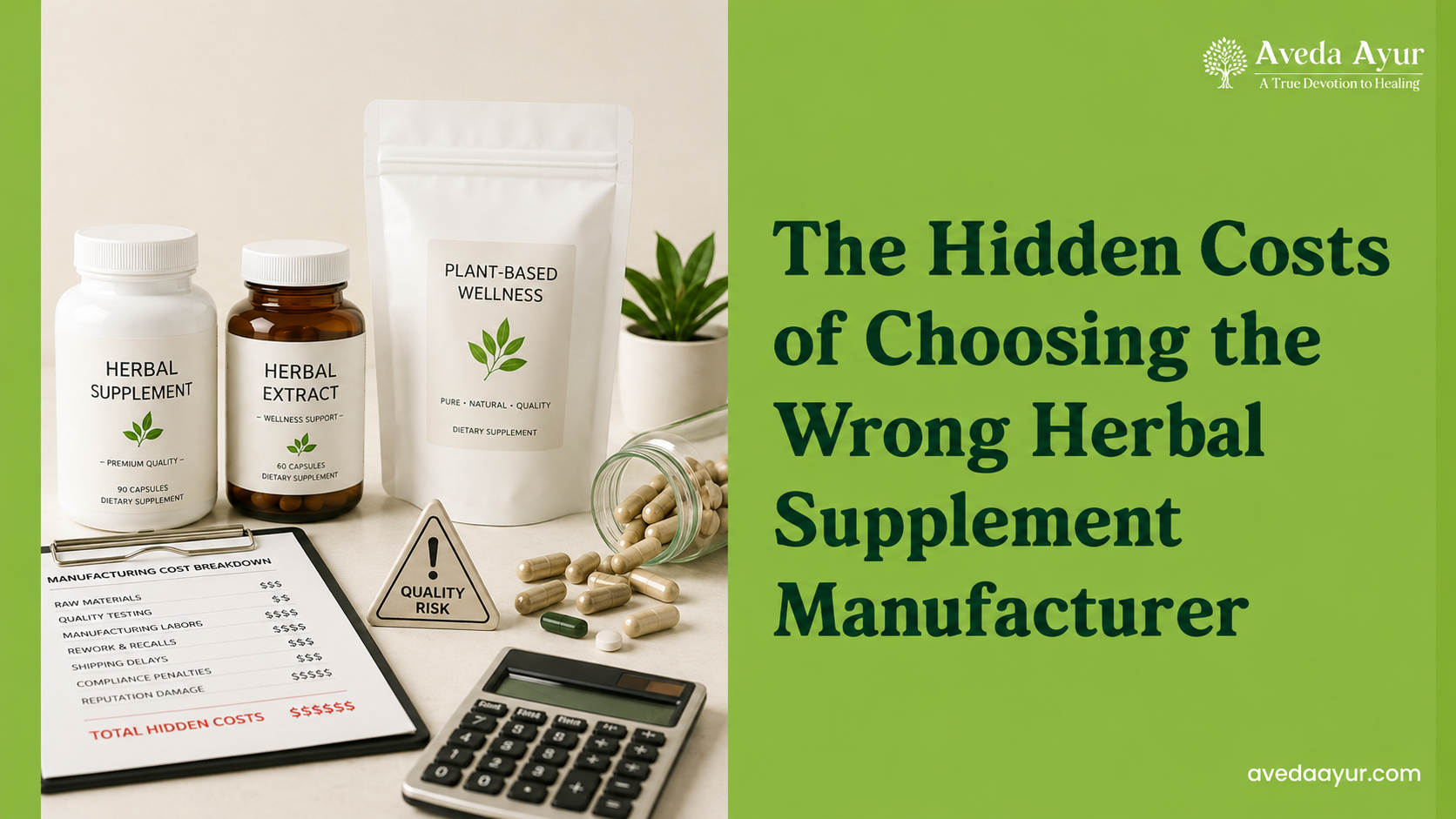
Choosing an herbal supplement manufacturer isn’t just a production decision; it’s a business decision that affects product quality, compliance, customer trust, and long-term growth. While a lower manufacturing quote may reduce upfront costs, the wrong partner can lead to quality issues, product recalls, regulatory challenges, production delays, and lost revenue. These hidden costs often outweigh any initial savings.
This guide explores the seven hidden costs of choosing the wrong herbal supplement manufacturer and what brands should look for when evaluating potential manufacturing partners.
What Is the Biggest Risk of Choosing the Wrong Manufacturer?
The biggest risk of choosing the wrong third-party supplement manufacturer is damage to brand trust. Quality issues, regulatory violations, and product inconsistencies can quickly erode consumer confidence. Once trust is lost, businesses often face declining sales, increased marketing expenses, and difficulty attracting new customers.
The True Cost Multiplier Framework
Most brands evaluate manufacturers based on production costs. However, the real cost of manufacturing includes both direct and indirect business impacts.
| Hidden Cost | Immediate Impact | Long-Term Impact |
| Product Quality Failure | Returns and complaints | Brand erosion |
| Compliance Violation | Regulatory actions | Market restrictions |
| Product Recall | Refunds and retrieval costs | Consumer distrust |
| Production Delay | Missed launch dates | Lost revenue opportunities |
| Poor Documentation | Audit failures | Partnership limitations |
| Supply Chain Issues | Stock shortages | Reduced customer loyalty |
| Inconsistent Quality | Customer dissatisfaction | Lower retention rates |
This framework helps brands understand why the cheapest third-party supplement manufacturer is rarely the least expensive option.
7 Hidden Costs That Can Hurt Your Supplement Brand
-
Product Quality Failures and Inconsistent Formulations
Herbal ingredients can naturally vary in potency and purity. Without strict quality control, manufacturers may produce batches with inconsistent formulations, contamination risks, or incorrect ingredient levels.
Business Impact:
- Customer complaints and returns
- Negative reviews
- Reduced repeat purchases
- Loss of consumer trust
The Hidden Cost: Every inconsistent batch weakens customer confidence in your brand.
-
Regulatory Compliance Risks
Manufacturers play a critical role in maintaining compliance through proper documentation, labeling, quality assurance, and GMP practices.
Business Impact:
- Product holds and launch delays
- Additional testing costs
- Legal and corrective action expenses
- Retail partnership challenges
The Hidden Cost: A compliance issue at the manufacturing level can quickly become a brand-level problem.
-
Product Recalls
Contamination, labeling errors, undeclared ingredients, or quality failures can force products off the market.
Business Impact:
| Recall Expense | Impact |
| Product retrieval | High |
| Customer refunds | High |
| Inventory losses | High |
| Legal costs | High |
| Reputation recovery | Long-term |
The Hidden Cost: The biggest loss isn’t the recall itself; it’s the loss of customer trust that follows.
-
Supply Chain Disruptions and Production Delays
Raw material shortages, poor planning, and limited production capacity can delay manufacturing and disrupt inventory levels.
Business Impact:
- Missed product launches
- Stockouts
- Lost sales opportunities
- Strained retailer relationships
The Hidden Cost: Customers often buy from competitors when your product isn’t available.
-
Brand Reputation Damage
A single quality issue can spread quickly through reviews, social media, and industry discussions.
Business Impact:
- Lower customer retention
- Reduced conversion rates
- Higher marketing costs
- Slower business growth
The Hidden Cost: Rebuilding trust is often far more expensive than protecting it.
-
Higher Operational Costs
A low-cost manufacturer often creates additional work for your team through quality issues, corrective actions, and ongoing oversight.
Business Impact:
- Additional product testing
- Increased customer support costs
- Product reformulations
- Supplier replacement expenses
The Hidden Cost: The cheapest manufacturing quote can become the most expensive long-term partnership.
-
Lost Growth Opportunities
Manufacturing limitations can prevent brands from scaling production, entering new markets, or launching new products.
Business Impact:
- Delayed expansion plans
- Missed retail opportunities
- Inability to meet demand
- Lost market share
The Hidden Cost: While competitors grow, your business remains constrained by manufacturing bottlenecks.
Reliable vs. Unreliable Herbal Supplement Manufacturer
| Reliable Manufacturer | Unreliable Manufacturer |
| Maintains cGMP compliance | Limited compliance documentation |
| Performs third-party testing | Minimal testing procedures |
| Provides Certificates of Analysis | Unable to verify results |
| Uses quality ingredients | Unknown sourcing practices |
| Maintains batch consistency | Frequent quality variations |
| Transparent communication | Delayed responses |
| Supports scalability | Limited production capacity |
| Strong quality systems | Reactive problem-solving |
This comparison provides a quick way to evaluate potential manufacturing partners.
How to Choose the Right Herbal Supplement Manufacturer
Not all manufacturers offer the same level of quality, compliance, and operational reliability. Before entering a partnership, evaluate potential manufacturers across these five critical areas:
-
Quality Control and Testing
A reliable manufacturer should have documented quality control processes and conduct testing throughout production.
Look for:
- Standardized formulations
- Batch-to-batch consistency testing
- Finished product testing
- Third-party verification
- Certificates of Analysis (COAs)
-
Regulatory Compliance
Strong compliance systems help reduce regulatory and operational risks.
Look for:
- GMP-compliant facilities
- Comprehensive batch documentation
- Accurate labeling processes
- Established quality management systems
-
Ingredient Sourcing
Manufacturers should be able to verify the quality of every ingredient used in their products.
Look for:
- Qualified supplier networks
- Raw material testing
- Identity and purity verification
-
Production Capacity and Scalability
Your manufacturing partner should be able to support your business as demand grows.
Look for:
- Scalable production capabilities
- Reliable inventory management
- Consistent production timelines
- Ability to handle future growth
-
Transparency and Communication
A trustworthy manufacturer should be open about its processes, documentation, and quality standards.
Look for:
- Clear communication
- Willingness to provide documentation
- Support for shipment audits
- Transparent quality assurance practices
Warning Signs to Watch For
Be cautious of a manufacturer that:
- Offers unusually low pricing without clear justification
- Refuses to share documentation or testing results
- Lacks third-party testing protocols
- Has inconsistent communication practices
- Provides limited visibility into sourcing or quality processes
A manufacturer should be evaluated based on long-term reliability, not just production costs. The right partner helps reduce risk, protect your reputation, and support sustainable business growth.
Why Quality Manufacturing Is an Investment, Not an Expense
The most successful supplement brands understand that manufacturing is not simply a production function; it is a strategic business partnership.
A high-quality herbal supplement manufacturer helps businesses:
- Reduce recall risk
- Improve product consistency
- Strengthen regulatory readiness
- Increase customer confidence
- Scale efficiently
- Protect brand reputation
The goal should not be finding the lowest manufacturing quote. The goal should be to find the manufacturing partner that minimizes risk while supporting long-term growth.
When evaluated through that lens, quality manufacturing becomes an investment rather than an expense.
Conclusion
The hidden costs of choosing the wrong herbal supplement manufacturer extend far beyond production expenses. Product recalls, compliance issues, quality failures, supply chain disruptions, and lost customer trust can create long-term financial consequences that outweigh any short-term savings.
Brands that prioritize quality, transparency, compliance, and operational reliability are better positioned to protect their reputation and achieve sustainable growth.
Before selecting a manufacturing partner, look beyond price. Evaluate the systems, processes, and capabilities that determine whether a manufacturer can support your brand today and as it grows in the future.
FAQs
- What is the biggest hidden cost of choosing the wrong herbal supplement manufacturer?
One of the biggest hidden costs is reputational damage. Product quality issues, compliance problems, and recalls can undermine customer trust and negatively affect sales, retention, and growth for years.
- How do manufacturing quality issues affect supplement brands?
Quality issues can lead to customer complaints, product returns, negative reviews, reduced repeat purchases, and regulatory scrutiny. Over time, these problems can significantly weaken brand credibility.
- What should I look for in an herbal supplement manufacturer?
Look for GMP compliance, third-party testing, quality ingredients, quality assurance systems, transparent documentation, scalable production capacity, and a strong regulatory track record.
- Can changing manufacturers impact product consistency?
Yes. Differences in sourcing, equipment, testing methods, and production processes can affect product characteristics. Careful transition planning is essential to maintain consistency.
- How can supplement brands reduce manufacturing risk?
Brands can reduce risk by conducting due diligence, auditing facilities, reviewing documentation, evaluating testing programs, verifying compliance records, and choosing manufacturers with proven quality systems.