

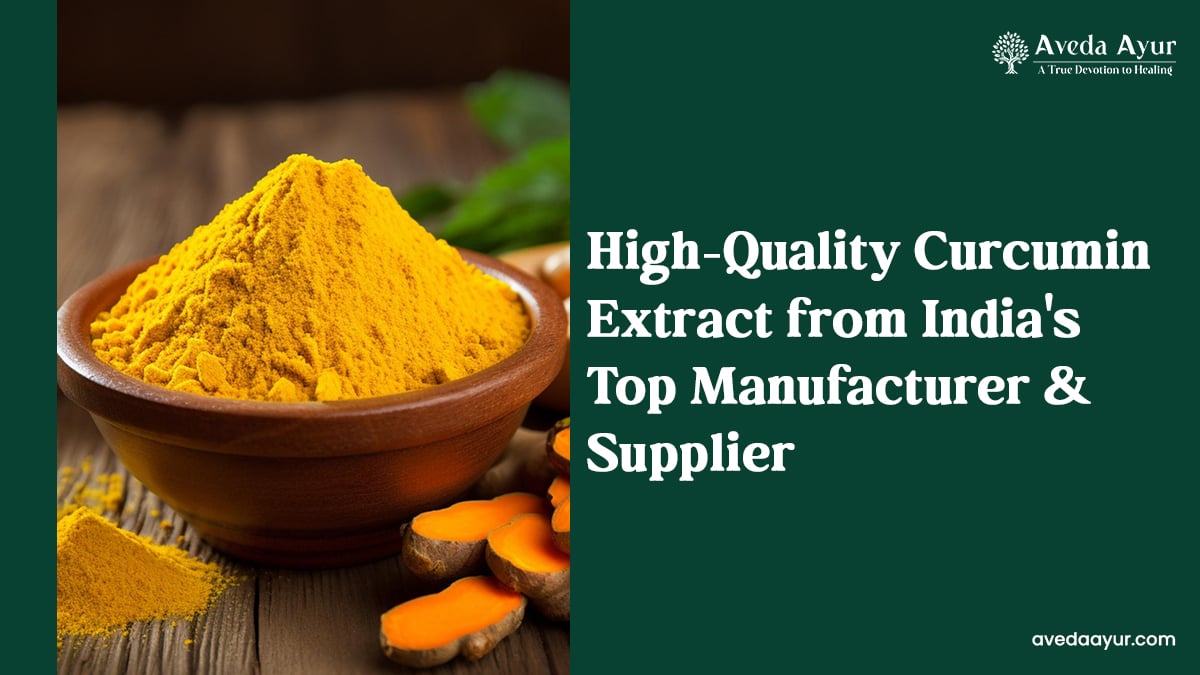
India is the world’s largest producer of turmeric and the leading global supplier of standardized curcumin extract used in the nutraceutical, pharmaceutical, and functional food industries. With rising demand for clinically validated botanical ingredients, global brands increasingly seek the best turmeric extract manufactured under strict quality and regulatory systems.
While raw turmeric has been traditionally used for centuries, modern formulations require concentrated, standardized, and scientifically validated curcumin extract supplement ingredients. This guide explains how turmeric is transformed into high-purity extract, why India dominates global supply, and what defines a truly high-quality turmeric-derived curcumin extract.
What is High-Quality Curcumin Extract?
High-quality curcumin extract is a concentrated botanical ingredient derived from turmeric (Curcuma longa), standardized to contain up to 95% total curcuminoids. Unlike raw turmeric rhizome, which naturally contains only 2–5% curcuminoids, standardized extraction isolates and concentrates the biologically active fractions responsible for turmeric’s researched functional properties.
The primary curcuminoids include:
- Curcumin
- Demethoxycurcumin
- Bisdemethoxycurcumin
Through controlled solvent or supercritical CO₂ extraction, followed by purification and crystallization, these compounds are concentrated into a stable, formulation-ready ingredient suitable for nutraceutical, pharmaceutical, and functional applications.
Scientific research has extensively investigated curcumin’s molecular activity. A review published in Advances in Experimental Medicine and Biology highlights its interaction with oxidative stress pathways and inflammatory signaling mechanisms (1). Additional pharmacological research published in Frontiers in Immunology describes its modulation of transcription factors, cytokines, and enzymatic pathways involved in immune regulation (2).
Because of this multi-target biological profile, standardized curcumin extract is widely incorporated into clinically positioned formulations across joint health, metabolic support, and immune-focused product categories.
Why India Is the Global Hub for Curcumin Extract Manufacturing
India produces more than 75% of the world’s turmeric , according to agricultural export data (3). This dominance provides unmatched raw material availability, traceability, and supply chain stability for turmeric-based extracts.
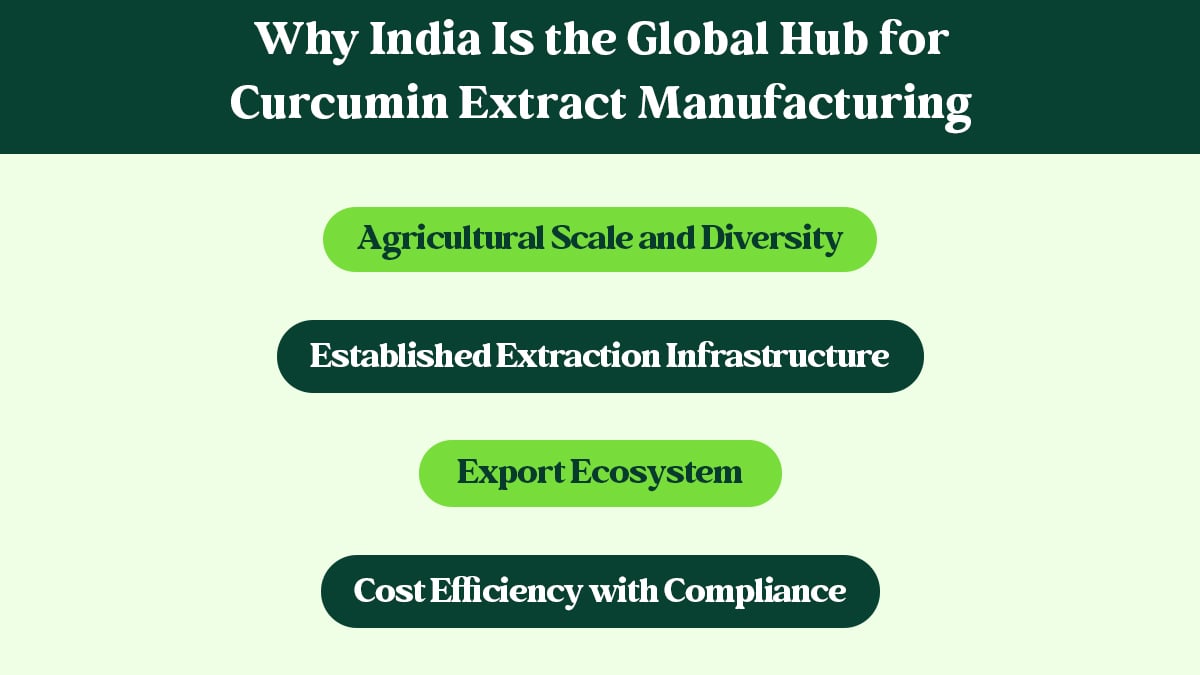
Several structural factors position India as the global leader in curcumin extract manufacturing:
-
Agricultural Scale and Diversity
India cultivates multiple turmeric varieties with high curcuminoid content across regions such as Telangana, Maharashtra, and Tamil Nadu. Proximity to cultivation reduces post-harvest degradation and ensures fresher extraction input.
-
Established Extraction Infrastructure
India has decades of experience in botanical solvent extraction, oleoresin concentration, and curcuminoid purification. Advanced facilities utilize:
- Controlled solvent extraction
- Supercritical CO₂ extraction
- Crystallization and drying systems
- HPLC and GC analytical validation
-
Export Ecosystem
India is one of the largest exporters of turmeric extract supplement ingredients to North America, Europe, Southeast Asia, and the Middle East. Manufacturers are familiar with documentation requirements such as:
- Certificate of Analysis
- Residual solvent compliance
- Heavy metal testing
- Microbial limits
- Regulatory declarations
-
Cost Efficiency with Compliance
Vertical integration from turmeric farming to finished curcumin extract reduces production costs while maintaining global regulatory alignment.
What Defines a High-Quality Curcumin Extract?
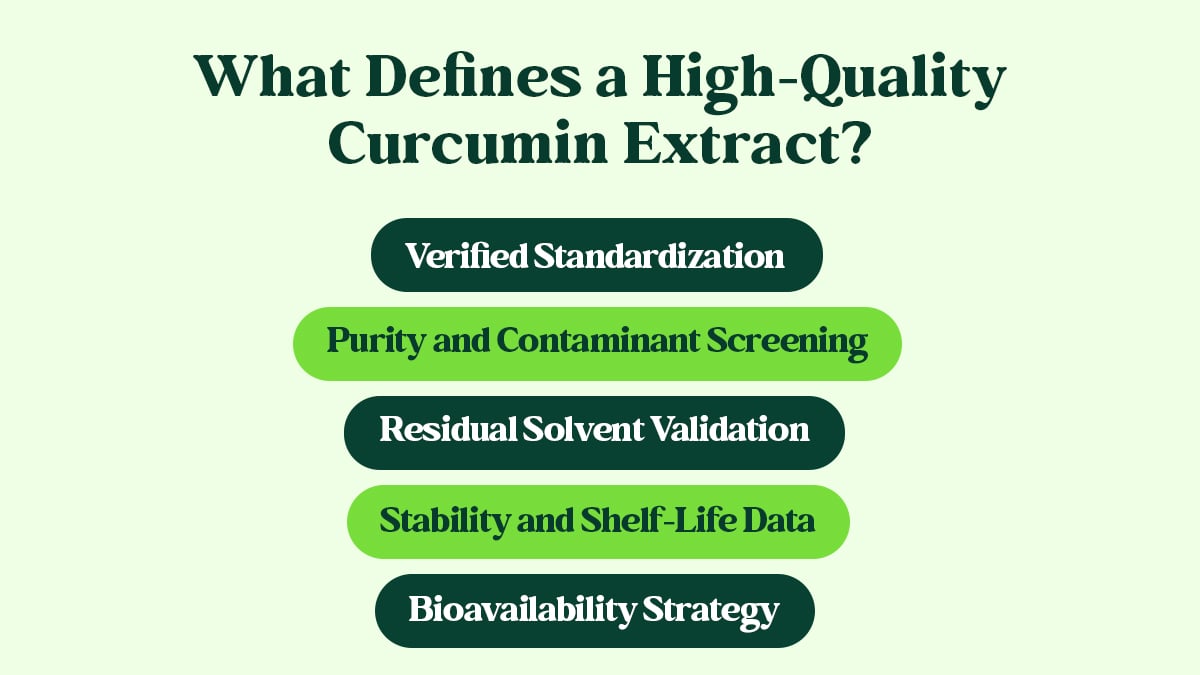
Not all turmeric extracts meet the standards required for global supplement manufacturing. True quality is determined by measurable, documented parameters, not label claims.
-
Verified Standardization
A premium-grade extract must be standardized to 95% total curcuminoids, confirmed through High-Performance Liquid Chromatography (HPLC). Analytical reports should clearly quantify individual curcuminoid fractions to ensure batch-to-batch consistency.
-
Purity and Contaminant Screening
Because turmeric is soil-grown, contaminant control is critical. A high-quality extract must undergo validated testing for:
- Heavy metals (lead, arsenic, cadmium, mercury)
- Microbial load (total plate count, yeast and mold)
- Pathogen screening
Compliance documentation should be available through a batch-specific Certificate of Analysis.
-
Residual Solvent Validation
For solvent-extracted materials, residual solvent levels must comply with international safety limits to ensure suitability for dietary supplement and pharmaceutical use.
-
Stability and Shelf-Life Data
Accelerated and real-time stability studies confirm potency retention over time. Controlled moisture levels and oxidation protection are essential to maintain curcuminoid integrity during storage and distribution.
-
Bioavailability Strategy
Curcumin has inherently low oral absorption due to rapid metabolism. Advanced manufacturers may enhance performance through dispersion technologies, complexation systems, or integration with absorption enhancers such as piperine, as reported in Planta Medica.
-
Regulatory and Manufacturing Compliance
Credible suppliers operate under GMP-certified facilities, maintain full traceability from raw turmeric sourcing to finished extract, and provide export-ready documentation aligned with international regulatory frameworks.
Raw Turmeric vs Standardized Curcumin Extract
Understanding the difference between raw turmeric and standardized curcumin extract is essential for formulators, procurement teams, and supplement brands seeking precision and regulatory compliance.
|
Parameter |
Raw Turmeric |
Standardized Curcumin Extract |
|
Curcuminoid Content |
2 to 5 percent naturally occurring |
Up to 95 percent total curcuminoids |
|
Potency Consistency |
Varies by harvest, soil, and climate |
Batch-to-batch standardized through HPLC validation |
|
Dosing Accuracy |
Difficult to measure exact active content |
Precise, measurable dosing for supplement formulation |
|
Primary Use |
Culinary and traditional wellness use | Nutraceutical, pharmaceutical, and functional products |
|
Purity Testing |
Not typically standardized |
Tested for heavy metals, microbes, and residual solvents |
|
Regulatory Suitability |
Limited for export-grade supplement manufacturing |
Suitable for curcumin extract supplement and turmeric extract supplement production |
Raw turmeric is valuable in culinary and traditional applications, but it does not provide the standardized potency required for modern nutraceutical manufacturing. For brands seeking the best turmeric extract for capsule or tablet formulation, standardized curcumin extract offers measurable potency, validated purity, and regulatory readiness.
Applications of Curcumin Extract
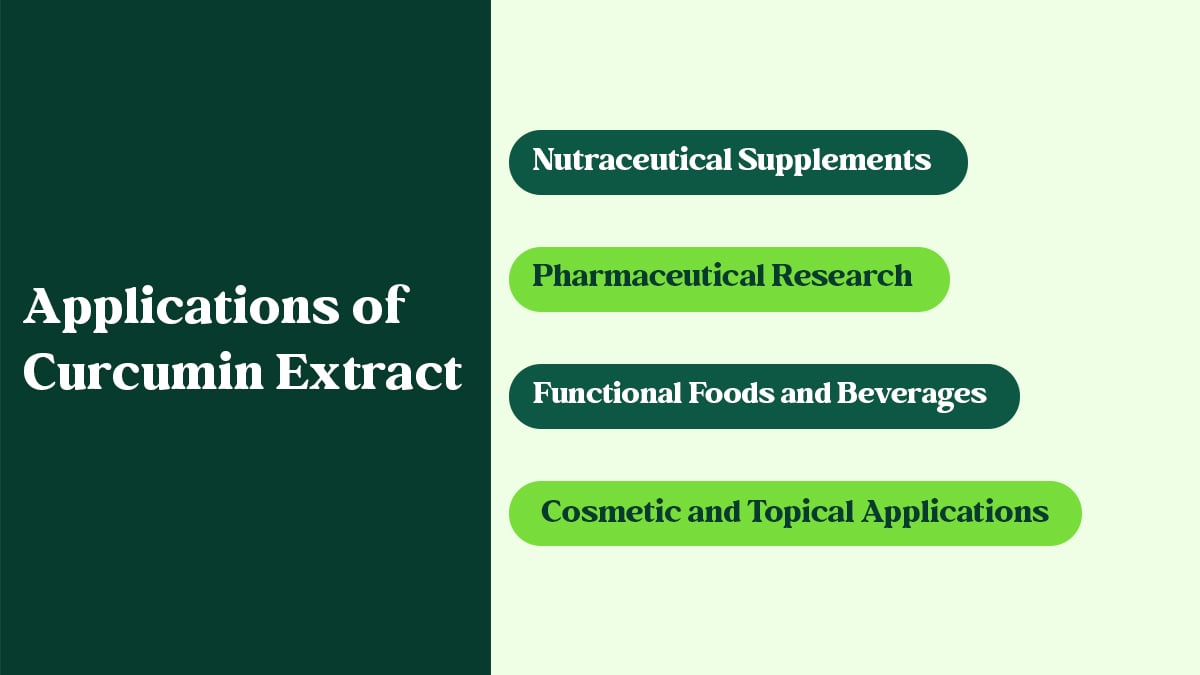
High-quality turmeric-derived curcumin extract serves multiple commercial sectors.
- Nutraceutical Supplements: A turmeric extract supplement is widely positioned for joint health, antioxidant support, metabolic balance, and immune modulation. Standardized curcumin extract supplement ingredients enable accurate labeling and dosage consistency.
- Pharmaceutical Research: Curcumin extracted from turmeric is studied extensively for inflammatory pathways, oxidative stress biomarkers, and cellular signaling mechanisms.
- Functional Foods and Beverages: Concentrated turmeric extract allows formulators to incorporate bioactive compounds without affecting the taste and texture associated with raw turmeric powder.
- Cosmetic and Topical Applications: Turmeric extract is used in skincare formulations for antioxidant and skin-support properties.
Aveda Ayur: A Trusted Curcumin Extract Manufacturer in India
Aveda Ayur specializes in standardized turmeric extracts and high-purity curcumin extract for B2B clients globally. The company focuses on quality-controlled production systems and documented compliance.
Key capabilities include:
- GMP-certified manufacturing infrastructure
- Controlled turmeric sourcing
- HPLC-validated 95 percent curcuminoid standardization
- Heavy metal and microbial compliance testing
- Batch-wise Certificate of Analysis
- Custom bulk supply and private labeling support
For brands seeking the best turmeric extract aligned with international regulatory expectations, manufacturing transparency and analytical validation are critical.
Bulk Supply and Export Capabilities
Reliable bulk supply of curcumin extract requires structured logistics and quality preservation.
Professional export-ready turmeric extract supplement ingredients include:
- drum packaging with moisture barriers
- Controlled storage conditions
- Complete export documentation
- Testing as per compliance
Bulk curcumin extract derived from premium turmeric must maintain potency throughout transit to ensure formulation reliability upon arrival.
Conclusion
Turmeric remains one of the most researched botanical ingredients globally, with expanding applications across nutraceutical, pharmaceutical, and functional product categories. However, raw turmeric alone does not provide the precision, potency, or compliance standards required for modern supplement manufacturing. A high-quality curcumin extract derived from standardized turmeric offers measurable potency, verified safety through analytical testing, regulatory readiness for international markets, and consistent batch-to-batch performance.
Whether developing a clinically positioned curcumin extract supplement or launching a premium turmeric extract supplement, sourcing from an experienced Indian manufacturer ensures quality control, scalability, and scientific credibility.
If you are looking for the best turmeric extract from a trusted Indian supplier with bulk export capability, connect with Aveda Ayur to request detailed technical specifications, analytical documentation, and customized supply solutions aligned with your formulation goals.
FAQs
1. What is the difference between turmeric and curcumin extract?
Turmeric is the raw rhizome containing 2 to 5 percent curcuminoids. Curcumin extract is a concentrated form derived from turmeric standardized to up to 95 percent active curcuminoids.
2. What makes the best turmeric extract?
The best turmeric extract is standardized, HPLC-verified, heavy metal compliant, microbial tested, and manufactured in GMP-certified facilities.
3. Is curcumin extract suitable for supplement manufacturing?
Yes. Standardized curcumin extract supplement ingredients provide precise dosing, safety validation, and regulatory compliance for capsule, tablet, and powder formulations.
4. Why is India the leading supplier of turmeric extract?
India produces over 80 percent of the world’s turmeric and has advanced botanical extraction infrastructure supported by decades of export experience.
References
1. Aggarwal BB, Sundaram C, Malani N, Ichikawa H. Curcumin: the Indian solid gold. Advances in experimental medicine and biology [Internet]. 2007;595:1–75. Available from: https://www.ncbi.nlm.nih.gov/pubmed/17569205
2. El-Saadony MT, Saad AM, Mohammed DM, Samar Sami Alkafaas, Ghosh S, Negm SH, et al. Curcumin, an active component of turmeric: biological activities, nutritional aspects, immunological, bioavailability, and human health benefits – a comprehensive review. Frontiers in Immunology. 2025 Aug 21;16.
3. PIB Delhi. Government of India notifies establishment of National Turmeric Board [Internet]. Pib.gov.in. 2023. Available from: https://www.pib.gov.in/PressReleasePage.aspx?PRID=1964083®=3&lang=2