

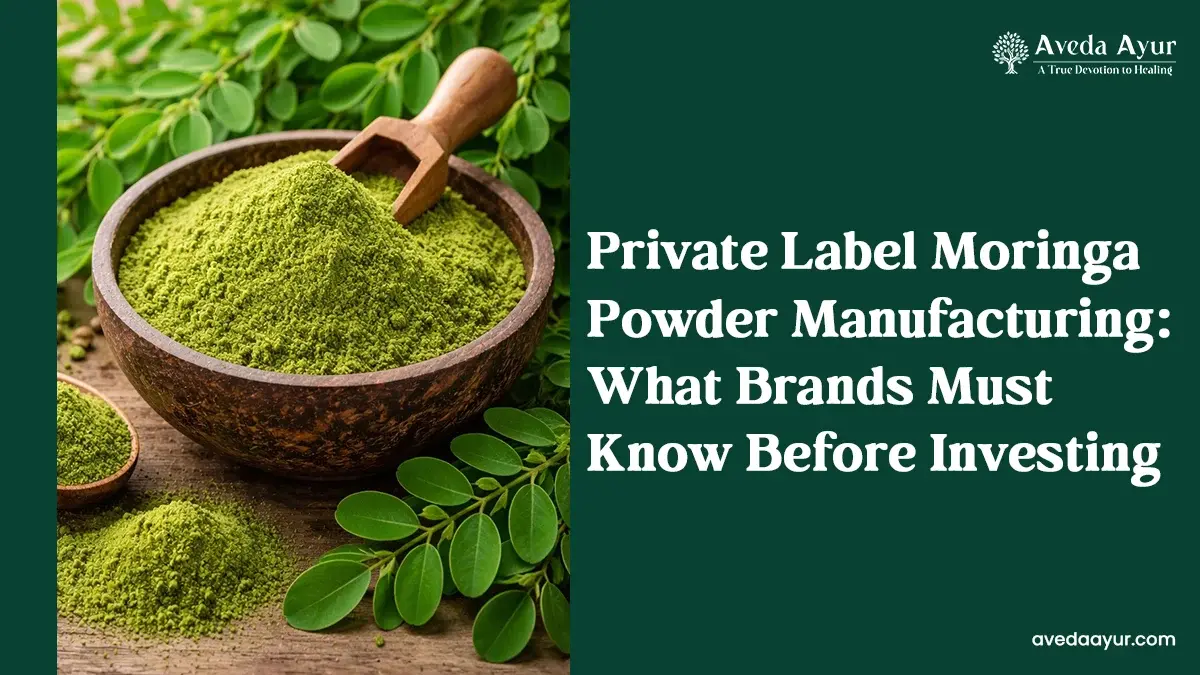
The current wellness industry is moving towards plant-based, clean-label, and traditional wellness solutions. Among the new superfoods that have been introduced, moringa powder has gained popularity due to its nutritional properties and traditional use in Ayurvedic wellness. As the popularity of moringa powder grows, more wellness companies are now interested in the private label moringa powder manufacturing process as a lucrative business opportunity.
But being a private label moringa supplier is more than just putting a green powder in a package. The quality of the product, integrity of sourcing, regulatory requirements, and manufacturing expertise all have a significant role to play in the success of the brand. This guide will cover what needs to be considered before working with a private label moringa powder manufacturer or supplier.
Why Private Label Moringa Powder Is a Strategic Investment for Wellness Businesses
Moringa (Moringa oleifera) is famous for its high vitamin, mineral, antioxidant, and plant-based protein values. Its versatility in terms of positioning as capsules, powders, blends, and functional foods makes it a very attractive product in the emerging wellness industry.
From a business perspective, the following are the benefits of Private Label Moringa Powder:
- High demand in the nutritional, Ayurvedic, and functional wellness markets
- High value with moderate complexity of formulation
- Easy to integrate into existing product lines
- Long shelf life with proper processing and storage
Concerned businesses may find that moringa is a highly desirable ingredient with marketability and scalability in the natural wellness industry.
Moringa Powder Quality: What Really Sets High-Quality Products Apart
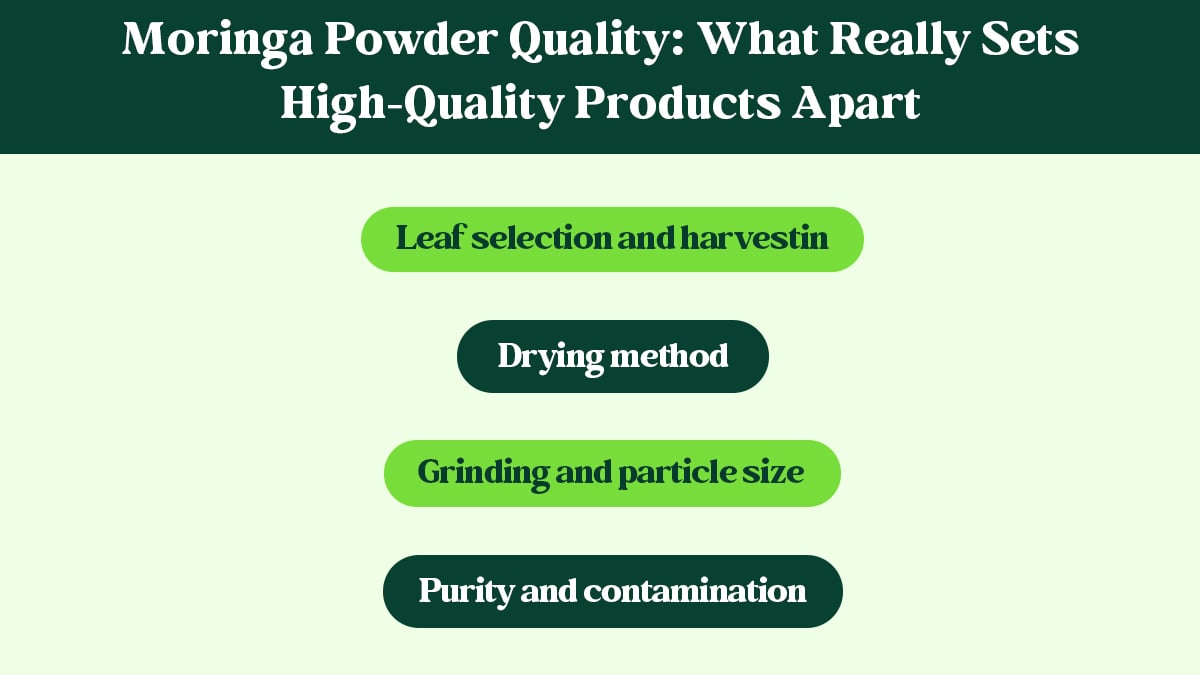
Not all moringa powders are the same in terms of their efficacy. The differences in quality cannot be detected by the naked eye but are essential in building brand loyalty. The following are the essential factors in determining quality:
- Leaf selection and harvesting: It is always best to harvest the mature but tender leaves for nutritional purposes. Insufficient harvesting can lead to a significant loss of potency.
- Drying method: Shade drying or low-temperature drying is best for preserving chlorophyll, antioxidants, and micronutrients. Sun drying or high-temperature drying may result in the loss of nutritional value.
- Grinding and particle size: Fine grinding and uniform particle size may enhance solubility, palatability, and bioavailability.
- Purity and contamination: Pure moringa powder should not contain heavy metals, microorganisms, or pesticides.
Companies working with an experienced private label moringa powder supplier can count on standardized quality processes to ensure consistency in every batch.
Role of a Private Label Moringa Powder Supplier in Building a Scalable Brand
An experienced private label moringa powder supplier is one of the most important determinants of product quality, brand integrity, and scalability. A supplier who is not a manufacturer lacks the end-to-end control of the manufacturing process, which is necessary for scalable brand development.
Important Role of an Experienced Manufacturer
- End-to-End Processing: The capability to manage cleaning, drying, grinding, and packaging processes ensures quality, retention of nutrients, and cleanliness of all batches.
- GMP Compliant Manufacturing Facilities: GMP helps in ensuring standardized manufacturing processes, safety, and preparedness for regulations, which further leads to the development of consumer acceptance and trust.
- Efficient Quality Control Processes: There are various quality control processes, such as raw material testing and finished product testing, that have been integrated to ensure the quality of the products.
- Customization and Private Labeling: Variations in product formulation, powder mesh size, packaging, and labeling allow brands to customize their products based on market plans.
- Scalable Production Capacity: The standardized infrastructure and processes ensure ease of scalability without compromising the quality and safety of the products.
- Regulatory and Market Readiness: Experience in regulatory documentation enables brands to be prepared for national or international distribution.
With this level of control, consistency, and support, a reputable private Label moringa powder supplier can be an excellent long-term partner in building a strong and scalable wellness brand.
Sourcing Matters: Why Choosing the Right Private Label Moringa Supplier Matters
Raw material sourcing has a direct impact on the safety, efficacy, and sustainability of products. When selecting a Private Label Moringa supplier, the following factors must be taken into account by brands:
- Methods of cultivation Soil quality
- Adherence to ethical and sustainable sourcing principles
- Transparency in testing
Good suppliers will work with manufacturers to ensure that quality levels are maintained on a consistent basis, ensuring that the final private label product meets a level of quality acceptable to regulatory and consumer bodies.
Regulatory, Safety & Compliance Factors Brands Simply Can’t Ignore
Compliance is a non-negotiable factor in private label manufacturing. Brands need to make sure that their moringa powder complies with food and health regulations in the market they are targeting.
- Compliance factors that simply cannot be ignored:
- GMP-compliant manufacturing processes
- AYUSH compliance for Ayurvedic product positioning
- Microbial, heavy metal, and contaminant testing
- Labeling and approved health claims
- Export documentation for international markets
A compliant supplier will ensure that regulatory risk is reduced and consumer confidence is maximized.
Customization Features in Private Label Moringa Powder Production
Customization enables brands to differentiate themselves effectively in a competitive wellness industry by matching product features with target consumers, pricing, and distribution channels.
- Powder Mesh Size Customization: Brands can select mesh sizes based on texture, solubility, and usage for beverages, capsules, cooking, or functional foods.
- Single-Ingredient or Blended Formulations: Brands can select single-ingredient moringa powder or formulate blends of complementary herbs for specific wellness positioning and differentiation.
- Flexible Packaging Options: Brands can select packaging options such as jars, pouches, sachets, or bulk packaging for retail, e-commerce, institutional, or export channels, improving shelf life and branding.
- Flexible MOQs for Start-Up Brands: Brands can select flexible minimum order quantities for easy market entry with lower investment and seamless scaling of production as demand grows.
These customization features help private label moringa powder brands develop differentiated, scalable products that match long-term business growth.
Cost, Margins, and Scalability: What Brands Must Consider Before Investing
Cost structures help brands determine competitive pricing and ensure sustainable growth. The following points have a direct effect on profitability and scalability.
- Quality of Raw Material and Source: The use of higher-quality moringa may be more expensive but ensures better nutritional consistency and brand credibility.
- Processing and Testing Standards: The use of higher standards of drying, grinding, and safety testing may be expensive but will ensure compliance with the law, safety, and quality.
- Packaging and Labeling: Use of food-grade packaging, legal labeling, and tamper-proof packaging could be more expensive, especially when purchased in smaller lots.
- Certification and Compliance Costs: GMP, AYUSH, and export certification could be more expensive but would ensure entry and acceptance into the market.
However, for quality Private Label Moringa Powder, although the initial investment costs may be higher, it also helps in the achievement of better margins due to its premium positioning and trust from loyal customers.
Why Ayurveda-Based Manufacturing Helps Build Brand Value Over Time
Ayurveda makes moringa more relevant by associating it with values of wellness from an ancient, authentic, and trusted Ayurvedic system of knowledge.
- Ingredient Synergy and Balance: The Ayurvedic processing method focuses on ingredient synergy, which enhances the efficacy and bioavailability of moringa but not the balance of nutritional values.
- Insights from Traditional Processing: Traditional processing methods can be employed to preserve the efficacy, bioavailability, and natural properties of moringa powder.
- Wellness Positioning: Ayurvedic products help in overall wellness, which helps the company position itself in overall wellness rather than as a benefit of nutrition.
For companies that want to differentiate themselves in the long run, the processing of Ayurveda-based private label moringa powder helps in building credibility, trust, and emotional connections with the target audience.
Selecting the Right Private Label Partner for Long-Term Growth of Moringa Brands
Building a successful private label moringa brand is more than just having the product on the shelf; it is having a manufacturer who can help with growth. The right partner would have manufacturing expertise, quality infrastructure, and processes that help maintain the integrity of the brand while growing.
The brands will greatly benefit from having partners who follow strict quality assurance processes and can help the brand navigate the certification process in different markets. Another important aspect of having a good partner is the ability to customize formulation, packaging, and manufacturing volumes without compromising the quality of the final product.
A collaborative and long-term manufacturing partnership enables brands to move beyond product launches and establish themselves in the market for the long term. With the help of an experienced private label moringa powder supplier, businesses can move forward with the confidence to develop, scale, and launch their products for long-term success in the competitive health and wellness market.
FAQs
-
What is private label moringa powder?
Private label moringa powder is produced by a certified supplier and is marked with the name, formula, and packaging of a brand.
-
How do I choose a private label moringa powder supplier?
It is recommended to choose suppliers who are GMP and AYUSH certified, possess in-house processing and quality testing, and are flexible with customization and open with their sourcing processes.
-
Is moringa powder exportable?
Yes, moringa powder is exportable if produced by a supplier who adheres to compliant standards and testing, documentation, and export readiness.
-
Can I customize packaging and formulation?
Most professional manufacturers offer customization in packaging formats, powder mesh sizes, formulations, and blends to meet brand requirements.