

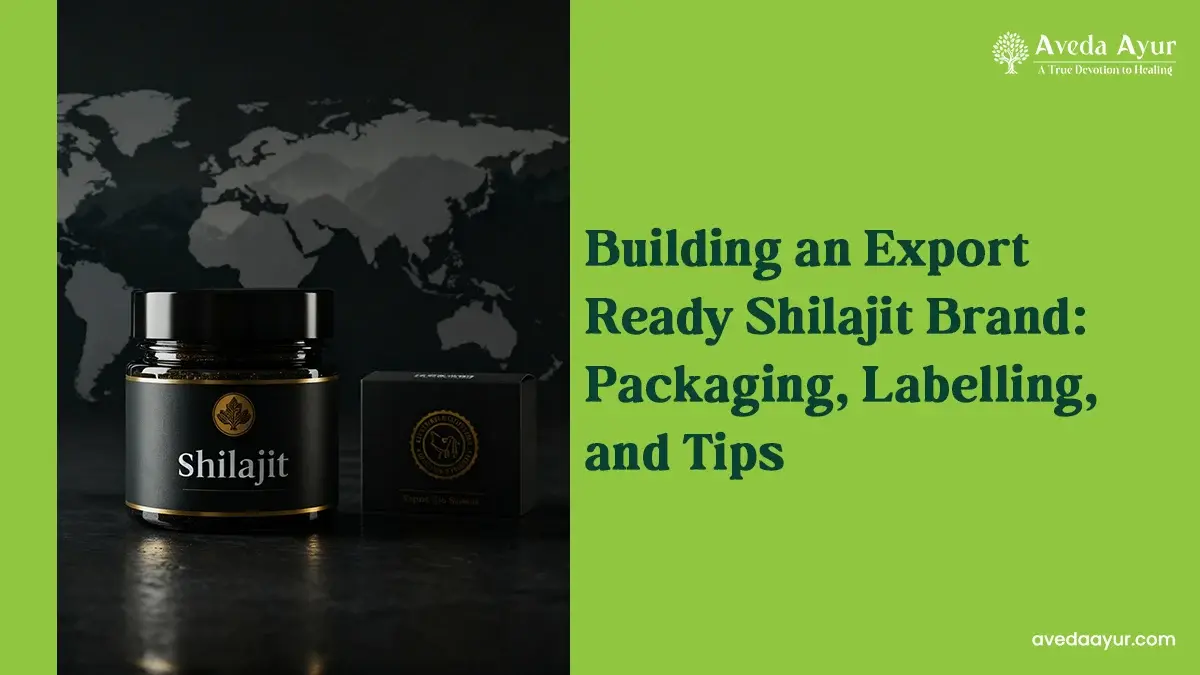
In a world where natural wellness and holistic health are gaining unstoppable momentum, Shilajit has emerged as one of the most sought-after Ayurvedic ingredients across international markets. Revered for centuries in ancient Ayurvedic texts such as Charaka Samhita and Sushruta Samhita, Shilajit today finds its place in global wellness formulations, dietary supplements, and natural vitality boosters. For businesses looking to establish a successful presence within this fast-growing niche, access to quality Shilajit is only the first step. Exporting branded Shilajit demands in-depth knowledge of packaging, labeling, stability, and compliance, vital for credibility and the ability to ensure safety and long-term success. Through this blog, we will learn how to build a globally competitive shilajit brand, from product integrity to market presentation.
Understanding the Power of Shilajit: Nature’s Ancient Elixir
Shilajit is a natural, tar-like resin that results from the decomposition of plant material entrapped in the layers of Himalayan rocks over centuries. It seeps out during warm months, rich in fulvic acid, humic substances, and over 80 trace minerals that are responsible for its strong rejuvenating action. According to Ayurveda, Shilajit is known as a “Rasayana,” a rejuvenator that enhances strength, vitality, and mental clarity. Those ancient claims are agreed upon by modern research, confirming its adaptogenic, antioxidant, and energy-enhancing effects. In fact, not all Shilajit is created equal. The purity and geographical source of Shilajit determine its potency. And that’s why pure Himalayan Shilajit sourced from pristine, high-altitude regions enjoys unmatched demand worldwide. Its mineral composition and natural bioavailability set it apart, making it the gold standard for wellness manufacturers throughout the world. For any business entering this market, ensuring authentic sourcing and standardized extraction is the very foundation of brand credibility and export readiness.
What Makes a Shilajit Brand Export-Ready?
To successfully penetrate international markets, the brand Shilajit needs to meet a variety of critical benchmarks regarding quality, safety, and compliance. Being “export-ready” means that your products not only meet local standards but also adhere to global regulatory frameworks.
Compliance to Regulations and Certifications
A genuine, export-ready Shilajit brand operates under recognized standards such as:
- Good Manufacturing Practices (GMP) ensure production is uniformly safe.
- AYUSH Certification to validate adherence to Ayurvedic principles.
- ISO and HACCP Certifications to assure global customers of high quality in control and hygiene.
Such certifications signal that your product is produced in a responsible manner and meets international safety parameters.
Documentation and Transparency
Exporters need to be prepared with the following key documents, including:
- Certificate of Analysis (COA)
- MSDS – Material Safety Data Sheet
- Free Sale Certificate
- Heavy metal reports
Transparency breeds trust, and trust facilitates long-term partnerships across geographies.
Private Label Support
All this can be a whole lot simpler if working with a Private Label Shilajit manufacturer. Private labeling allows your business to offer authentic Shilajit under your own brand name without investing in a complex, extensive production infrastructure. A reliable manufacturer ensures:
- Regulatory compliance
- Custom formulations
- Ready-to-export packaging and documentation
In conclusion, an export-ready brand integrates authentic Ayurvedic heritage with international production standards.
The Role of Packaging in Shilajit’s Shelf Life and Appeal

Besides aesthetics, packaging plays a far greater role: it directly influences product safety and shelf life. Shilajit is a natural resin with active bio-compounds that are sensitive to light, air, and temperature.
Safeguarding Purity with the Right Materials
The choice of material when packaging Shilajit determines how long the product will remain potent.
- Glass Jars: Amber or dark glass jars protect against UV exposure and maintain resin integrity.
- HDPE Bottles: They are perfect for travel-friendly formats, providing great protection from moisture.
- High-Density PET Jars: Lighter in weight and with good barrier properties.
Sealing tight to prevent oxidation and contamination, a tamper-proof seal ensures that consumers can trust the safety and authenticity of the product.
Eco-Friendly and Sustainable Options
Since the global wellness consumer increasingly values sustainability, eco-friendly packaging like recyclable glass, biodegradable labels, or aluminum caps will help develop your brand reputation and export potential.
Branding that Reflects Authenticity
Design your packaging to tell a story about your brand. For a Shilajit brand, visuals inspired by the Himalayas, nature, and Ayurveda can evoke authenticity and purity. Earthy tones in minimalist designs often work well with wellness-oriented demographics. Packaging should be more than just protection for the product; it can help communicate your brand’s identity and build instant recognition across borders.
Labeling Guidelines for Export-Ready Shilajit
Labeling is where compliance meets communication. A well-structured label fulfills not only the legal demands but also creates credibility and consumer trust.
Basic Elements of Labels
Depending on the country of export, labels should include:
- Product name and type, like Pure Himalayan Shilajit Resin
- Ingredients and percentage composition
- Net quantity
- Batch number and date of manufacturing
- Expiration date or “Best Before” statement
- Country of origin
- Manufacturer’s details and certifications
- Usage instructions and dosage
- Safety warnings (if applicable)
Meeting Country-Specific Regulations
The rules of labeling are not the same for every market; the rules may change from one market to another, such as the EU, the USA, and the Middle East. Examples include:
- FDA requires Supplement Facts panels for US exports.
- The EU requires clear ingredient transparency and allergen information.
- Arabic or bilingual labeling is required for compliance in the UAE and Australia.
An experienced Shilajit wholesale supplier or export consultant will definitely help you meet these diversified labeling norms with ease.
Power of Transparent Communication
Emphasizing certifications like GMP, AYUSH, or ISO on your label is a seal of instant credibility. Similarly, phrases such as “authentically sourced from the Himalayas” or “lab-tested for purity” resonate extremely well with today’s global consumer, who looks for transparency.
Quality Control and Product Testing: The Backbone of Export Success
In the global wellness market, quality assurance is one of the key factors that define a brand’s success. Shilajit, being a naturally active resin, has its own texture and potency. For shilajit products, purity, authenticity, and safety are non-negotiable, specifically in international markets like the UK and Germany. Therefore, before introducing the product in international markets, every batch must undergo a strict laboratory test for quality assurance and also to validate its compliance with global quality standards.
Shilajit Quality Assurance Testing
- Fulvic Acid Test: Determines the concentration of fulvic acid—the key bioactive compound responsible for Shilajit’s potency. Ensures the product is pure Himalayan Shilajit with consistent strength and efficacy.
- Heavy Metal Testing: Screens for toxic elements such as lead, arsenic, cadmium, and mercury. Confirms that Shilajit meets international safety limits and is safe for human consumption.
- Microbiological Analysis: Checks for the presence of bacteria, yeast, and mold to ensure the product is hygienic, contamination-free, and compliant with global food and supplement safety standards.
- ETO Residue Test: Verifies that the product is free from harmful sterilization residues, meeting the strict health and safety regulations of markets like the EU and UK.
- Pesticide Residue Test: Confirms that Shilajit is free from chemical and agrochemical traces, ensuring it remains a natural, clean-label product suitable for international wellness consumers.
Through these quality checks, every batch of pure Himalayan Shilajit achieves the highest standards of purity and safety. Brands partnering for Private Label Shilajit can confidently offer products that meet export-grade specifications and earn lasting global trust.
Formulation and Storage Factors
It is necessary to keep the moisture content at the optimal value to avoid hardening or fermentation.
- Store in cool, dark conditions at 20–25°C for best results.
- Adding natural preservatives or desiccants can further extend the shelf life.
These measures ensure that your exported product is of the same efficacy and purity that your brand has promised.
Aveda Ayur’s Commitment to Purity and Global Standards
Each of these tests is conducted in certified laboratories under strict quality management systems. Our GMP and AYUSH-certified manufacturing facility follows stringent internal controls to ensure consistency, transparency, and reliability in every production cycle.
By adhering to such detailed testing protocols, Aveda Ayur guarantees that every batch of pure Himalayan Shilajit not only meets domestic standards but also aligns with the safety and compliance expectations of international buyers.
Our dedication to uncompromised quality empowers wellness brands to confidently market Private Label Shilajit products that are trusted, safe, and effective — ensuring long-term success in the global export arena.
Partnering with the Right Shilajit Wholesale Supplier
Probably the most strategic decision associated with building a global wellness brand is choosing the right Shilajit wholesale supplier. A dependable supplier doesn’t just provide raw materials; they become your manufacturing and regulatory ally. Here’s what to look for:
- Authentic Sourcing and Purity: Make sure your product source is ethically sourcing Shilajit from genuine Himalayan regions and employing safe purification methods that preserve fulvic acid and trace minerals.
- Certification and Compliance: A trusted partner like Aveda Ayur brings with it all the necessary GMP, AYUSH, and export certifications, simplifying your entry into the market.
- Private Label Capabilities: With the Private Label Shilajit solutions, one can rapidly take their brand to market under their identity, taking advantage of an established manufacturer’s formulation, packaging, and compliance expertise. The right one would allow customization and support, from capsules and resin through powders to even bespoke packaging and branding—all in flexible, client-oriented support for your business model.
A partnership with a certified wholesale supplier such as Aveda Ayur provides an entire ecosystem: from sourcing and quality assurance to documentation and export readiness, all under one roof.
Conclusion
Developing a Shilajit export brand is not just business; it’s a promise of purity, tradition, and global well-being. From its very authentic sourcing from the Himalayas to advanced packaging, precision labeling, and every minute detail, it speaks volumes about the credibility and dedication your brand has for quality. If you are interested in bulk buying Shilajit powder to formulate expertly and offer Private Label Shilajit, then this is the right place to find the purest Himalayan Shilajit. Aveda Ayur is a GMP- and AYUSH-certified manufacturer and one of the trusted Shilajit wholesale suppliers. Collaborating with Aveda Ayur can help you build a brand that meets the international parameters and offers authentic wellness solutions that are potent and natural.